
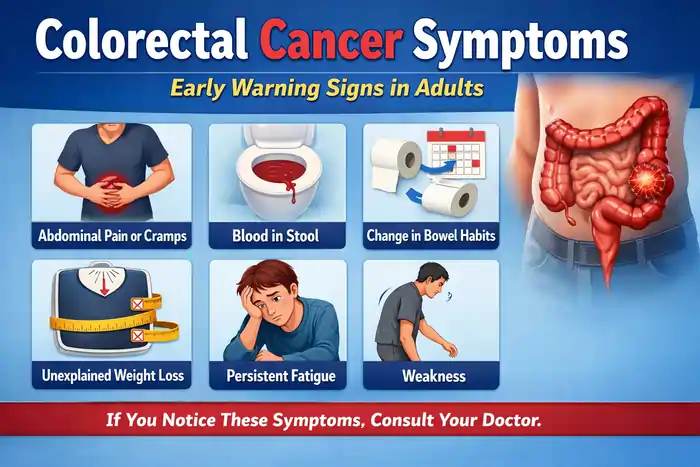
Colorectal cancer symptoms in adults often begin subtly, including changes in bowel habits, blood in the stool, unexplained weight loss, abdominal pain, and fatigue. Early stages may have no symptoms, which is why screening starting at age 45 is recommended by organizations like the Centers for Disease Control and Prevention (CDC) colorectal program and the World Health Organization (WHO) cancer fact sheet. Recognizing warning signs early significantly improves survival and treatment outcomes.
Introduction
Colorectal cancer—commonly referred to as colon or rectal cancer—is one of the most prevalent cancers worldwide. It affects the large intestine and rectum and often develops slowly over time, beginning as noncancerous polyps that may eventually turn into cancer.
According to the World Health Organization (WHO) cancer overview, colorectal cancer ranks among the leading causes of cancer-related deaths globally. However, early detection through screening and symptom awareness can significantly reduce mortality.
In the United States, the CDC’s colorectal cancer overview highlights that colorectal cancer is one of the most commonly diagnosed cancers in adults, but screening and early intervention dramatically improve survival rates.
Understanding the early warning signs of colorectal cancer is critical because symptoms are often mild—or even absent—in the early stages.
What Is Colorectal Cancer?
Colorectal cancer occurs when abnormal cells grow uncontrollably in the colon or rectum. These cells can form tumors, invade nearby tissues, and spread to other organs.
The National Cancer Institute (NCI), part of the NIH, explains that most colorectal cancers begin as adenomatous polyps—small growths on the inner lining of the colon that may develop silently over years—in its colorectal cancer resource.
Why Early Detection Is Critical
Colorectal cancer is highly treatable when detected early. However, many adults overlook early symptoms or attribute them to common digestive issues.
According to CDC screening data:
- Early-stage survival rates exceed 90%
- Late-stage detection significantly reduces survival
These points are emphasized in the CDC colorectal cancer screening guide.
Because early symptoms can be subtle, awareness plays a key role in prevention and survival.
Early Warning Signs of Colorectal Cancer
1. Changes in Bowel Habits
Persistent changes in bowel movements are among the earliest signs.
These may include:
- diarrhea or constipation
- alternating bowel patterns
- changes in stool frequency
- feeling of incomplete bowel emptying
If these symptoms last more than a few weeks, medical evaluation is recommended.
2. Blood in Stool (Rectal Bleeding)
Blood in the stool is one of the most important warning signs.
It may appear as:
- bright red blood
- dark or tarry stool
- hidden (occult) blood
The CDC emphasizes on its colorectal cancer symptoms page that any unexplained rectal bleeding should be evaluated promptly.
3. Unexplained Weight Loss
Sudden, unintentional weight loss can be a sign of cancer.
Cancer affects metabolism and may reduce appetite, leading to weight loss over time.
4. Persistent Abdominal Pain or Cramping
Common symptoms include:
- abdominal discomfort
- bloating
- cramping
- gas pain
These symptoms may mimic common digestive issues but become persistent or worsen over time.
5. Fatigue and Weakness
Fatigue may result from:
- chronic blood loss (anemia)
- systemic effects of cancer
The American Cancer Society notes in its colon and rectal cancer information that slow bleeding in the colon can lead to iron deficiency anemia, causing ongoing fatigue.
6. Narrow or Pencil-Thin Stools
A narrowing of stool may indicate obstruction in the colon caused by a tumor.
7. Feeling of Incomplete Bowel Movement
Some individuals feel they still need to pass stool even after a bowel movement.
This sensation can indicate rectal or lower colon involvement.
Subtle Symptoms That Are Often Ignored
Colorectal cancer can develop silently.
Common overlooked symptoms include:
- mild bloating
- occasional constipation
- slight fatigue
- minor stool changes
These symptoms may appear harmless but should be evaluated if persistent.
When Should You See a Doctor?
Seek medical care if you experience:
- blood in stool
- persistent bowel changes
- unexplained weight loss
- ongoing abdominal pain
- fatigue without cause
Early consultation significantly improves outcomes.
Colorectal Cancer vs Common Conditions
Colon Cancer vs Hemorrhoids
- both can cause bleeding
- hemorrhoids often cause pain or itching
- cancer bleeding may be painless
Colon Cancer vs IBS
- IBS causes irregular bowel habits
- cancer includes bleeding and weight loss
Colon Cancer vs Constipation
- occasional constipation is common
- persistent constipation with other symptoms is concerning
Risk Factors for Colorectal Cancer
Age
Adults over 45 are at higher risk, which is reflected in the CDC’s recommendation to start screening at 45.
Family History
Genetic predisposition significantly increases risk.
Diet
High intake of:
- processed meats
- red meats
- low fiber
is associated with higher risk, as noted by the American Cancer Society’s risk factor discussion.
Lifestyle Factors
- smoking
- alcohol use
- sedentary lifestyle
WHO identifies these as major contributors in its broader cancer risk-factor guidance.
Obesity
Excess body weight increases colorectal cancer risk.
Screening for Colorectal Cancer
Screening is the most effective prevention strategy.
Common Screening Methods
- colonoscopy
- stool tests (FIT, DNA tests)
- CT colonography
The CDC screening recommendations outline appropriate tests and timing based on risk.
Diagnosis
Doctors may use:
- colonoscopy
- biopsy
- imaging (CT, MRI)
- blood tests
Treatment Options
Surgery
Removal of cancerous tissue.
Chemotherapy
Targets cancer cells.
Radiation Therapy
Used especially in rectal cancer.
Advances in treatment have significantly improved outcomes, as detailed in the NCI colorectal cancer treatment overview and American Cancer Society treatment resources.
Prevention Strategies
Healthy Diet
High fiber, fruits, vegetables.
Exercise
At least 150 minutes weekly.
Avoid Tobacco & Alcohol
Both increase cancer risk.
Routine Screening
The most effective prevention tool, emphasized by both the CDC colorectal program and the WHO cancer prevention messaging.
Colorectal Cancer in Younger Adults
Rates are increasing in adults under 50.
Symptoms may be ignored due to age assumptions, making awareness critical; recent updates from organizations like the American Cancer Society highlight this trend.
Psychological Impact
A diagnosis can affect:
- mental health
- relationships
- quality of life
Support systems and survivorship resources, including those from the American Cancer Society, are essential.
Key Takeaways
- Symptoms are often subtle early.
- Blood in stool is a major warning sign.
- Screening saves lives.
- Lifestyle changes reduce risk.
FAQ | Colorectal Cancer Symptoms
What are early signs of colorectal cancer?
Changes in bowel habits, blood in stool, fatigue, and abdominal pain.
Can colorectal cancer be silent?
Yes, especially in early stages.
Is blood in stool always cancer?
No, but it should always be checked.
When should I get screened?
Starting at age 45 or earlier if high risk.
Can young adults get colorectal cancer?
Yes, and rates are increasing.
Does colon cancer cause fatigue?
Yes, often due to anemia.
Can diet affect colon cancer risk?
Yes, high processed meat intake increases risk.
What does colon cancer stool look like?
Dark, bloody, or thin stools.
Is colorectal cancer curable?
Yes, especially when detected early.
How fast does it grow?
Usually slowly over years.
Can constipation be a symptom?
Yes, if persistent.
Does it cause bloating?
Yes, especially in later stages.
What are silent symptoms?
Mild fatigue and subtle bowel changes.
Is it hereditary?
Some cases are genetic.
Can it spread quickly?
Advanced cases can spread to liver and lungs.
How often should screening be done?
Depends on risk, typically every 10 years.
Medical Disclaimer
This article is intended for educational purposes only and should not replace professional medical advice, diagnosis, or treatment. Always consult a qualified healthcare professional for personalized medical guidance regarding colorectal cancer or any health concerns.
Written by: Eden Grace Ramos, RN
Medical Resources
This article integrates evidence-based guidance from:
- World Health Organization (WHO): https://www.who.int
- Centers for Disease Control and Prevention (CDC): https://www.cdc.gov
- National Institutes of Health (NIH): https://www.nih.gov
- National Cancer Institute (NCI): https://www.cancer.gov
- American Cancer Society (ACS): https://www.cancer.org
These organizations provide authoritative information on colorectal cancer symptoms, prevention, screening, and treatment.