
This article explains how type 1 and type 2 diabetes differ in causes, symptoms, diagnosis, treatment, and long‑term outlook, and what those differences practically mean for your daily life. It is written for people living with diabetes, their families, and anyone trying to understand a new or existing diagnosis.
Content is based on current clinical guidelines and peer‑reviewed research from major organizations and sources, including the World Health Organization (WHO), the Centers for Disease Control and Prevention (CDC), the National Institutes of Health (NIH), national diabetes guidelines, and leading diabetes journals such as Diabetes Care.
Diabetes Basics: What Both Types Have in Common
Both type 1 and type 2 diabetes involve problems with insulin and glucose. Glucose (sugar) is your body’s main fuel, and insulin is the hormone that helps move glucose from your blood into your cells so you can use it for energy.
When you have diabetes, your body either does not make enough insulin, cannot use it properly, or both, so glucose builds up in your bloodstream instead of entering your cells.
Over time, high blood sugar can damage blood vessels and nerves. This can affect your eyes, kidneys, heart, brain, and feet and is the reason diabetes is considered serious even when you feel normal. Both type 1 and type 2 diabetes share some key features:
- Blood tests show higher‑than‑normal glucose (fasting glucose, oral glucose tolerance test, or HbA1c).
- Classic symptoms include thirst, frequent urination, fatigue, and unintentional weight loss, although type 2 can be silent for years.
- You need long‑term follow‑up to reduce the risk of heart, kidney, eye, and nerve problems.
If you want to understand what can show up in the early phase, you can read our dedicated guide on the early warning signs of diabetes, which walks through subtle and obvious changes to watch for in everyday life.
Type 1 vs Type 2 Diabetes Key Differences at a Glance
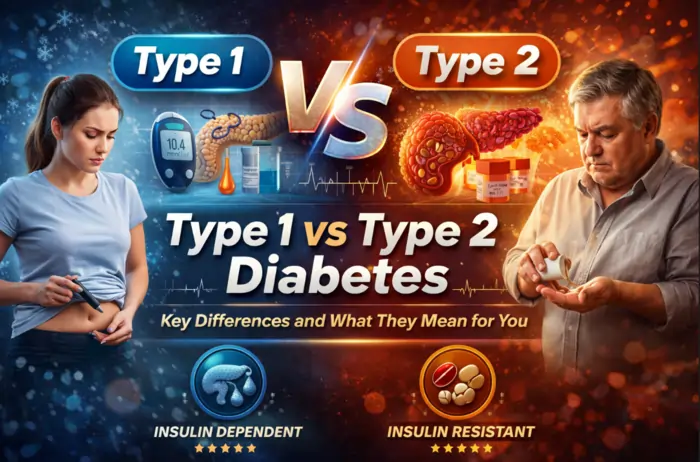
Here is a side‑by‑side view of the most important differences between type 1 and type 2 diabetes:
| Aspect | Type 1 Diabetes | Type 2 Diabetes |
|---|---|---|
| Main problem | Pancreas makes little or no insulin at all. | Body does not use insulin properly (insulin resistance) and may also not make enough. |
| Typical cause | Autoimmune attack on insulin‑producing beta cells. | Combination of insulin resistance and beta‑cell failure, influenced by weight, age, and genetics. |
| Usual age at diagnosis | Often in childhood, adolescence, or young adulthood, but can occur at any age. | More common in adults but increasingly seen in adolescents and children. |
| How fast it appears | Symptoms typically develop quickly over days to weeks. | Develops slowly over years; many people have no obvious symptoms at first. |
| Body weight at diagnosis | Many people have normal weight or are underweight. | Often associated with overweight or obesity, though not always. |
| Treatment from day one | Insulin is always required. | Often starts with lifestyle measures and tablets; insulin may be needed later. |
| Can it be prevented? | No proven way to prevent type 1 at present. | Risk can often be reduced or delayed through healthy weight, diet, and activity. |
| How common is it? | Smaller proportion: roughly 5–10% of diabetes cases. | Majority: about 90–95% of diagnosed diabetes. |
What Is Type 1 Diabetes?
Type 1 diabetes is an autoimmune condition. Your immune system, which normally defends you against infections, mistakenly attacks the beta cells in your pancreas that make insulin, eventually destroying most or all of them.
When that happens, your body produces little or no insulin, and you cannot regulate blood sugar without insulin from outside sources.
Symptoms of type 1 diabetes often appear suddenly. You may notice intense thirst, frequent urination (including getting up at night), blurred vision, fatigue, and rapid weight loss over days or weeks.
Without enough insulin, your body starts breaking down fat for energy, producing acids called ketones; if they build up, this can lead to diabetic ketoacidosis (DKA), a life‑threatening emergency that often brings people to the hospital at first diagnosis.
Genetics and environmental triggers both play roles. Certain HLA genes are linked with higher risk, and infections or other environmental exposures may trigger the autoimmune response, but there is currently no proven way to prevent type 1 diabetes from developing. People with type 1 also have a higher chance of other autoimmune diseases, including autoimmune thyroid disease and celiac disease.
For a global overview of type 1 diabetes burden and management, you can explore the WHO diabetes fact sheet, which summarizes key statistics and care priorities.
What Is Type 2 Diabetes?
Type 2 diabetes has a different root problem. In type 2, your body still makes insulin, especially in the early stages, but your cells do not respond to it properly (insulin resistance). Over time, the pancreas becomes less able to keep up with the extra demand, and insulin production gradually falls, so blood sugar rises more and more.
Type 2 usually develops gradually. Many people pass through a stage of prediabetes, where blood sugar is higher than normal but not yet in the diabetes range, often without noticeable symptoms. Some are diagnosed only after routine blood tests, during screening, or when complications such as heart disease, stroke, or eye problems are investigated.
Factors that increase the chance of type 2 diabetes include:
- Having overweight or obesity, particularly with more fat around the waist.
- Family history of type 2 diabetes.
- Older age (though younger people and teenagers are now affected).
- Certain ethnic backgrounds with higher baseline risk.
- Physical inactivity and energy‑dense diets over many years.
Type 2 diabetes can also appear in people who are not overweight, and not everyone with overweight develops diabetes. Genetics, environment, and lifestyle combine to affect individual risk. For an in‑depth exploration of causes, risk factors, and treatment options, you can read our dedicated overview of type 2 diabetes.
You can also review key background information on type 2 diabetes in the CDC’s Diabetes Basics and the NIH‑linked StatPearls review of type 2 diabetes.
Shared Symptoms – And Where They Diverge
Both type 1 and type 2 diabetes share many of the same symptoms when blood sugar is high:
- Increased urination, especially at night.
- Feeling very thirsty.
- Feeling more tired than usual.
- Unintended weight loss.
- Blurry vision.
- Slow‑healing cuts or frequent infections.
How they differ:
- In type 1, symptoms tend to develop quickly and become severe in a short time.
- In type 2, symptoms often creep in slowly and may be mild or absent for years, which is why type 2 can go undiagnosed for a long period.
Some people discover type 2 diabetes only during routine screening or when another health issue is being evaluated. If you want more detail on symptom patterns and real‑life examples, you can explore our article on the early warning signs of diabetes.
For patient‑friendly symptom lists, you can also check the American Diabetes Association website, which summarises classic signs of both type 1 and type 2 diabetes.
Diagnosis: How Health‑Care Teams Tell the Difference
Diagnosis does not rely on symptoms alone. Your health‑care team uses blood tests to confirm diabetes and then looks at your age, body build, timing of symptoms, and additional tests to understand the type.
Common tests used to diagnose diabetes include:
- Fasting plasma glucose (FPG).
- Oral glucose tolerance test (OGTT).
- Hemoglobin A1c (HbA1c).
These tests show whether diabetes or prediabetes is present, but they do not always show which type you have. To clarify, your team may order:
- Autoantibody tests (for example, GAD antibodies), which are often positive in type 1 and autoimmune forms of diabetes.
- C‑peptide levels, which give an estimate of how much insulin your pancreas is still producing.
- Additional assessment of age at onset, speed and severity of symptoms, presence of ketoacidosis, weight changes, and family history.
National and international guidelines, such as the ADA Standards of Medical Care in Diabetes and WHO recommendations, provide diagnostic thresholds and classification criteria for consistent decisions across health systems. They also describe overlapping forms such as latent autoimmune diabetes in adults (LADA) and monogenic diabetes.
Why Type 1 Diabetes Always Needs Insulin
Because type 1 diabetes involves near‑complete destruction of insulin‑producing beta cells, insulin is always required as part of treatment. There is currently no oral medication, diet, or exercise program that can replace insulin for people with type 1 diabetes.
Typical insulin strategies in type 1 include:
- Multiple daily injections: a long‑acting basal insulin plus rapid‑acting insulin with meals or snacks.
- Insulin pump therapy: a pump delivers basal insulin continuously, with extra “boluses” when you eat.
- Hybrid closed‑loop systems: pumps linked with continuous glucose monitoring (CGM) that automatically adjust insulin delivery based on real‑time readings.
Living with type 1 means thinking about insulin many times a day – with meals, activity, illness, travel, and stress – and adjusting doses as needed. For deeper clinical detail, NIH‑linked reviews such as the Type 1 and Type 2 Diabetes Mellitus overview on PubMed Central discuss pathophysiology and emerging therapies.
How Type 2 Diabetes Is Managed Over Time
Type 2 diabetes management is more varied because your body still produces insulin, especially early in the disease course. Many people start with lifestyle changes and one oral medication, and treatment is gradually intensified if blood sugar targets are not met.
Common elements of type 2 diabetes management include:
- Nutrition patterns that support steady blood sugar and weight control.
- Regular physical activity to improve insulin sensitivity.
- Medications such as:
- Metformin, to reduce liver glucose production and improve sensitivity.
- Agents that increase insulin secretion.
- Medicines that slow carbohydrate absorption or increase urinary glucose loss.
- Newer treatments that influence appetite, weight, and cardiovascular or kidney risk.
- Insulin therapy when needed, often years after diagnosis, if your own insulin production declines or tablets are no longer enough.
Modern guidelines emphasise that some medication classes (such as SGLT2 inhibitors and GLP‑1 receptor agonists) also protect the heart and kidneys, which is crucial because cardiovascular and renal complications are major causes of reduced life expectancy in type 2 diabetes. For a fuller walk‑through of treatment choices, you can explore our in‑depth article on type 2 diabetes.
Long‑Term Outlook and Complications
Both type 1 and type 2 diabetes can lead to similar long‑term complications when blood sugar remains high:
- Cardiovascular disease, including heart attack and stroke.
- Kidney disease (diabetic nephropathy).
- Eye disease (diabetic retinopathy).
- Nerve damage (neuropathy), including foot problems and pain.
Because type 2 may be present for years before diagnosis, some people already have complications such as heart disease or retinopathy when they first learn they have diabetes. With type 1, complications tend to appear after many years, particularly when glucose, blood pressure, and cholesterol have not been well controlled.
Guidelines and large clinical trials consistently show that keeping blood sugar, blood pressure, and cholesterol closer to recommended ranges lowers the risk of complications in both types. Some studies show a “legacy effect,” where good control early on provides long‑term protection even many years later.
When diabetes is not well controlled for long periods, the risk of these complications rises. You can learn more about what “poor control” means in real terms by reading our article on uncontrolled diabetes, which explains how chronically high blood sugar affects your organs and lab results.
For more technical summaries of complications and risk reduction, you can also review WHO’s diabetes fact sheet and the ADA’s Standards of Care pages.
Everyday Life: How These Differences Feel for You
Type 1 and type 2 diabetes do not just differ in lab numbers; they feel different in daily life.
With type 1 diabetes:
- Insulin is part of your routine from the start, with multiple daily decisions about doses.
- You may use injections, pumps, and CGM devices to fine‑tune glucose control.
- Meals, physical activity, illness, travel, and stress all link directly to insulin adjustments.
With type 2 diabetes:
- You may begin with fewer daily tasks if you start on tablets and lifestyle changes.
- Over time, you might add more medications, possibly injectable therapies and insulin, especially if your own insulin production decreases.
- Weight management, physical activity, sleep, and stress become key parts of your overall plan, consistent with recommendations from organizations like the CDC, WHO, and national diabetes societies.
In both types, life with diabetes involves regular blood tests, periodic screening for complications, and ongoing conversations with your health‑care team. International and national guidelines—such as those from WHO, CDC, NIH, and the ADA—are updated regularly so that treatment recommendations reflect the latest evidence.
Frequently Asked Questions
1. Which type of diabetes is more common?
Type 2 diabetes is much more common worldwide, making up about 90–95% of diagnosed diabetes cases, while type 1 accounts for around 5–10%.
2. Can children get type 2 diabetes, or is that only type 1?
Children can develop both types. Type 1 has long been more common in younger ages, but type 2 is increasingly diagnosed in children and teenagers.
3. Is type 1 diabetes always diagnosed in childhood?
No. Type 1 diabetes can appear at any age, including adulthood, and some adults initially thought to have type 2 are later found to have autoimmune diabetes.
4. Is type 2 diabetes always caused by lifestyle choices?
Lifestyle is important, but it is not the only factor. Genetics, age, ethnicity, and other influences can lead to type 2 diabetes even in people who eat well and stay active.
5. Can type 1 diabetes be prevented?
Current evidence suggests no reliable way to prevent type 1 diabetes, because it is driven by an autoimmune process that destroys insulin‑producing cells.
6. Can type 2 diabetes be prevented or delayed?
For many people at high risk, changes in weight, diet, and physical activity can lower the chance of developing type 2 or delay when it appears.
7. Do people with type 2 diabetes always end up needing insulin?
Not everyone with type 2 needs insulin. Some manage with lifestyle measures and non‑insulin medications, while others eventually require insulin when their own insulin production falls or tablets are not enough.
8. Why is insulin absolutely required in type 1 diabetes?
In type 1, the pancreas produces little or no insulin, so the body cannot use glucose properly without external insulin and is at risk for diabetic ketoacidosis without it.
9. Can symptoms alone tell whether a person has type 1 or type 2?
Symptoms provide clues but are not enough on their own. Blood tests (including autoantibodies and C‑peptide), plus age and clinical context, are needed to classify diabetes accurately.
10. Why do some people with type 2 diabetes feel fine even when blood sugar is high?
Type 2 often develops slowly, and the body adapts to higher sugar levels over time, so symptoms may be mild or absent, which is why screening is recommended in people at risk.
11. Do both types of diabetes increase the risk of heart disease?
Yes. Both type 1 and type 2 diabetes raise the risk of heart attack, stroke, and other cardiovascular problems, especially when blood pressure and cholesterol are also high.
12. Are the complications different between type 1 and type 2?
The major complications—affecting eyes, kidneys, nerves, and the cardiovascular system—can occur in both types, though patterns and timing differ depending on age at onset, duration, and overall risk factors.
13. How do guidelines define diabetes and prediabetes?
Guidelines use standard cut‑offs for fasting plasma glucose, oral glucose tolerance tests, and HbA1c to define normal glucose, prediabetes, and diabetes, regardless of type.
14. What does “borderline diabetes” mean?
“Borderline diabetes” usually refers to prediabetes, where blood sugar is higher than normal but not high enough to be called diabetes according to guideline thresholds.
15. Can someone switch from type 2 to type 1 diabetes?
The underlying type does not switch, but some people first diagnosed with type 2 are later recognised as having autoimmune diabetes (such as LADA), which behaves more like type 1 and typically requires insulin earlier.
16. Does weight loss cure type 2 diabetes?
Substantial weight loss can lead to remission in some people with type 2, meaning blood sugars fall into the non‑diabetes range without medication, but long‑term monitoring is still needed.
17. Are there other types of diabetes besides type 1 and type 2?
Yes. Other types include gestational diabetes, monogenic forms, and diabetes from pancreatic disease, hormonal disorders, or certain medications.
18. Why are WHO, CDC, NIH, and national guidelines often mentioned together?
These organisations regularly review research and issue recommendations on screening, diagnosis, and treatment, which shape how diabetes is managed across countries and health systems.
19. Where can someone read more detailed medical information?
More technical information appears in national guidelines, diabetes society statements, and peer‑reviewed medical journals, as well as in major diabetes and endocrine textbooks.
20. Do both type 1 and type 2 diabetes require lifelong attention?
Yes. Whether type 1 or type 2, diabetes is a long‑term condition that needs ongoing monitoring, regular check‑ups, and adjustments over time to protect long‑term health.
⚠️ Medical Disclaimer
The information provided on MedEduHub is for educational purposes only and does not replace professional medical advice, diagnosis, or treatment. If you experience severe hyperglycemia, confusion, chest pain, breathing difficulty, or signs of a medical emergency, seek immediate medical attention. Always consult a licensed healthcare provider before starting, stopping, or changing any diabetes treatment plan.
👩⚕️ Written by: Eden Grace Ramos-Arsenio, RN
Registered Nurse | Clinical Health Educator
📚 Medical Sources & References
This article is informed by current evidence and guidance from national and international diabetes guidelines (including the ADA Standards of Medical Care in Diabetes), the World Health Organization (WHO), the Centers for Disease Control and Prevention (CDC), and the National Institutes of Health (NIH), as well as peer‑reviewed articles and consensus reports in journals such as Diabetes Care and other recognised diabetes and endocrine publications.