
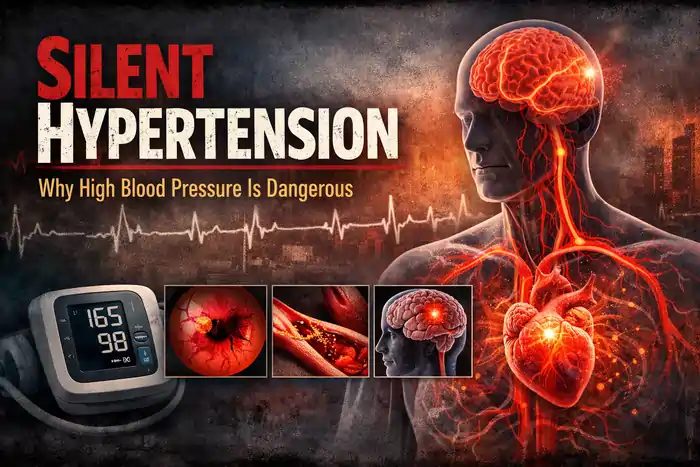
Silent hypertension, often called the “silent killer disease,” refers to high blood pressure that develops and progresses without noticeable symptoms, quietly damaging blood vessels and vital organs over time. According to the World Health Organization, more than 1.28 billion adults worldwide live with hypertension and nearly half are unaware they have the condition, as highlighted in the WHO hypertension fact sheet.
The danger of silent hypertension lies in its invisibility. While people may feel healthy, elevated blood pressure can gradually damage arteries, the heart, brain, kidneys, and eyes, increasing the risk of heart attack, stroke, kidney disease, and other life-threatening complications. Understanding what silent hypertension is, why it is dangerous, and how it affects the body is essential for prevention and early detection.
For a broader overview of the condition, read our comprehensive guide on hypertension and cardiovascular health in our article on hypertension: understanding and managing high blood pressure.
What Is Silent Hypertension?
Silent hypertension refers to high blood pressure that causes little or no noticeable symptoms, even while serious damage is occurring inside the body. Blood pressure measures the force of blood pushing against the walls of arteries as the heart pumps blood throughout the body. It is expressed using two numbers:
- Systolic blood pressure – pressure when the heart beats
- Diastolic blood pressure – pressure when the heart rests between beats
These numbers are measured in millimeters of mercury (mm Hg). According to the American Heart Association, blood pressure readings are one of the most important indicators of cardiovascular health because they help assess how well the heart and blood vessels are functioning, as described in AHA’s overview of high blood pressure.
A typical healthy reading may look like 120/80 mm Hg, but when blood pressure remains elevated over time, it becomes hypertension, a chronic condition associated with cardiovascular disease. If you’re unfamiliar with blood pressure categories and what the numbers mean, you can read our detailed guide on what blood pressure numbers mean, which explains systolic and diastolic ranges in detail.
Silent hypertension is dangerous because the body can adapt to gradually rising arterial pressure, allowing damage to accumulate silently.
Why Hypertension Is Called the “Silent Killer”
Hypertension is often referred to as the silent killer because many people do not experience symptoms until severe damage has already occurred. According to the Centers for Disease Control and Prevention, nearly half of adults with hypertension in the United States do not have their condition under control, and many remain unaware they even have it, as outlined in CDC resources on blood pressure and control.
Unlike many diseases that produce early symptoms, hypertension can develop gradually over many years. During this time, blood vessels and organs may be slowly damaged without noticeable warning signs. When symptoms finally appear, the condition may already be severe.
Late-stage symptoms may include:
- severe headaches
- chest pain
- shortness of breath
- dizziness
- blurred vision
- nosebleeds
The National Heart, Lung, and Blood Institute explains that hypertension often remains undetected because symptoms rarely occur until complications arise in its guidance on high blood pressure.
This is why regular blood pressure screening is essential, even for people who feel healthy.
How High Blood Pressure Damages the Body
High blood pressure causes damage primarily through long-term stress on blood vessels and organs. When arterial pressure remains elevated, the cardiovascular system must work harder to circulate blood, causing structural changes in the arteries. According to the National Institutes of Health, prolonged hypertension can cause arterial damage, inflammation, and reduced blood flow to vital organs, which increases the risk of cardiovascular disease, as described in NHLBI’s summary of health effects of high blood pressure.
Damage to Blood Vessels
High blood pressure damages the inner lining of arteries, making them:
- thicker
- less flexible
- more prone to plaque buildup
This process contributes to atherosclerosis, which narrows arteries and reduces blood flow. Over time, weakened arteries may also form aneurysms, which can rupture and cause life-threatening bleeding.
Damage to the Heart
When blood pressure remains high, the heart must pump harder to push blood through narrowed arteries. This increased workload can lead to:
- left ventricular hypertrophy (thickening of the heart muscle)
- coronary artery disease
- heart failure
According to the American Heart Association, hypertension is one of the strongest risk factors for heart disease and heart attack, a point emphasized in its article on why high blood pressure is a silent killer.
Damage to the Brain
Hypertension is a leading cause of stroke, which occurs when blood flow to the brain is interrupted. Two major types of stroke are linked to high blood pressure:
- Ischemic stroke – caused by blocked blood flow
- Hemorrhagic stroke – caused by ruptured blood vessels in the brain
The World Health Organization identifies high blood pressure as one of the most important modifiable risk factors for stroke worldwide in its hypertension fact sheet. Chronic hypertension may also contribute to vascular dementia and cognitive decline.
Damage to the Kidneys
The kidneys rely on a network of tiny blood vessels to filter waste from the bloodstream. High blood pressure damages these vessels, reducing kidney function and potentially leading to chronic kidney disease. According to the National Kidney Foundation, hypertension is the second leading cause of kidney failure globally, as outlined in its page on high blood pressure and kidney disease.
Damage to the Eyes
Hypertension can damage blood vessels in the retina, causing a condition known as hypertensive retinopathy. This condition may lead to:
- blurred vision
- eye damage
- vision loss
The American Academy of Ophthalmology warns that uncontrolled hypertension can cause permanent retinal damage if left untreated in its overview of hypertensive retinopathy.
Blood Pressure Categories and Diagnosis
Hypertension is diagnosed through repeated blood pressure readings. The American Heart Association and CDC define the following categories:
- Normal – Systolic less than 120, diastolic less than 80
- Elevated – Systolic 120–129, diastolic less than 80
- Hypertension Stage 1 – Systolic 130–139 or diastolic 80–89
- Hypertension Stage 2 – Systolic 140+ or diastolic 90+
- Hypertensive Crisis – Systolic 180+ or diastolic 120+
A hypertensive crisis requires immediate medical attention because it significantly increases the risk of stroke or heart attack.
To understand how healthcare providers interpret these numbers, visit our full guide on what blood pressure numbers mean, which walks through each category in detail.
Causes of Silent Hypertension
In many cases, hypertension develops gradually due to a combination of lifestyle factors, genetics, and aging. According to the World Health Organization, major contributors include unhealthy diet, physical inactivity, tobacco use, and excessive alcohol consumption, as described in its hypertension overview.
Primary Hypertension
Primary hypertension develops slowly over time without a specific identifiable cause. Risk factors include:
- aging and hypertension
- genetics and family history
- obesity
- sedentary lifestyle
- high sodium diet
- alcohol consumption
- smoking
Secondary Hypertension
Secondary hypertension occurs due to underlying medical conditions such as:
- kidney disease
- endocrine disorders
- sleep apnea
- thyroid disease
- certain medications
Treating the underlying cause can sometimes reduce blood pressure.
Early Detection and Blood Pressure Monitoring
Because hypertension often develops silently, healthcare experts recommend regular blood pressure monitoring. The CDC recommends routine blood pressure checks during healthcare visits—particularly for adults over age 40 or those with cardiovascular risk factors—as explained in its guidance on how to measure your blood pressure.
Monitoring options include:
- in-clinic blood pressure tests
- home blood pressure monitors
- ambulatory blood pressure monitoring devices
Early detection can prevent serious complications.
How to Lower High Blood Pressure
Fortunately, many people can reduce their blood pressure through lifestyle changes and medical treatment.
Heart-Healthy Diet
The DASH diet (Dietary Approaches to Stop Hypertension) is recommended by the National Institutes of Health as one of the most effective dietary approaches for lowering blood pressure, as detailed in the NHLBI DASH eating plan. The diet emphasizes:
- fruits and vegetables
- whole grains
- lean proteins
- low-fat dairy
- reduced sodium intake
Exercise for Blood Pressure Control
Regular physical activity improves cardiovascular health and helps reduce hypertension. The CDC recommends at least 150 minutes of moderate physical activity per week for adults in its guidance on physical activity basics.
Weight Management
Losing excess body weight reduces strain on the heart and improves blood pressure control.
Reduce Salt Intake
Limiting sodium intake helps reduce fluid retention and lowers blood pressure.
Medication
In some cases, doctors may prescribe medications such as:
- ACE inhibitors
- beta blockers
- calcium channel blockers
- diuretics
For practical lifestyle strategies, read our guide on ways to lower blood pressure, which explores habits that support healthy blood pressure levels.
Frequently Asked Questions
What is silent hypertension?
Silent hypertension is high blood pressure that develops without noticeable symptoms, often damaging the heart, brain, kidneys, and blood vessels over time.
Why is high blood pressure dangerous?
High blood pressure damages arteries and organs, increasing the risk of heart disease, stroke, kidney failure, and vision loss.
Can you have hypertension without symptoms?
Yes. Most people with high blood pressure experience no symptoms, which is why routine screening is essential.
How can I prevent high blood pressure?
Prevention strategies include healthy diet, regular exercise, reduced sodium intake, maintaining healthy weight, avoiding smoking, and limiting alcohol consumption.
Final Thoughts
Silent hypertension remains one of the most serious global health threats because it often progresses without warning. Without regular monitoring, individuals may not realize their blood pressure is dangerously elevated until complications occur. Increasing awareness about hypertension, adopting healthier lifestyles, and seeking regular medical care can significantly reduce the risk of cardiovascular disease and improve long-term health outcomes.
Medical Disclaimer
This article is intended for educational purposes only and should not be considered medical advice. While every effort has been made to ensure accuracy based on current clinical guidelines and reputable sources, individual health conditions vary. Always consult a qualified healthcare professional for diagnosis, treatment, or medical concerns related to hypertension or other health conditions.
Written by: Eden Grace Ramos, RN
Medical Resources
This article references information from trusted health authorities to ensure accuracy and alignment with current clinical guidelines. Key data and educational materials about hypertension, cardiovascular risks, and prevention are supported by the World Health Organization’s hypertension fact sheet, the Centers for Disease Control and Prevention’s blood pressure and high blood pressure resources, the American Heart Association’s high blood pressure topic center, and the National Heart, Lung, and Blood Institute’s overview of high blood pressure and its health effects.
Additional information on hypertension-related kidney and eye complications is referenced from the National Kidney Foundation’s guidance on high blood pressure and kidney disease and the American Academy of Ophthalmology’s explanation of hypertensive retinopathy and eye damage. These organizations provide peer-reviewed research and clinical guidance widely used by healthcare professionals worldwide.