
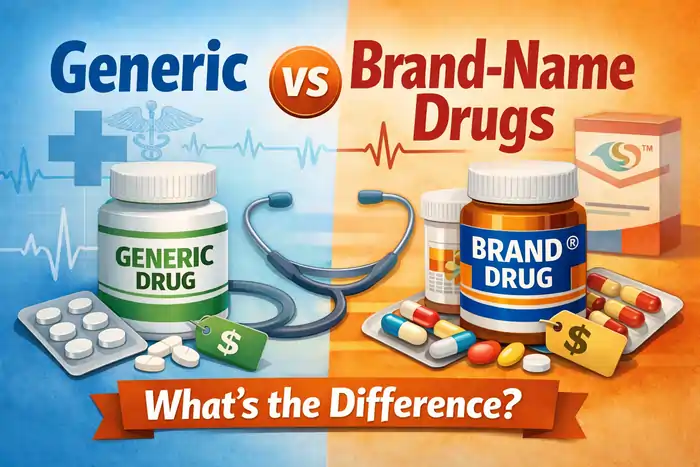
Prescription medications play a critical role in modern healthcare. From treating infections to managing chronic diseases such as hypertension, diabetes, asthma, and heart disease, medications help millions of people maintain health and prevent complications. However, patients are often faced with an important question when filling prescriptions: Should you choose a generic drug or a brand-name medication?
Generic drugs and brand-name drugs are widely used in healthcare systems around the world. Although both types of medications contain the same therapeutic ingredients, there are differences in pricing, drug naming, packaging, and marketing. These differences sometimes lead to confusion among patients who may wonder whether generic medications are as safe or effective as their brand-name counterparts.
According to the U.S. Food and Drug Administration (FDA), generic drugs must meet the same rigorous standards of quality, safety, strength, and effectiveness as brand-name medications before they are approved for use, a requirement explained in FDA’s generic drugs and bioequivalence guidance. The FDA’s generic drug program emphasizes that approved generics are bioequivalent to brand-name drugs, meaning they work in the body in the same way and provide the same clinical benefits.
If you want to understand medication safety more broadly, you can read our pillar guide on Safe Medication Use: A Patient’s Guide
This article explains how generic and brand-name drugs compare, how regulatory agencies evaluate drug safety, and how patients can make informed medication decisions.
What Are Brand-Name Drugs?
Brand-name drugs are medications developed and marketed by pharmaceutical companies that first discover and patent a new drug. These medications are typically introduced after years of research, laboratory testing, and clinical trials. The development process for a new medication is lengthy and expensive; research supported by the National Institutes of Health (NIH) and global pharmaceutical research organizations shows that developing a new drug may take more than a decade of research and require substantial financial investment, as discussed in NIH’s drug development and translational science overviews.
When a pharmaceutical company develops a new drug, it receives patent protection, which allows the company to sell the medication exclusively for a specific period of time. During this patent period, other manufacturers cannot produce generic versions of the drug.
Examples of well-known brand-name medications include:
- Lipitor (atorvastatin)
- Glucophage (metformin)
- Zoloft (sertraline)
- Tylenol (acetaminophen)
- Norvasc (amlodipine)
Brand-name drugs often have recognizable names, marketing campaigns, and distinctive packaging that make them easier for patients to recognize.
What Are Generic Drugs?
Generic drugs are medications that contain the same active ingredients as brand-name drugs and are intended to work in the same way. Once the patent for a brand-name medication expires, other pharmaceutical manufacturers are allowed to produce generic versions of the drug.
Generic drugs must demonstrate bioequivalence to the brand-name drug. Bioequivalence means the generic medication delivers the same amount of active ingredient into the bloodstream at the same rate and extent as the original drug. According to the FDA’s Office of Generic Drugs, approved generic medications must meet strict regulatory standards to ensure they are pharmaceutically equivalent, therapeutically equivalent, manufactured under quality standards, and clinically effective, as outlined in FDA’s Office of Generic Drugs resources. The World Health Organization (WHO) also emphasizes the importance of generic medications in global health systems because they increase access to essential medicines and reduce healthcare costs, a key message within WHO’s Essential Medicines and access-to-medicines programs.
How Generic Drugs Are Approved
Generic drug approval is regulated by national health authorities such as the FDA in the United States and other regulatory agencies worldwide. Unlike brand-name drugs, generic medications do not require the same extensive clinical trials because the safety and effectiveness of the active ingredient have already been established.
Instead, generic drug manufacturers must demonstrate:
- pharmaceutical equivalence
- bioequivalence
- manufacturing quality standards
- consistent drug formulation
The FDA’s Abbreviated New Drug Application (ANDA) process evaluates these requirements before approving generic drugs, as described in its ANDA and generic drug approval framework. The CDC and other public health organizations recognize generic drugs as an important strategy for improving medication access and reducing healthcare costs in their medication safety and chronic disease management materials.
Generic vs Brand-Name Drugs: Key Differences
Although generic and brand-name drugs contain the same active ingredients, several differences may exist between the two. These differences include:
- cost
- appearance
- inactive ingredients
- manufacturer
Understanding these differences helps patients make informed medication decisions.
Cost Differences Between Generic and Brand Drugs
One of the most noticeable differences between generic and brand-name drugs is cost. Generic drugs are usually significantly less expensive than brand-name medications. In many cases, generics cost 80% to 90% less than their brand-name counterparts.
This cost difference occurs because generic drug manufacturers do not need to repeat the extensive research and development process required for new drugs. According to FDA data and pharmaceutical cost studies, generic medications save billions of dollars annually in healthcare spending, as highlighted in FDA’s summaries on generic drug savings and affordability.
Lower drug costs can improve medication adherence, because patients are more likely to continue treatment when medications are affordable. To learn more about medication adherence strategies, read our guide on Medication Adherence and Safety
Do Generic Drugs Work the Same as Brand-Name Drugs?
A common concern among patients is whether generic medications work as well as brand-name drugs. Regulatory agencies consistently confirm that approved generic medications provide the same therapeutic effect as brand-name drugs.
The FDA states that generic drugs must demonstrate:
- identical active ingredients
- same dosage strength
- same route of administration
- same clinical effect
In addition, generic medications must meet the same Good Manufacturing Practice (GMP) standards used for brand-name drugs, as summarized in FDA’s generic drug facts and quality standards. Research supported by the NIH and published in peer-reviewed medical journals shows that generic medications are just as effective as brand-name drugs for most conditions.
Appearance Differences Between Generic and Brand Drugs
Although generic drugs contain the same active ingredients, they may look different from brand-name medications. Differences may include:
- tablet color
- pill shape
- packaging design
- labeling
These differences occur because pharmaceutical companies use different trademarks and packaging styles. However, the active ingredient and therapeutic effect remain the same.
Patients should always verify medication names and instructions when receiving new prescriptions. If you want to learn how to interpret medication labels correctly, read our guide on How to Read a Prescription Label
Inactive Ingredients in Generic Drugs
Generic medications may contain different inactive ingredients compared to brand-name drugs. Inactive ingredients include:
- fillers
- preservatives
- coloring agents
- binding compounds
These ingredients help form the tablet or capsule but do not affect the therapeutic action of the medication. In rare cases, some patients may have sensitivities or allergies to certain inactive ingredients. Patients should inform healthcare providers if they experience unusual reactions after switching medications.
Why Generic Drugs Are Important for Healthcare
Generic medications play a major role in improving healthcare access around the world. According to the World Health Organization, increasing access to affordable medicines is a key strategy for improving global health outcomes and is a core aim of its Essential Medicines program and access initiatives.
Generic medications help healthcare systems by:
- lowering prescription drug costs
- increasing treatment accessibility
- supporting public health programs
- reducing healthcare system expenses
The WHO’s Essential Medicines List encourages the use of high-quality generic medications to improve access to life-saving treatments worldwide.
Are Generic Drugs Always Substituted for Brand Drugs?
In many healthcare systems, pharmacists are allowed to substitute generic medications for brand-name drugs unless the prescribing physician specifically indicates otherwise. Generic substitution laws vary by country and region, but pharmacists typically follow strict regulatory guidelines when dispensing medications.
Patients who have concerns about generic substitutions should discuss their options with their healthcare provider or pharmacist.
Situations Where Brand-Name Drugs May Be Preferred
Although generic drugs are appropriate in most cases, there are some situations where healthcare providers may recommend brand-name medications. Examples may include:
- medications with narrow therapeutic ranges
- drugs requiring highly specific formulations
- certain epilepsy medications
- some biologic therapies
Healthcare providers evaluate individual patient needs when deciding which medication is most appropriate.
Medication Safety and Generic Drugs
Medication safety is an important consideration when using any medication. Patients can reduce medication risks by:
- confirming medication names
- reading prescription labels carefully
- following dosage instructions
- consulting healthcare providers about side effects
Understanding medication instructions is essential for preventing medication errors. For a complete guide to medication safety practices, read our article on Safe Medication Use
Drug Interactions and Medication Monitoring
Generic and brand-name drugs share the same active ingredients, which means they carry the same potential risks for drug interactions. Drug interactions may occur with:
- other prescription medications
- over-the-counter drugs
- herbal supplements
- alcohol
- certain foods
Healthcare providers recommend maintaining an updated medication list to help identify potential interactions. The CDC highlights medication reviews and reconciliation as an important strategy for preventing adverse drug events in its medication safety and chronic disease management guidance.
Future Trends in Generic Medications
Advances in pharmaceutical manufacturing and regulatory science continue to expand the availability of generic drugs. Emerging innovations include:
- biosimilar medications
- complex generic drug formulations
- improved manufacturing technologies
- personalized pharmacology
The NIH continues to support research on drug development and pharmacology to improve medication safety and effectiveness, including studies on biosimilars and complex generics within its therapeutics and pharmacology research programs. Increasing access to high-quality generic medications remains a major focus of global health initiatives.
Key Takeaways | Generic vs Brand-Name Drugs
Generic and brand-name drugs contain the same active ingredients and must meet strict safety and effectiveness standards before approval. Regulatory agencies such as the FDA require generic medications to demonstrate bioequivalence to brand-name drugs, ensuring they provide the same therapeutic effect. Generic medications are typically much less expensive because manufacturers do not need to repeat the costly research and development process required for new drugs. As a result, generic drugs play an important role in improving medication affordability and healthcare access.
Patients can safely use generic medications when prescribed by healthcare providers and approved by regulatory authorities. Understanding medication instructions, reading prescription labels carefully, and communicating with healthcare professionals are essential steps for safe medication use.
Medical Disclaimer
This article is intended for educational purposes only and should not replace professional medical advice, diagnosis, or treatment. Always consult a qualified healthcare professional for personalized medical guidance regarding medications, prescriptions, or treatment decisions.
Written by: Eden Grace Ramos, RN
Medical Resources
This article references evidence-based guidance from trusted global health organizations to ensure clinical accuracy and reliability. Key resources include regulatory guidance from the U.S. Food and Drug Administration on generic drug approval and bioequivalence standards, public health information from the Centers for Disease Control and Prevention on medication safety and adverse drug events, and global access-to-medicine initiatives from the World Health Organization, including the Essential Medicines program. Additional research on pharmacology and drug safety is supported by the National Institutes of Health, which provides extensive scientific research on drug development, therapeutic equivalence, and medication effectiveness. These organizations publish clinical guidelines widely used by healthcare professionals worldwide.