
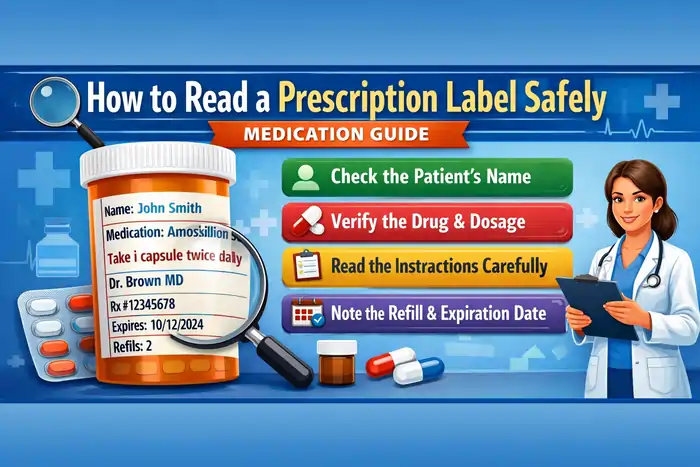
Modern medicine relies heavily on prescription medications to treat disease, control symptoms, and improve long-term health outcomes. From antibiotics and blood pressure drugs to insulin therapy and cholesterol-lowering medications, prescription medicines play an essential role in managing both acute and chronic health conditions. However, medications can only work effectively when they are used correctly.
One of the most important steps in safe medication use is understanding how to read a prescription label. Prescription labels contain critical information about dosage instructions, medication timing, warnings, and refill guidance. When patients misunderstand these instructions, medication errors can occur. According to the World Health Organization, medication errors are a major global public health concern and can lead to preventable harm, hospitalizations, and complications if medicines are taken incorrectly—a concern at the heart of WHO’s Medication Without Harm global patient safety challenge. Improving patient understanding of medication labels is considered one of the most effective strategies for reducing medication-related harm worldwide.
If you want a broader overview of medication safety practices, you can read our complete guide on Safe Medication Use: A Patient’s Guide
This article explains how prescription labels work, what each section of a medication label means, and how patients can use this information to take medicines safely and effectively.
What Is a Prescription Label?
A prescription label is a printed label attached to a medication container that provides important instructions and safety information about the medication prescribed by a healthcare provider. Prescription labels are created by pharmacists based on the instructions written by the prescribing physician. These labels provide standardized information designed to help patients understand how to take their medication correctly.
Typical prescription labels include:
- patient name
- medication name
- dosage strength
- dosing instructions
- prescribing physician
- pharmacy information
- refill instructions
- expiration date
- safety warnings
According to the U.S. Food and Drug Administration, prescription labels and associated patient medication information are a critical component of medication safety because they provide essential guidance about drug use, dosing schedules, and precautions, as reflected in FDA’s patient labeling resources and proposals for standardized Patient Medication Information (PMI). Understanding each part of the prescription label helps patients follow treatment instructions accurately and reduces the risk of medication misuse.
Key Information Found on a Prescription Label
Prescription labels contain several sections, each designed to provide specific information about the medication. Understanding these sections is essential for safe medication management.
Patient Information
Most prescription labels include the patient’s name and identifying information. This section ensures that the medication is dispensed to the correct individual. Taking someone else’s medication can lead to dangerous drug interactions or incorrect dosing. Healthcare providers emphasize that patients should always confirm that their name appears correctly on the medication label before taking the medication.
Medication Name
The medication name identifies the specific drug prescribed. This section may include:
- generic drug name
- brand name medication
- drug class
For example:
- amoxicillin (antibiotic)
- lisinopril (ACE inhibitor)
- metformin (diabetes medication)
Many medications have both generic and brand-name versions. Generic medications contain the same active ingredients as brand-name drugs and must meet the same safety and effectiveness standards. To learn more about how these medications compare, read our guide on Generic vs Brand-Name Drugs at
https://mededuhub.com/clinical/medications/generic-vs-brand-name-drugs/
Understanding medication names helps prevent duplication of medications that contain similar ingredients.
Medication Strength
Prescription labels also include the strength of the medication, which indicates the amount of active ingredient contained in each dose. Examples of medication strength include:
- 5 mg tablets
- 250 mg capsules
- 10 mg/mL liquid suspension
Medication strength is important because taking the wrong strength can result in under-treatment or overdose. Patients should confirm that the medication strength matches the prescription provided by their healthcare provider.
Dosage Instructions
Dosage instructions are one of the most important sections of the prescription label. This section explains:
- how much medication to take
- how often to take it
- how long to continue treatment
Examples of dosage instructions may include:
- take one tablet once daily
- take two capsules every 12 hours
- take one tablet three times daily with food
According to the Centers for Disease Control and Prevention, incorrect dosing is one of the most common causes of medication errors and adverse drug events, as highlighted in CDC’s overview of medication safety and your health. Misunderstanding dosage instructions can lead to complications, treatment failure, or adverse drug events. Patients should carefully follow these instructions and ask a pharmacist or healthcare provider if anything is unclear.
Medication Timing Instructions
Some medications must be taken at specific times of the day to maintain stable drug levels in the body. Prescription labels may include instructions such as:
- take in the morning
- take before meals
- take after meals
- take at bedtime
- take every 6 hours
Medication timing instructions are designed to optimize drug absorption and effectiveness. Skipping doses or taking medications at irregular intervals can reduce treatment effectiveness or increase the risk of side effects. CDC medication safety tips also encourage using reminders or apps to help patients stay on schedule with time-sensitive medications.
Quantity Dispensed
Prescription labels typically include the total quantity of medication dispensed. Examples include:
- quantity: 30 tablets
- quantity: 60 capsules
- quantity: 100 mL liquid
This information helps patients track how many doses remain and when they may need to request a refill.
Refills Remaining
The prescription label also indicates the number of authorized refills. Examples include:
- refills remaining: 0
- refills remaining: 2
- refills remaining: 5
If no refills remain, patients may need to contact their healthcare provider for a new prescription. Medication refill information helps ensure that patients maintain continuity of treatment and do not abruptly stop necessary medications.
Pharmacy Information
Prescription labels include the contact information of the dispensing pharmacy, including:
- pharmacy name
- pharmacy phone number
- pharmacy address
If patients have questions about their medication, they can contact the pharmacy for clarification. Pharmacists are trained medication experts and can provide guidance about:
- dosage instructions
- drug interactions
- medication storage
- side effects
FDA and professional pharmacy organizations encourage patients to use pharmacists as accessible resources for medication counseling and clarification.
Prescription Date and Expiration
Prescription labels also include the date the medication was dispensed. Some medications may also include expiration dates indicating when the medication should no longer be used. Using expired medications may reduce treatment effectiveness or cause safety concerns.
Medication Warning Labels
Many prescription medications include warning labels to inform patients about potential risks. Examples of warning labels include:
- may cause drowsiness
- avoid alcohol while taking this medication
- do not operate heavy machinery
- take with food
- protect from sunlight
These warnings help prevent adverse reactions or drug interactions. The FDA emphasizes that medication warning labels and black box warnings are important safety features designed to prevent avoidable medication harm, as described in its drug safety and medication error prevention resources.
Auxiliary Labels
Pharmacies often add additional auxiliary labels to prescription bottles. These labels highlight important safety instructions such as:
- shake well before use
- store in refrigerator
- avoid sunlight
- complete the full course of antibiotics
Auxiliary labels provide additional reminders that help ensure safe medication use and are part of broader medication safety initiatives described in WHO’s and NIH’s work on medication safety in high-risk situations and complex regimens.
Understanding Prescription Abbreviations
Some prescriptions may include abbreviations commonly used in medical settings. Examples include:
- BID – twice daily
- TID – three times daily
- QID – four times daily
- PRN – as needed
- QHS – at bedtime
Healthcare providers increasingly encourage using clear language rather than abbreviations because abbreviations may cause confusion. Patients should ask their pharmacist if they do not understand any abbreviations on their medication label.
Drug Interaction Warnings
Prescription labels may include warnings about drug interactions. Drug interactions can occur when medications interact with:
- other prescription drugs
- over-the-counter medications
- herbal supplements
- alcohol
- certain foods
For example:
- grapefruit can affect certain cholesterol medications
- alcohol can increase sedation with some drugs
Healthcare providers recommend informing pharmacists about all medications and supplements being taken to help identify potential interactions. CDC and FDA medication safety resources both stress the importance of keeping an updated medication list and reviewing it with clinicians at each visit.
Why Understanding Prescription Labels Is Important
Understanding prescription labels helps patients:
- take medications safely
- avoid incorrect dosing
- reduce medication errors
- prevent drug interactions
- improve treatment outcomes
Medication misunderstandings are a major cause of adverse drug events. According to the CDC, adverse drug events account for millions of emergency department visits each year, many of which are preventable through improved medication education and clearer instructions, as outlined in CDC’s medication safety and ADE prevention. Clear prescription labeling and patient education are critical for improving medication safety.
Medication Adherence and Prescription Labels
Understanding prescription instructions also improves medication adherence, which refers to taking medications exactly as prescribed. Poor medication adherence may occur when patients:
- forget medication schedules
- misunderstand instructions
- stop medication early
- skip doses due to side effects
Medication adherence plays an important role in treatment success. To learn strategies for improving adherence and medication safety, read our guide on Medication Adherence and Safety
Patients who clearly understand prescription instructions are more likely to follow treatment plans consistently and gain full benefit from their medications.
Tips for Reading Prescription Labels Safely
Patients can reduce medication risks by following several best practices when reading prescription labels. Recommended strategies include:
- read the entire label before taking medication
- confirm your name appears on the label
- verify the medication name and strength
- follow dosage instructions carefully
- review warning labels
- ask questions if instructions are unclear
- keep medications in original containers
Patients should also maintain an updated list of medications and share this list with healthcare providers. This advice aligns with WHO’s global “KNOW. CHECK. ASK.” campaign under the Medication Without Harm initiative, which encourages patients to actively participate in medication safety.
Advances in Prescription Label Design
Healthcare organizations are working to improve prescription labels to make them easier for patients to understand. Recent innovations include:
- larger font sizes
- simplified dosing instructions
- standardized label formats
- visual medication guides
- multilingual instructions
Research supported by the National Institutes of Health suggests that clearer medication labeling can significantly reduce medication errors and improve adherence, a theme discussed in NIH-backed reviews such as “Medication Safety—A Global Health Priority” and other pharmacology studies. Improving medication communication remains a major focus of patient safety initiatives worldwide.
Key Takeaways | How to Read a Prescription Label
Prescription labels contain essential information about medication use, including dosage instructions, timing guidance, refill details, and safety warnings. Understanding these instructions helps patients take medications correctly and avoid preventable medication errors. Patients should always read prescription labels carefully, confirm medication details, follow dosing instructions precisely, and consult pharmacists or healthcare providers if questions arise. Clear communication between patients and healthcare professionals is one of the most effective ways to promote medication safety and improve treatment outcomes.
Medical Disclaimer
This article is intended for educational purposes only and should not replace professional medical advice, diagnosis, or treatment. Always consult a qualified healthcare professional for personalized medical guidance regarding medications, prescriptions, or treatment decisions.
Written by: Eden Grace Ramos, RN
Medical Resources
This article references evidence-based guidance from trusted health organizations to ensure clinical accuracy. Key resources include the World Health Organization’s Medication Without Harm and related medication safety initiatives, the Centers for Disease Control and Prevention’s medication safety guidance, and U.S. Food and Drug Administration resources on prescription drug labeling and patient medication information and medication error prevention. Additional research on medication safety and pharmacology is supported by the National Institutes of Health, including reviews such as Medication Safety—A Global Health Priority and labeling overviews in the Drug Labeling chapter. These organizations publish widely used recommendations that guide safe medication use in healthcare systems worldwide.