
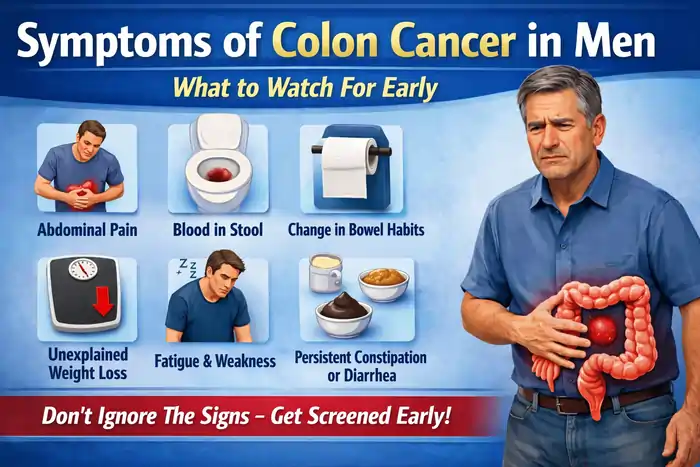
Colon cancer in men often begins with subtle symptoms such as changes in bowel habits, blood in the stool, unexplained weight loss, persistent abdominal discomfort, and fatigue. Early detection is critical, as colon cancer may not cause noticeable symptoms in its initial stages. Men over age 45 or those with risk factors should undergo regular screening, as recommended by public health bodies such as the Centers for Disease Control and Prevention (CDC) and the World Health Organization (WHO).
Introduction
Colon cancer—also known as colorectal cancer—is one of the most common cancers affecting men worldwide. It develops in the large intestine (colon) or rectum and often begins as small, noncancerous growths called polyps that can gradually become malignant over time.
According to the World Health Organization’s cancer fact sheet, colorectal cancer is among the top causes of cancer-related deaths globally, but early detection and screening significantly improve survival rates. WHO notes that lifestyle factors, diet, and delayed diagnosis contribute to many preventable cases.
In the United States, the CDC’s colorectal cancer statistics and overview show that colorectal cancer is one of the leading cancers diagnosed in men, yet screening and early intervention can dramatically reduce mortality.
Understanding the early signs of colon cancer in men—and acting on them promptly—can be life-saving.
What Is Colon Cancer?
Colon cancer occurs when abnormal cells grow uncontrollably in the lining of the colon or rectum. Over time, these cells can form tumors and spread to other parts of the body.
Research from the National Cancer Institute’s colorectal cancer resource explains that most colorectal cancers begin as adenomatous polyps, which may develop silently for years before symptoms appear.
Why Early Detection Matters
Colon cancer is highly treatable when detected early. However, many men ignore early warning signs or mistake them for minor digestive issues.
According to CDC data summarized in its section on the importance of screening, early-stage colon cancer can have a very high five-year survival rate, while late-stage diagnosis significantly lowers survival.
This makes awareness of early symptoms and timely screening critical.
Early Signs of Colon Cancer in Men
1. Changes in Bowel Habits
One of the earliest signs of colon cancer is a persistent change in bowel patterns.
This may include:
- diarrhea or constipation
- alternating bowel habits
- feeling that the bowel does not empty completely
Symptoms that last more than a few weeks should not be ignored, especially in men over 45 or those with other risk factors.
2. Blood in Stool (Rectal Bleeding)
Blood in stool is one of the most important warning signs.
It may appear as:
- bright red blood on the stool or toilet paper
- dark or tarry stools
While hemorrhoids can also cause bleeding, the CDC’s symptom guide for colorectal cancer emphasizes that any unexplained rectal bleeding should be evaluated promptly.
3. Unexplained Weight Loss
Sudden weight loss without dieting or increased exercise may indicate cancer.
Cancer cells can affect metabolism and appetite, leading to unintended weight loss over time.
4. Persistent Abdominal Pain or Cramping
Men with colon cancer may experience:
- bloating
- abdominal discomfort
- cramping
- gas pain
These symptoms may feel similar to common digestive issues but become persistent or progressively worse.
5. Fatigue and Weakness
Chronic fatigue may result from:
- blood loss over time (leading to anemia)
- cancer-related metabolic changes
The American Cancer Society’s information on colorectal cancer notes that anemia caused by slow bleeding in the colon can lead to significant fatigue and weakness.
6. Narrow or Pencil-Thin Stools
A change in stool shape—especially narrow or pencil-thin stools—may indicate a blockage or tumor narrowing the colon.
7. Feeling of Incomplete Bowel Movement
Some men feel like they still need to pass stool even after going to the bathroom.
This sensation of incomplete evacuation can indicate rectal or lower colon involvement and should be discussed with a healthcare provider if persistent.
Subtle Symptoms Men Often Ignore
Colon cancer can be silent or present with mild symptoms early on.
Commonly ignored signs include:
- mild digestive discomfort
- occasional constipation
- intermittent fatigue
- slight changes in stool pattern or appearance
These may seem harmless but require attention if they persist or appear together.
When Should You See a Doctor?
You should seek medical evaluation if you experience:
- blood in stool or rectal bleeding
- persistent bowel changes lasting more than a few weeks
- unexplained weight loss
- ongoing abdominal pain or cramping
- fatigue without a clear cause
Early consultation with a healthcare professional improves diagnosis and outcomes, as highlighted in the CDC’s colorectal cancer basics.
Colon Cancer vs Common Conditions
Many colon cancer symptoms overlap with less serious conditions. Getting proper evaluation is important.
Colon Cancer vs Hemorrhoids
- Both may cause rectal bleeding.
- Hemorrhoids often cause pain, itching, or discomfort around the anus.
- Colon cancer bleeding may be painless and associated with stool changes or anemia.
Colon Cancer vs IBS (Irritable Bowel Syndrome)
- IBS causes irregular bowel habits, bloating, and discomfort.
- Colon cancer may include additional symptoms such as blood in the stool, unexplained weight loss, or anemia.
Colon Cancer vs Constipation
- Occasional constipation is common and often diet or lifestyle-related.
- Persistent constipation combined with other symptoms like bleeding, pain, or weight loss may signal something more serious.
Risk Factors for Colon Cancer in Men
Several factors increase a man’s risk of colon cancer.
Age
Men over 45 have a higher risk. The CDC’s screening recommendations now advise starting routine screening at age 45 for average-risk adults.
Family History
A family history of colon or rectal cancer, especially in first-degree relatives, significantly increases risk.
Diet
High intake of:
- processed meats
- red meat
- low-fiber diets
has been linked to increased colorectal cancer risk in multiple epidemiologic studies summarized by organizations such as the American Cancer Society.
Lifestyle Factors
- smoking
- heavy alcohol consumption
- sedentary lifestyle
These are recognized by WHO and cancer societies as major contributors to colorectal and other cancers.
Obesity
Excess body weight is strongly associated with an increased risk of colorectal cancer, especially in men.
Screening for Colon Cancer
Screening is the most effective way to detect colon cancer early—often before symptoms appear.
Common Screening Methods
- colonoscopy
- stool-based tests (such as FIT or stool DNA tests)
- CT colonography
The CDC’s colorectal cancer screening guide recommends regular screening starting at age 45 for average-risk adults, with earlier or more frequent screening for those at higher risk.
Diagnosis of Colon Cancer
If screening or symptoms suggest cancer, doctors may use:
- colonoscopy with biopsy
- imaging tests such as CT or MRI scans
- blood tests (including tests for anemia and sometimes tumor markers)
The National Cancer Institute’s colorectal cancer overview notes that combining endoscopy and imaging helps determine the cancer’s stage and guide treatment decisions.
Treatment Options
Treatment depends on the cancer’s stage, location, and overall health status.
Surgery
- removal of tumors
- partial removal of affected sections of the colon or rectum
Chemotherapy
- uses drugs to kill cancer cells or prevent them from growing
Radiation Therapy
- often used for rectal cancer or in combination with other treatments
Advances in colorectal cancer treatment and multidisciplinary care, documented by NCI and the American Cancer Society, have significantly improved survival rates over recent decades.
Prevention Strategies
Prevention focuses on lifestyle choices and consistent screening.
Healthy Diet
- high in fiber
- rich in fruits and vegetables
- whole grains rather than refined grains
Regular Exercise
Aim for at least 150 minutes of moderate-intensity activity per week, as generally recommended by major health organizations.
Avoid Tobacco and Limit Alcohol
Both smoking and heavy alcohol use are linked to higher colorectal cancer risk.
Routine Screening
Routine screening remains the most effective preventive measure, catching polyps and early cancers before they progress, as emphasized by the CDC.
Colon Cancer in Younger Men
Rates of colorectal cancer are rising in adults under 50, including men.
Because screening is less common in this age group, symptoms may be overlooked or attributed to benign causes. Recent alerts from cancer organizations, including the American Cancer Society, stress the importance of not ignoring persistent symptoms in younger adults.
Psychological Impact
A cancer diagnosis can affect:
- mental health (anxiety, depression, fear)
- relationships
- work and daily life
Support, counseling, and survivorship resources from groups such as the American Cancer Society and patient support organizations are essential parts of comprehensive care.
Key Takeaways
- Colon cancer often begins with subtle symptoms.
- Blood in stool and persistent changes in bowel habits are major warning signs.
- Early detection and screening dramatically improve survival.
- Screening is generally recommended starting at age 45, or earlier for high-risk men.
- Lifestyle changes and regular checkups can help reduce risk.
FAQ | Symptoms of Colon Cancer in Men
- What is usually the first symptom of colon cancer in men?
A persistent change in bowel habits—such as ongoing diarrhea, constipation, or changes in stool appearance—or noticing blood in the stool are among the most common early signs. - Can colon cancer be present without any symptoms?
Yes. Early-stage colon cancer can be completely silent, which is why routine screening is so important even if you feel well. - Is blood in the stool always a sign of colon cancer?
No, conditions like hemorrhoids or anal fissures can also cause bleeding, but any unexplained blood in the stool should be evaluated by a doctor to rule out serious causes. - How long can colon cancer go unnoticed?
Polyps and early cancers can grow for years without obvious symptoms. This slow development is why guidelines emphasize preventive screening starting in mid-adulthood. - Does abdominal pain always mean something serious?
Not always, but persistent or worsening abdominal pain, especially combined with changes in bowel habits or weight loss, warrants medical evaluation. - Can fatigue alone be a sign of colon cancer?
Fatigue alone is common and often benign, but when it is persistent and combined with anemia or other symptoms like bleeding, it can be a warning sign. - At what age should men start screening for colon cancer?
Most major guidelines now recommend starting at age 45 for average-risk adults, with earlier screening for those with strong family histories or genetic syndromes. - Is colon cancer more common in men than women?
Colorectal cancer affects both, but incidence and mortality are slightly higher in men in many regions, according to global cancer statistics. - Can lifestyle changes really lower my risk?
Yes. A healthy diet, regular physical activity, maintaining a healthy weight, avoiding tobacco, and limiting alcohol can all reduce colorectal cancer risk. - If I have a family history, what should I do?
Tell your doctor. You may need to start screening earlier and repeat it more frequently than average-risk recommendations. - Are stool tests as good as colonoscopy?
Stool tests are effective screening tools when done regularly, but colonoscopy allows direct visualization and removal of polyps, making it both diagnostic and preventive. - How fast does colon cancer spread?
Growth rates vary. Some cancers progress slowly over years; others may grow more quickly. This variability is another reason consistent screening is important. - Can younger men in their 30s or early 40s get colon cancer?
Yes. While it is less common, cases in younger adults are increasing, so persistent symptoms should not be dismissed because of age alone. - Does a normal colonoscopy mean I am safe long-term?
A normal colonoscopy greatly reduces risk for several years, but you still need repeat screening at intervals recommended by your doctor, typically every 10 years for average risk. - What should I do if I notice symptoms but feel embarrassed to talk about them?
Doctors see these issues every day. It is essential to overcome discomfort and discuss symptoms honestly—early conversation can lead to early diagnosis and better outcomes.
Medical Disclaimer
This article is intended for educational purposes only and should not replace professional medical advice, diagnosis, or treatment. Always consult a qualified healthcare professional for personalized medical guidance regarding colon cancer symptoms or any health concerns.
Written by: Eden Grace Ramos, RN
Medical Resources
This article integrates evidence-based medical guidance from:
- the World Health Organization (WHO) cancer fact sheets
- the Centers for Disease Control and Prevention (CDC) colorectal cancer resources
- the National Institutes of Health (NIH) and National Cancer Institute (NCI) colorectal cancer pages
- the American Cancer Society’s colorectal cancer information
These organizations provide authoritative information on colorectal cancer prevention, symptoms, screening, and treatment.