
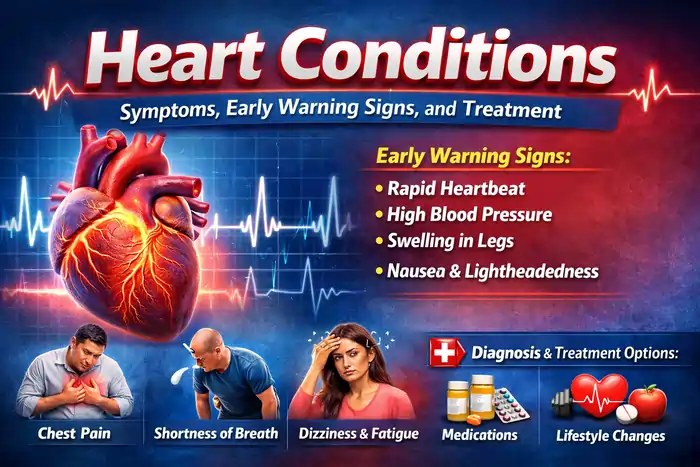
Heart conditions—also called cardiovascular diseases (CVD)—are among the leading causes of illness and death worldwide. These disorders affect the heart and blood vessels and can interfere with the body’s ability to circulate oxygen‑rich blood efficiently. Early recognition of symptoms and prompt medical intervention can significantly reduce complications and improve survival, a point underscored in the World Health Organization’s global cardiovascular disease fact sheet on WHO.
According to the World Health Organization’s cardiovascular disease overview, cardiovascular diseases remain the leading cause of death globally, responsible for an estimated 17.9 million deaths each year, representing roughly one‑third of all deaths worldwide, as detailed in the WHO cardiovascular diseases overview on WHO. Public health experts emphasize that many of these deaths are linked to preventable risk factors such as smoking, unhealthy diet, hypertension, diabetes, and physical inactivity, and WHO’s prevention materials highlight that addressing these risks through lifestyle changes and public‑health policies could prevent millions of premature deaths each year.
In the United States, the Centers for Disease Control and Prevention’s heart disease facts program similarly reports that heart disease remains the leading cause of death, affecting hundreds of thousands of Americans each year, as described on CDC. However, medical research shows that early detection and management of cardiovascular risk factors—such as controlling blood pressure and cholesterol, stopping smoking, and treating diabetes—can dramatically reduce complications, according to CDC’s prevention guidance on CDC. Understanding heart conditions, recognizing early warning signs, and knowing when to seek medical attention are essential steps in protecting cardiovascular health.
This guide explains how the heart works, common heart conditions, early symptoms, diagnostic methods, and modern treatment options used by healthcare professionals.
How the Heart Works
The heart is a muscular organ responsible for pumping blood throughout the body. It functions as part of the cardiovascular system, which includes the heart, arteries, veins, and capillaries.
The heart contains four chambers:
- right atrium
- right ventricle
- left atrium
- left ventricle
These chambers work together to maintain blood circulation through two main pathways.
- Pulmonary circulation moves blood between the heart and lungs where oxygen exchange occurs.
- Systemic circulation pumps oxygenated blood from the heart to organs and tissues throughout the body.
The National Heart, Lung, and Blood Institute (NHLBI)—a research institute within the National Institutes of Health (NIH)—explains in its How the Heart Works and Cardiovascular System overviews that healthy circulation depends on coordinated electrical impulses, strong heart muscle contractions, properly functioning valves, and unobstructed blood vessels, as outlined on NHLBI. When disruptions occur in these systems, cardiovascular disease may develop.
Common Symptoms of Heart Conditions
Heart disease symptoms can vary depending on the specific disorder and severity of the condition.
Common cardiovascular symptoms include:
- chest pain or pressure
- shortness of breath
- irregular heartbeat
- fatigue
- dizziness or fainting
- swelling in the legs or ankles
- palpitations
- persistent coughing
- nausea or cold sweats
Clinical guidance from the American Heart Association’s warning signs of heart attack and heart disease resources notes that some heart conditions develop gradually and may produce mild or subtle symptoms early on, as described on American Heart Association. In certain cases, cardiovascular disease may remain undetected until a serious event such as a heart attack occurs, which is why the AHA encourages early evaluation of new or unusual symptoms.
Common Types of Heart Conditions
Several types of cardiovascular disorders affect the heart and circulatory system.
Coronary Artery Disease
Coronary artery disease (CAD) occurs when the arteries supplying blood to the heart become narrowed or blocked due to plaque buildup.
Plaque is composed of cholesterol, fatty deposits, inflammatory cells, and calcium that accumulate along artery walls.
Symptoms may include:
- chest discomfort or angina
- shortness of breath
- fatigue during physical activity
The CDC coronary artery disease pages explain that reduced blood flow to the heart muscle can lead to heart attack if a coronary artery becomes completely blocked, and they outline how CAD remains the most common type of heart disease in the U.S. on CDC.
Heart Attack
A heart attack, also known as myocardial infarction, occurs when blood flow to a portion of the heart muscle is suddenly blocked.
Symptoms may include:
- chest pressure or squeezing sensation
- pain radiating to the arm, jaw, neck, or back
- sweating
- nausea
- shortness of breath
The American Heart Association heart attack and emergency cardiac care guidelines emphasize that rapid treatment during a heart attack—especially calling emergency services immediately—can preserve heart muscle and significantly improve survival outcomes, as described on American Heart Association. CDC’s heart attack symptom pages echo this urgency and explain what to watch for on CDC.
Arrhythmias
Arrhythmias are abnormal heart rhythms caused by problems with the heart’s electrical signaling system.
Common symptoms include:
- palpitations
- dizziness
- fainting
- irregular heartbeat
Some arrhythmias are harmless, but others can increase the risk of stroke or sudden cardiac arrest. NHLBI’s Arrhythmia information explains that arrhythmias such as atrial fibrillation, supraventricular tachycardia, and ventricular arrhythmias may require medications, catheter ablation, or implantable devices, as outlined on NHLBI.
You can learn more in our detailed guide:
Arrhythmia Symptoms and Causes (MedEduHub).
Heart Failure
Heart failure occurs when the heart is unable to pump blood effectively enough to meet the body’s needs.
Symptoms may include:
- shortness of breath
- swelling in the legs or ankles
- fatigue
- persistent cough or wheezing
The NIH heart failure research program, coordinated by the National Heart, Lung, and Blood Institute, explains in its Heart Failure patient education pages that heart failure often develops gradually due to conditions such as coronary artery disease, high blood pressure, or cardiomyopathy, and it describes how guideline‑directed therapy can improve quality of life on NHLBI.
You can explore more in our guide:
Early Signs of Heart Failure (MedEduHub).
Hypertension (High Blood Pressure)
High blood pressure is one of the most significant risk factors for cardiovascular disease.
Hypertension occurs when the force of blood against artery walls remains consistently elevated.
The CDC High Blood Pressure pages explain that many individuals with high blood pressure do not experience symptoms, which is why the condition is often called the “silent killer,” and they highlight the need for regular screening and management on CDC. Untreated hypertension increases the risk of:
- heart attack
- stroke
- kidney disease
- heart failure
Risk Factors for Heart Disease
Heart disease can develop due to a combination of lifestyle, genetic, and environmental factors.
Major cardiovascular risk factors include:
- high blood pressure
- high cholesterol
- smoking
- diabetes
- obesity
- sedentary lifestyle
- poor diet
- chronic stress
- family history of heart disease
The World Health Organization cardiovascular risk and prevention materials emphasize that many cardiovascular risk factors are preventable through lifestyle changes and public‑health interventions, noting in its NCD prevention frameworks that reducing tobacco use, improving diets, increasing physical activity, and controlling blood pressure and diabetes are key strategies on WHO.
The Role of Cholesterol in Cardiovascular Disease
Cholesterol plays an important role in heart disease development.
Excess low‑density lipoprotein (LDL) cholesterol can accumulate in artery walls and form plaques.
Over time, this process—known as atherosclerosis—can narrow arteries and restrict blood flow.
The American Heart Association cholesterol management guidance recommends regular cholesterol screening and maintaining healthy levels through diet, exercise, and medications when necessary, explaining how lowering LDL cholesterol helps reduce the risk of heart attack and stroke on American Heart Association.
Diagnosis of Heart Conditions
Doctors use several diagnostic tests to evaluate cardiovascular disease.
Common diagnostic tools include:
- blood pressure monitoring
- cholesterol testing
- electrocardiogram (ECG)
- echocardiogram
- cardiac stress testing
- CT scan or MRI imaging
- coronary angiography
The NHLBI cardiac tests and diagnostic procedures resources explain that these tools help doctors detect abnormalities in heart structure, rhythm, and blood flow—for example, using ECGs to identify rhythm problems, echocardiograms to assess pumping function and valves, and coronary angiography to visualize blockages—as detailed on NHLBI. Early diagnosis allows healthcare providers to begin treatment before serious complications occur.
Treatment Options for Heart Conditions
Treatment depends on the specific cardiovascular condition and severity.
Lifestyle Changes
Lifestyle modification plays a central role in heart disease prevention and treatment.
Examples include:
- eating a heart‑healthy diet rich in fruits and vegetables
- maintaining regular physical activity
- quitting smoking
- managing stress
- maintaining healthy body weight
The American Heart Association physical activity recommendations encourage adults to engage in at least 150 minutes of moderate aerobic exercise per week, along with muscle‑strengthening activities on two or more days, to support cardiovascular health, as outlined on American Heart Association. AHA and NHLBI also recommend eating patterns such as the DASH or Mediterranean diet for blood pressure and cholesterol control.
Medications
Doctors may prescribe medications such as:
- blood pressure medications
- cholesterol‑lowering drugs (statins)
- anticoagulants
- beta blockers
- antiarrhythmic medications
Medication therapy helps control cardiovascular risk factors and prevent complications. Evidence summarized by NHLBI and AHA shows that these medications, when used appropriately, reduce the risk of heart attack, stroke, and progression of heart failure, as discussed in treatment overviews on NHLBI and American Heart Association.
Medical Procedures
Some heart conditions require interventional procedures.
Examples include:
- coronary angioplasty with stent placement
- coronary artery bypass surgery
- pacemaker implantation
- implantable cardioverter‑defibrillator (ICD)
These procedures can restore blood flow, regulate heart rhythm, or support heart function, and they are described in patient resources from organizations such as the AHA and American College of Cardiology on American Heart Association and ACC.
When Chest Pain Is a Medical Emergency
Chest pain is one of the most important warning signs of heart disease.
Emergency symptoms may include:
- severe chest pressure
- pain spreading to the arm or jaw
- difficulty breathing
- sweating
- dizziness
The CDC heart attack symptoms awareness program emphasizes that individuals experiencing these symptoms should seek emergency medical care immediately by calling emergency services, as prompt treatment can reduce damage to the heart muscle on CDC. The American Heart Association’s emergency‑response guidance reinforces that “time is muscle” and urges rapid action when heart attack signs appear on American Heart Association.
Learn more in our guide:
Chest Pain: When It’s an Emergency (MedEduHub).
Preventing Cardiovascular Disease
Preventive healthcare strategies can significantly reduce cardiovascular risk.
Healthy habits include:
- balanced diet
- regular exercise
- maintaining healthy weight
- avoiding tobacco
- controlling blood pressure and cholesterol
The WHO global cardiovascular disease prevention strategy, part of its broader noncommunicable disease action plan, highlights that population‑wide lifestyle improvements and better access to essential medicines could prevent millions of deaths annually, as explained on WHO. AHA’s Life’s Essential 8 framework similarly provides simple targets—like managing blood pressure, cholesterol, blood sugar, diet, activity, and sleep—for individuals to follow on American Heart Association.
Key Takeaways | Heart Conditions
Heart conditions remain a major global health concern, but many cases can be prevented or effectively treated with early detection and proper care. Recognizing symptoms such as chest pain, shortness of breath, fatigue, or irregular heartbeat can help individuals seek medical attention before complications occur.
Ongoing research supported by organizations such as the World Health Organization, Centers for Disease Control and Prevention, National Institutes of Health, and American Heart Association continues to improve prevention strategies, diagnostic tools, and treatments for cardiovascular disease. These organizations provide evidence‑based recommendations on risk‑factor control, emergency care, and long‑term management on WHO, CDC, NHLBI, and American Heart Association.
FAQ | Early Signs of Heart Conditions
What are common heart conditions?
Common heart conditions include coronary artery disease, arrhythmias, heart failure, hypertension, and heart valve disease, as summarized in patient resources from NHLBI, CDC, and AHA on NHLBI, CDC, and American Heart Association.
What are early signs of heart disease?
Early symptoms may include chest discomfort, fatigue, shortness of breath, palpitations, and swelling in the legs or ankles. AHA symptom guides emphasize that subtle or “atypical” symptoms—especially in women, older adults, and people with diabetes—also warrant attention, as described on American Heart Association.
When should chest pain be treated as an emergency?
Chest pain should be treated as an emergency if it is severe, persistent, or accompanied by shortness of breath, dizziness, nausea, or pain radiating to the arm or jaw, according to CDC and AHA heart attack warning‑sign guidance on CDC and American Heart Association.
Can heart disease be prevented?
Many heart conditions can be prevented through healthy lifestyle habits such as exercise, balanced nutrition, smoking cessation, and regular medical checkups. WHO and AHA prevention resources show that improving diet, activity, and tobacco exposure can significantly lower lifetime cardiovascular risk on WHO and American Heart Association.
Medical Disclaimer
This article is intended for educational purposes only and should not replace professional medical advice, diagnosis, or treatment. Always consult a qualified healthcare professional for personalized medical guidance regarding heart conditions.
Written by: Eden Grace Ramos, RN
Medical Resources
This article references evidence-based medical information from internationally recognized health organizations. Clinical explanations of cardiovascular disease align with research published by the National Heart, Lung, and Blood Institute (NHLBI) within the National Institutes of Health (NIH). Public health statistics on heart disease and prevention reflect guidance from the Centers for Disease Control and Prevention (CDC). Cardiovascular health recommendations referenced in this guide align with clinical resources from the American Heart Association (AHA). Global cardiovascular disease statistics are informed by reports from the World Health Organization (WHO).