
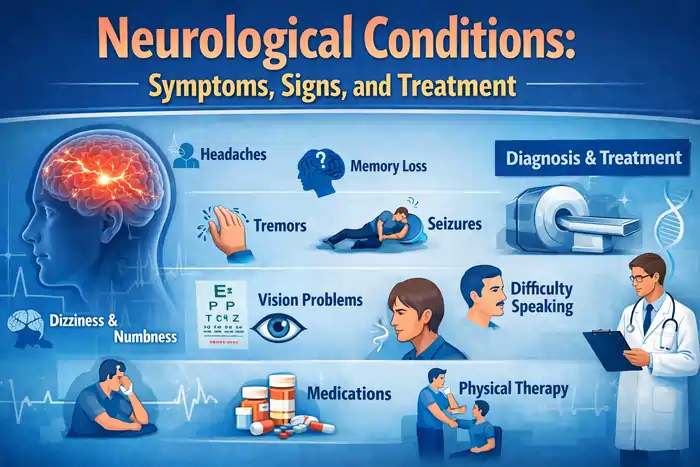
Neurological conditions affect the brain, spinal cord, and nerves that control essential body functions such as movement, sensation, coordination, cognition, and autonomic processes. Disorders of the nervous system can range from relatively common issues such as migraines or nerve compression to life‑threatening emergencies like stroke, meningitis, or traumatic brain injury. Because the nervous system controls nearly every function in the body, neurological diseases can produce a wide variety of symptoms affecting physical, cognitive, and emotional health, as highlighted in general neurology overviews from the National Institute of Neurological Disorders and Stroke (NINDS) on NINDS
According to the World Health Organization’s neurological disorders program, neurological diseases represent one of the leading causes of disability worldwide, with conditions such as stroke, epilepsy, migraines, dementia, and Parkinson’s disease affecting more than one billion people globally, as summarized in the WHO report Neurological disorders: public health challenges on WHO. These findings are highlighted in the WHO’s global neurological health reports, which emphasize the increasing burden of brain and nervous system disorders across both developed and developing countries.
In the United States, the National Institute of Neurological Disorders and Stroke (NINDS)—part of the National Institutes of Health—reports that neurological diseases are among the leading causes of long‑term disability, affecting millions of individuals each year through conditions such as stroke, epilepsy, neuropathy, multiple sclerosis, and traumatic brain injury, as outlined in NINDS’ Disorders A–Z summaries on NINDS. Public health agencies such as the Centers for Disease Control and Prevention also note in their stroke and traumatic brain injury resources that early recognition of neurological symptoms can dramatically improve treatment outcomes, particularly in emergencies like stroke where rapid treatment can prevent permanent brain damage, as described on CDC.
Understanding neurological symptoms, recognizing warning signs, and seeking timely medical care are essential for protecting brain health and preventing serious complications.
Understanding the Nervous System
The nervous system functions as the body’s communication network, transmitting signals between the brain, spinal cord, and the rest of the body. It allows humans to think, move, feel sensations, regulate breathing and heart rate, and coordinate complex physical and cognitive functions.
The nervous system consists of two primary components.
Central Nervous System (CNS)
The central nervous system includes:
- the brain
- the spinal cord
These structures process information and control voluntary and involuntary body functions.
Peripheral Nervous System (PNS)
The peripheral nervous system includes the network of nerves that branch from the spinal cord and brain to the rest of the body. These nerves control:
- sensory perception
- muscle movement
- reflex responses
- autonomic functions such as digestion and heart rate
Research supported by NINDS explains that communication within the nervous system occurs through specialized nerve cells called neurons, which transmit electrical impulses and chemical neurotransmitters throughout the body, as described in NINDS’ Brain Basics: The Life and Death of a Neuron on NINDS. When disease, injury, inflammation, or degeneration disrupts this communication system, neurological symptoms may develop.
Common Symptoms of Neurological Conditions
Neurological disorders can produce a wide range of symptoms depending on the part of the nervous system affected.
Common neurological symptoms include:
- persistent headaches
- dizziness or vertigo
- seizures
- memory problems
- confusion
- weakness or paralysis
- numbness or tingling
- tremors
- coordination problems
- speech difficulty
- swallowing problems
- vision disturbances
- chronic fatigue
- nerve pain
- muscle stiffness
- balance problems
According to neurological symptom guidance published within CDC’s stroke awareness and brain injury education materials, sudden neurological symptoms—such as weakness, confusion, trouble speaking, or vision changes—may indicate medical emergencies like stroke and require immediate medical attention, as emphasized on CDC.
Common Neurological Conditions
Neurological disorders include a wide range of diseases affecting the brain, spinal cord, and nerves.
Stroke
A stroke occurs when blood flow to the brain is interrupted, preventing oxygen and nutrients from reaching brain cells.
There are two major types:
- ischemic stroke, caused by blocked blood vessels
- hemorrhagic stroke, caused by bleeding in the brain
Symptoms may include:
- facial drooping
- arm weakness
- difficulty speaking
- sudden confusion
- vision changes
- loss of coordination
The Centers for Disease Control and Prevention stroke statistics program identifies stroke as one of the leading causes of long‑term disability and death in the United States and globally, as detailed on CDC. Brain cells begin dying within minutes when oxygen supply is interrupted, which is why rapid emergency treatment is critical and why campaigns stress calling emergency services immediately.
You can learn more in our guide:
Stroke Warning Signs (FAST Method) on MedEduHub, which complements the FAST education on CDC.
Migraine and Headache Disorders
Headaches are one of the most common neurological complaints. While occasional headaches are common, chronic or recurrent headaches may indicate migraine or tension‑type headaches.
Migraine
Migraine headaches often involve:
- throbbing head pain
- nausea
- sensitivity to light and sound
- visual disturbances known as aura
The NINDS migraine research program explains that migraines involve complex changes in brain signaling pathways, neurotransmitters, and blood vessel activity, as discussed in Migraine Information Page on NINDS.
Tension Headaches
Tension headaches are usually characterized by:
- mild to moderate pressure around the head
- tightness in neck and scalp muscles
- fatigue or stress‑related pain
You can explore the differences in our MedEduHub guide:
Migraine vs Tension Headache, which parallels distinctions described in NINDS’ headache overviews.
Peripheral Neuropathy
Peripheral neuropathy occurs when nerves outside the brain and spinal cord become damaged.
Common causes include:
- diabetes
- vitamin deficiencies
- autoimmune diseases
- infections
- medication side effects
- toxic exposures
Symptoms may include:
- numbness
- tingling
- burning nerve pain
- muscle weakness
- coordination problems
According to the NINDS Peripheral Neuropathy overview, nerve damage often begins in the hands or feet and may gradually worsen if the underlying cause is not treated, as outlined on NINDS.
You can read more in our MedEduHub guide:
Peripheral Neuropathy Explained.
Epilepsy and Seizure Disorders
Epilepsy is a neurological disorder characterized by recurrent seizures caused by abnormal electrical activity in the brain.
Symptoms may include:
- uncontrolled movements
- loss of awareness
- staring spells
- muscle stiffness
- confusion after seizures
The World Health Organization epilepsy fact sheet reports that approximately 50 million people worldwide live with epilepsy, making it one of the most common neurological disorders globally, and notes that with proper treatment up to 70% of people with epilepsy could live seizure‑free on WHO.
Neurodegenerative Diseases
Neurodegenerative disorders involve progressive damage to nerve cells in the brain.
Examples include:
- Alzheimer’s disease
- Parkinson’s disease
- Huntington’s disease
- amyotrophic lateral sclerosis (ALS)
The National Institute on Aging (NIA), a branch of the NIH, notes in its Neurodegenerative Diseases and Alzheimer’s disease resources that these conditions are becoming more common as populations age worldwide and remain a major cause of disability and dependency among older adults, as described on NIA.
Causes of Neurological Disorders
Neurological diseases can develop due to many factors.
Common causes include:
- genetic disorders
- infections affecting the nervous system
- autoimmune diseases
- traumatic brain injury
- stroke
- tumors
- toxic exposures
- metabolic disorders
- vitamin deficiencies
The World Health Organization Brain Health and neurological‑disorder initiatives highlight that lifestyle factors such as smoking, poor diet, physical inactivity, and uncontrolled hypertension may also increase the risk of neurological disease, particularly stroke and dementia, as outlined in WHO’s Brain Health: A New Global Priority on WHO.
Diagnosis of Neurological Conditions
Healthcare providers use several diagnostic tools to evaluate neurological disorders.
Common neurological tests include:
- neurological physical examination
- MRI brain imaging
- CT scans
- electroencephalogram (EEG)
- nerve conduction studies
- electromyography (EMG)
- spinal fluid testing
- blood tests
The NINDS diagnostic and imaging information explains that modern technologies such as MRI, CT, and advanced neurophysiologic testing allow physicians to detect structural brain abnormalities, bleeding, tumors, and nerve damage more accurately than ever before, as described in NINDS’ Brain Imaging and Neurological Diagnostic Tests pages on NINDS.
Treatment Options for Neurological Disorders
Treatment depends on the specific neurological condition.
Medications
Doctors may prescribe:
- anticonvulsants for seizures
- migraine medications
- nerve pain treatments
- dopamine medications for Parkinson’s disease
- anti‑inflammatory or immunomodulating drugs
NINDS and other NIH institutes describe how these medications are used in disease‑specific pages (for example, epilepsy, Parkinson’s disease, and multiple sclerosis) on NINDS.
Rehabilitation Therapy
Neurological rehabilitation may include:
- physical therapy
- occupational therapy
- speech therapy
- cognitive therapy
NINDS’ Rehabilitation and stroke‑recovery resources on NINDS emphasize that multidisciplinary rehabilitation can help patients regain function, adapt to limitations, and improve quality of life after neurological injury.
Surgical Treatments
Some neurological disorders require surgical intervention, including:
- brain tumor surgery
- spinal decompression surgery
- epilepsy surgery
- deep brain stimulation
Advances in neurosurgery and neuroimaging have significantly improved treatment outcomes for many neurological conditions, as detailed in educational materials from academic neurosurgery centers and NINDS‑supported clinical‑trials summaries.
Warning Signs of Serious Neurological Disease
Certain neurological symptoms require urgent medical attention.
Emergency warning signs include:
- sudden weakness or paralysis
- severe headache with no known cause
- confusion or difficulty speaking
- vision loss
- seizures
- loss of consciousness
- difficulty walking or balance problems
The CDC stroke awareness campaign recommends remembering the FAST method—Face drooping, Arm weakness, Speech difficulty, Time to call emergency services—as a simple way to recognize stroke symptoms and act quickly on CDC. Similar emergency‑response guidance is echoed in NINDS’ Know Stroke materials.
Preventing Neurological Disorders
Preventive measures can help reduce the risk of some neurological diseases.
Healthy habits include:
- controlling blood pressure
- managing diabetes
- maintaining regular physical activity
- eating a balanced diet
- avoiding smoking
- limiting alcohol use
- preventing head injuries (for example, seatbelts and helmets)
The World Health Organization global brain health initiative highlights that lifestyle improvements and preventive healthcare strategies—such as controlling cardiovascular risk factors, reducing head trauma, and promoting brain‑healthy behaviors—can reduce the burden of stroke, dementia, and other neurological disorders worldwide, as discussed on WHO.
Key Takeaways
Neurological disorders affect millions of people worldwide and can interfere with essential functions such as movement, sensation, memory, and coordination. Recognizing symptoms early and seeking medical evaluation when warning signs appear can help prevent serious complications.
Research supported by organizations such as the World Health Organization, Centers for Disease Control and Prevention, and National Institutes of Health continues to improve diagnosis, treatment, and prevention strategies for neurological diseases, as reflected in WHO neurological‑health reports, CDC stroke and brain‑injury programs, and NINDS/NIA research portfolios on WHO, CDC, and NINDS.
FAQ | Neurological Conditions
What are common neurological disorders?
Common neurological disorders include stroke, migraines, epilepsy, peripheral neuropathy, Parkinson’s disease, Alzheimer’s disease, and multiple sclerosis, as listed in NINDS’ Disorders A–Z overview on NINDS.
What are early signs of neurological problems?
Early symptoms may include persistent headaches, numbness, weakness, memory problems, dizziness, or speech difficulties, similar to warning signs described in CDC’s stroke and neurological‑symptom education on CDC.
When should I see a doctor for neurological symptoms?
You should seek medical care if symptoms include sudden weakness, seizures, severe headaches, confusion, or difficulty speaking, as urgent evaluation is recommended in stroke and seizure guidance from CDC and NINDS on CDC and NINDS.
What causes nerve damage?
Nerve damage can result from diabetes, infections, autoimmune diseases, trauma, vitamin deficiencies, or exposure to toxins, as explained in NINDS’ Peripheral Neuropathy and related nerve‑disorder pages on NINDS.
Medical Disclaimer
This article is intended for educational purposes only and should not replace professional medical advice, diagnosis, or treatment. Always consult a qualified healthcare professional for personalized medical guidance regarding neurological symptoms or conditions.
Written by: Eden Grace Ramos, RN
Medical Resources
Clinical explanations in this guide align with research from the National Institute of Neurological Disorders and Stroke (NINDS) within the National Institutes of Health (NIH). Public health data on stroke and neurological disease prevention reflect resources from the Centers for Disease Control and Prevention (CDC). Global neurological disease statistics referenced in this article are informed by reports from the World Health Organization (WHO).