
Bleeding is one of the most common medical emergencies, ranging from minor cuts to life-threatening hemorrhage. Knowing how to respond quickly and effectively can prevent complications, reduce infection risk, and in severe cases, save lives. First aid for bleeding focuses on controlling blood loss, protecting the wound, and recognizing when urgent medical care is needed.
According to the World Health Organization (WHO) emergency and injury prevention programs, uncontrolled bleeding is a major cause of preventable death, particularly in trauma situations. WHO emphasizes that early bleeding control—especially within the first few minutes—can significantly improve survival outcomes. Similarly, the Centers for Disease Control and Prevention (CDC) injury prevention resources highlight that prompt first aid reduces complications such as infection, shock, and long-term tissue damage. Guidance from the American Heart Association (AHA) first aid guidelines reinforces that anyone can perform life-saving bleeding control using simple techniques like direct pressure and proper wound care.
Understanding Bleeding and Why It Matters
Bleeding occurs when blood vessels are damaged, allowing blood to escape from the circulatory system. The severity depends on the type of vessel involved, wound depth, and overall health. Research supported by the National Institutes of Health (NIH) trauma and emergency care studies shows that severe bleeding—especially arterial hemorrhage—can become life-threatening within minutes without intervention.
Types of Bleeding
External Bleeding
Visible bleeding from cuts or injuries.
Internal Bleeding
Bleeding inside the body, often harder to detect. According to NIH clinical resources on internal bleeding, internal bleeding may not be obvious but can rapidly worsen without treatment.
👉 Learn more in:
Signs of Internal Bleeding
Arterial Bleeding
- bright red, spurting blood
- requires immediate action
Venous Bleeding
- dark red, steady flow
Capillary Bleeding
- slow, oozing bleeding
Common Causes of Bleeding Injuries
Bleeding injuries can happen in everyday situations.
Common Causes
- cuts and lacerations
- falls
- road accidents
- sharp objects
- sports injuries
The CDC fall and injury statistics identify accidents as a leading cause of emergency visits, many involving bleeding wounds.
First Aid Principles for Bleeding
The main goals are:
- stop bleeding
- prevent infection
- protect the wound
- maintain circulation
The AHA first aid science guidelines emphasize that immediate pressure is the most effective first response.
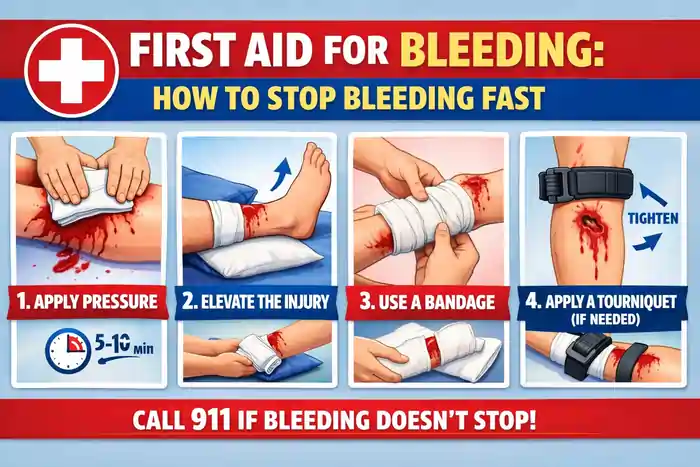
Step-by-Step: How to Stop Bleeding Fast
Step 1: Assess the Situation
- identify bleeding source
- check responsiveness
- evaluate severity
Emergency care models in WHO trauma guidelines stress rapid assessment as the first step in saving lives.
Step 2: Apply Direct Pressure
- use clean cloth or gauze
- press firmly
- do not release pressure
The CDC wound care and infection prevention guidance highlights that continuous pressure is essential for clot formation.
Step 3: Elevate the Injury (If Safe)
- raise above heart level
- reduces blood flow
Step 4: Apply a Dressing
- secure with bandage
- do not remove soaked dressing
WHO surgical safety materials emphasize proper wound coverage to prevent contamination.
Step 5: Use a Tourniquet (Severe Cases)
- apply above wound
- tighten until bleeding stops
The WHO trauma care guidelines support tourniquet use in life-threatening bleeding when pressure alone fails.
👉 Learn more in:
How to Control Severe Bleeding
First Aid for Minor Cuts
Minor wounds can be treated at home.
Steps for Minor Wounds
- rinse with clean water
- apply antiseptic
- cover with bandage
The CDC infection prevention guidance emphasizes proper cleaning to reduce infection risk.
When a Cut Needs Medical Attention
Some wounds require professional care.
👉 Learn more in:
When a Cut Needs Stitches
Warning Signs
- deep wounds
- heavy bleeding
- exposed tissue
Clinical recommendations from NIH-supported emergency care resources show that untreated wounds increase infection and complication risks.
Recognizing Severe Bleeding
Severe bleeding requires urgent care.
Signs of Severe Bleeding
- rapid blood loss
- soaking bandages
- pale skin
- dizziness
The WHO emergency care framework identifies hemorrhage as a leading cause of preventable death.
Internal Bleeding: A Hidden Emergency
Internal bleeding may not be visible.
👉 Learn more in:
Signs of Internal Bleeding
Symptoms of Internal Bleeding
- abdominal pain
- confusion
- weakness
NIH trauma data on internal bleeding indicates delayed recognition significantly increases mortality.
Preventing Shock
Shock is a life-threatening condition.
Symptoms of Shock
- cold, clammy skin
- rapid pulse
- confusion
First Aid for Shock
- lay person flat
- keep warm
The AHA shock first aid guidance highlights early intervention as critical.
Special Situations
Nosebleeds
- sit upright
- lean forward
The CDC bleeding disorders guidance recommends avoiding tilting the head back.
Infection Prevention
Prevent infection by:
- cleaning wound
- using sterile dressings
CDC infection control programs emphasize hygiene as the most effective prevention strategy.
High-Risk Individuals
Higher bleeding risk:
- elderly
- blood thinner users
- clotting disorders
NIH and CDC bleeding disorder resources show these groups require closer monitoring.
Medical Treatment
Treatment may include:
- sutures
- IV fluids
- transfusion
WHO trauma systems research shows improved survival with early intervention.
Prevention Tips
- wear protective gear
- use caution with sharp tools
The CDC injury prevention programs emphasize safety awareness.
Key Takeaways
Fast response saves lives. Applying pressure, recognizing severity, and seeking help are critical. Evidence from WHO, CDC, NIH, and AHA consistently supports early intervention as the most important factor.
FAQ | First Aid for Bleeding
How do you stop bleeding fast?
Apply firm, continuous pressure.
When should I seek emergency help?
If bleeding is severe or does not stop.
Are tourniquets safe?
Yes, for severe bleeding when needed.
What are danger signs?
Heavy bleeding, dizziness, confusion.
Medical Disclaimer
This article is for educational purposes only and does not replace professional medical advice. Always consult a qualified healthcare provider.
Written by: Eden Grace Ramos, RN
Medical Resources
This article integrates guidance from World Health Organization (WHO) emergency care and trauma frameworks, Centers for Disease Control and Prevention (CDC) injury and infection prevention resources, National Institutes of Health (NIH) trauma and first aid education, and American Heart Association (AHA) first aid and basic life support guidelines.