
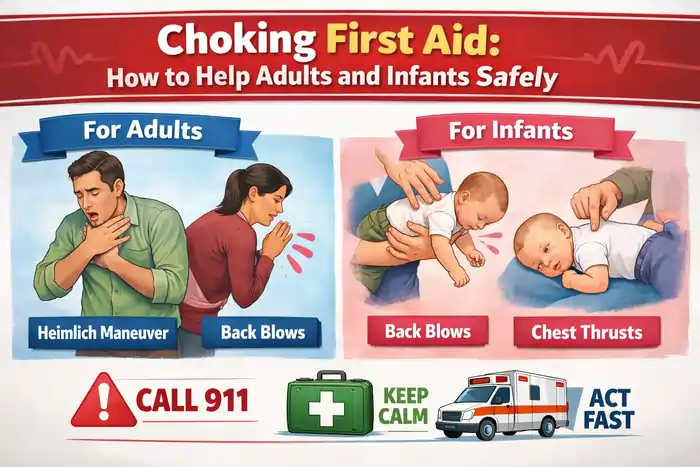
Choking is a life-threatening emergency that occurs when an object blocks the airway, preventing normal breathing. It can happen suddenly during eating, drinking, or swallowing small objects and can affect both adults and infants. Without immediate intervention, choking can lead to oxygen deprivation, brain injury, or death within minutes.
According to the World Health Organization’s injury prevention initiatives, airway obstruction is a significant cause of accidental death globally, particularly among young children and older adults. The Centers for Disease Control and Prevention (CDC) choking and suffocation data also show that choking is one of the leading causes of unintentional injury deaths in children under five, highlighting the importance of prevention and rapid response. Clinical guidance from the American Heart Association (AHA) Basic Life Support guidelines emphasizes that immediate first aid—such as abdominal thrusts or back blows—can effectively clear airway obstruction and save lives.
Understanding how to recognize choking, perform first aid techniques correctly, and know when to seek emergency help is essential for everyone. This guide provides a comprehensive overview of choking first aid for adults and infants, including prevention strategies and emergency response steps.
Understanding Choking and Airway Obstruction
Choking occurs when a foreign object blocks the airway, preventing air from reaching the lungs. The airway includes the mouth, throat (pharynx), and windpipe (trachea). When obstructed, oxygen cannot reach vital organs, especially the brain.
Research supported by the National Institutes of Health (NIH) on hypoxia and brain injury explains that brain cells can begin to suffer irreversible damage within 4–6 minutes without oxygen, which is why choking is considered a time-critical emergency.
Causes of Choking
Choking can occur in various everyday situations.
Common Causes in Adults
- eating too quickly
- poorly chewed food
- alcohol impairment
- dental problems
- swallowing disorders
Common Causes in Infants and Children
- small toys or objects
- food items like nuts, grapes, or candy
- lack of developed chewing skills
The CDC choking prevention guidance for infants and toddlers emphasizes that children are especially vulnerable due to their smaller airway size and natural tendency to explore objects by putting them in their mouths.
Signs and Symptoms of Choking
Recognizing choking quickly is critical.
Mild (Partial Airway Obstruction)
- coughing forcefully
- difficulty speaking
- wheezing
Encourage coughing, as this is the body’s natural mechanism to clear the airway.
Severe (Complete Airway Obstruction)
- inability to speak or cry
- silent attempts to cough
- clutching the throat (universal choking sign)
- bluish lips or face (cyanosis)
- loss of consciousness
The AHA Basic Life Support updates on choking response stress that severe choking requires immediate action, as delayed intervention increases the risk of brain injury and death.
First Aid for Choking in Adults
When an adult is choking and cannot breathe, act immediately.
👉 Learn more in:
Heimlich Maneuver for Adults
Step 1: Assess the Situation
- ask: “Are you choking?”
- if they cannot respond or speak, begin intervention
Step 2: Encourage Coughing (If Possible)
If the person can cough, allow them to continue.
Step 3: Perform Abdominal Thrusts (Heimlich Maneuver)
- stand behind the person
- wrap arms around the waist
- place a fist above the navel
- thrust inward and upward
Repeat until the airway is cleared. Clinical guidance from the AHA confirms in its choking-response recommendations that abdominal thrusts are one of the most effective emergency techniques for relieving airway obstruction in conscious adults.
Special Situations in Adults
Pregnant or Obese Individuals
Use chest thrusts instead of abdominal thrusts to avoid injury to the abdomen.
Unconscious Adult
- call emergency services immediately
- begin CPR
- check the airway before giving breaths
The AHA CPR algorithms highlight that CPR may help dislodge the obstruction while maintaining circulation.
First Aid for Choking in Infants
Infants require a modified approach due to their anatomy.
👉 Learn more in:
Choking in Infants
Step 1: Position the Infant
- place face down along your forearm
- support the head and neck
Step 2: Deliver Back Blows
- give 5 firm back blows between the shoulder blades
Step 3: Perform Chest Thrusts
- turn infant face up
- deliver 5 chest thrusts using two fingers in the center of the chest
Repeat cycles until the airway clears. The AHA pediatric choking guidance emphasizes alternating back blows and chest thrusts as the safest and most effective method for infants, instead of abdominal thrusts.
When to Call Emergency Services
Choking can escalate rapidly.
👉 Learn more in:
When to Call Emergency Services
Call emergency help if:
- the object is not expelled quickly
- the person becomes unconscious
- breathing stops
- symptoms persist
The CDC’s emergency response and injury-prevention messaging emphasizes calling emergency services immediately in severe choking cases to prevent fatal outcomes.
Choking and CPR
If the person becomes unconscious:
- begin CPR immediately
- check the airway before giving breaths
- continue until help arrives
The AHA notes that CPR is critical in maintaining oxygen flow and may also help clear airway obstruction when the person is unresponsive.
Complications of Choking
Choking can result in serious complications.
Immediate Complications
- oxygen deprivation
- brain injury
- cardiac arrest
Long-Term Complications
- neurological damage
- swallowing difficulties
- respiratory issues
NIH-supported research on hypoxic brain damage shows that delayed treatment increases the risk of permanent neurological damage due to lack of oxygen.
Preventing Choking
Prevention is the most effective strategy.
For Adults
- chew food thoroughly
- avoid talking while eating
- limit alcohol consumption
For Children
- supervise meals
- avoid high-risk foods
- keep small objects out of reach
The CDC’s choking hazard guidance and broader injury-prevention programs highlight that proper supervision, safe food preparation, and age-appropriate toys significantly reduce choking risks.
High-Risk Groups
Certain groups are more vulnerable:
- infants and young children
- elderly individuals
- people with neurological conditions
- individuals with swallowing disorders
NIH research on swallowing disorders and neurological conditions such as stroke, Parkinson’s disease, and dementia shows that these illnesses increase choking risk due to impaired swallowing reflexes and reduced airway protection.
Choking vs Other Emergencies
Choking can resemble other medical conditions, such as:
- asthma attacks
- allergic reactions
- heart attacks
If unsure, seek emergency help immediately rather than attempting to distinguish the cause on your own.
Psychological Impact of Choking
Choking incidents can lead to:
- anxiety while eating
- fear of recurrence
- trauma in children
World Health Organization mental health frameworks emphasize that emotional recovery, reassurance, and, when needed, counseling are important parts of post-emergency care, especially for children and caregivers.
Key Takeaways
Choking is a life-threatening emergency requiring immediate action. Recognizing symptoms, performing correct first aid techniques, and seeking medical help promptly can save lives. Techniques such as abdominal thrusts for adults and back blows with chest thrusts for infants are highly effective when applied correctly.
Guidance from WHO, CDC, NIH, and AHA consistently shows that early intervention is the most important factor in preventing death from choking.
FAQ | Choking First Aid
What should I do if someone is choking?
Encourage coughing if possible. If not, perform abdominal thrusts (adults and older children) or back blows and chest thrusts (infants).
Can choking resolve on its own?
Mild choking may resolve with coughing, but severe choking requires immediate intervention.
When should I call emergency services?
Call immediately if the person cannot breathe, becomes unconscious, or does not improve quickly.
Is the Heimlich maneuver safe?
Yes, when performed correctly, it is a life-saving technique recommended by major resuscitation councils, including the AHA, for conscious adults and children with severe choking.
Medical Disclaimer
This article is intended for educational purposes only and should not replace professional medical advice, diagnosis, or treatment. Always consult a qualified healthcare professional for personalized medical guidance regarding choking emergencies and first aid.
Written by: Eden Grace Ramos, RN
Medical Resources
This article incorporates evidence-based recommendations from globally recognized authorities. Guidance aligns with World Health Organization (WHO) injury prevention initiatives, Centers for Disease Control and Prevention (CDC) choking and injury data, National Institutes of Health (NIH) research on choking risk and hypoxia, and American Heart Association (AHA) Basic Life Support and choking response guidance.