
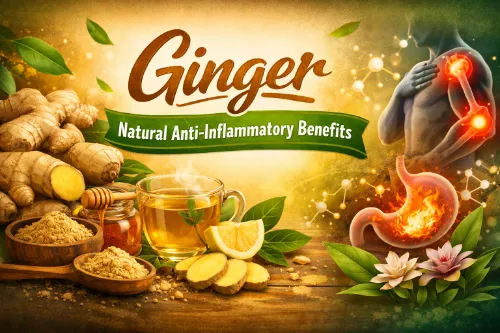
Ginger is a popular herbal anti‑inflammatory used to support joint comfort, muscle recovery, digestion, and overall inflammatory balance.
This guide explains how ginger works, what the research shows, how to take it safely, and how it fits with other anti‑inflammatory herbs like turmeric and green tea.
Introduction
Ginger (Zingiber officinale) is a warming root widely used in cooking and traditional medicine, especially in Asia. Its main bioactive compounds—gingerols and shogaols—have been studied for joint pain, inflammation, nausea, and digestive support.
People often turn to ginger to help manage osteoarthritis pain, muscle soreness, menstrual cramps, and symptoms related to inflammation, either as tea, fresh root, or supplements.
Ginger is also commonly paired with other anti‑inflammatory herbs such as turmeric and green tea for broader support; you can learn more in our guides on turmeric and green tea:
Turmeric
Green tea
Medical Disclaimer:
This information is for educational purposes only and does not replace medical advice, diagnosis, or treatment from your own healthcare provider.
What is ginger used for in inflammation?
Ginger is used to help reduce pain and stiffness from osteoarthritis and other inflammatory conditions, and to support digestive comfort and overall inflammatory balance.
Is ginger good for joint pain?
Some studies and reviews suggest ginger can modestly reduce pain and improve function in osteoarthritis, though evidence quality varies and effects are generally moderate rather than dramatic.
Can ginger help with whole‑body inflammation?
Ginger’s antioxidant and anti‑inflammatory effects may help lower inflammatory signals in the body, but it should be seen as supportive—not a cure‑all.
How Ginger Works as an Anti-Inflammatory
Ginger contains gingerols, shogaols, and related compounds that act on inflammatory pathways, including prostaglandins, leukotrienes, and inflammatory cytokines. These compounds can reduce the production of inflammatory mediators and may modulate NF‑κB, a key transcription factor involved in inflammation.
Ginger also has antioxidant properties, helping to neutralize free radicals and reduce oxidative stress, which can otherwise fuel chronic inflammation over time. This dual antioxidant and anti‑inflammatory action is one reason ginger appears so often in anti‑inflammatory diets and supplements.
How does ginger reduce inflammation in the body?
Ginger’s active compounds appear to decrease inflammatory mediators and signaling molecules, which can translate into reduced pain and improved comfort for some people.
Is ginger the same as taking an NSAID?
No. Ginger may offer NSAID‑like benefits in some studies but usually with milder, slower, and more variable effects. It should not replace prescribed anti‑inflammatory drugs without medical advice.
Does ginger help just pain, or does it affect inflammation too?
Evidence suggests ginger can influence both pain perception and underlying inflammatory processes, but the degree of benefit differs between individuals and conditions.
Ginger for Osteoarthritis and Joint Pain
Clinical studies and meta‑analyses indicate ginger can be modestly helpful for knee and hip osteoarthritis, with some participants reporting reduced pain and better function compared with placebo. Results are not universal, but ginger is considered a reasonable complementary option for many adults.
Ginger is usually taken as capsules or standardized extracts in these studies, often in divided doses throughout the day.
External resources (ginger & arthritis):
NCCIH – Ginger
Versus Arthritis – Ginger
Arthritis Foundation – Benefits of Ginger
Is ginger good for knee arthritis?
Yes, research suggests ginger can modestly reduce knee pain and improve function in some people with osteoarthritis, especially when used regularly.
How long does ginger take to work for joint pain?
Some individuals notice benefits within a few weeks, but more meaningful improvement often requires consistent use for 6–12 weeks.
Ginger for Muscle Soreness and Menstrual Pain
Ginger’s anti‑inflammatory and analgesic properties may help reduce exercise‑related muscle soreness and support recovery, particularly when taken around periods of heavy activity.
Ginger is also commonly used for menstrual cramps, with some studies showing reductions in pain severity comparable to mild pain medications in certain groups.
Can ginger help with muscle soreness?
Yes, ginger may help ease delayed‑onset muscle soreness when taken regularly, though results vary and it should be combined with rest, stretching, and proper training.
Is ginger useful for period pain?
Some research supports ginger for reducing menstrual cramp intensity, particularly when taken at the start of a period, but you should still discuss persistent or severe pain with your clinician.
Ginger for Digestion and Nausea
Ginger is well known for helping with nausea, motion sickness, and mild indigestion. By supporting digestive motility and calming the stomach, ginger may indirectly help with inflammation‑related gut discomfort for some people.
It is often used as tea, fresh slices in hot water, or chewable preparations for nausea.
**Can ginger help with gut inflammation?
**Ginger can support digestive comfort and may reduce some inflammatory signals in the gut, but it should not replace medical treatment for serious digestive diseases.
Is ginger good for nausea and motion sickness?
Yes, ginger is widely used and reasonably well supported for mild to moderate nausea, including pregnancy‑related nausea (under medical guidance) and motion sickness.
How to Take Ginger for Inflammation
Forms of Ginger
Ginger can be used as:
- Fresh root (grated, sliced, or juiced)
- Dried or powdered ginger
- Tea (fresh or dried ginger steeped in hot water)
- Capsules or tablets (standardized extracts or powder)
- Chews, lozenges, syrups, or functional drinks
Quick Tip: If you’re new to ginger, start with a mild tea (1–2 thin slices steeped in hot water) to see how your stomach tolerates it before moving to stronger doses or supplements.
Typical Dosage Ranges
There is no single standard dose, but commonly referenced ranges for inflammation and arthritis in adults include about 250–1,000 mg of ginger extract taken one to four times daily, or around 1–3 grams of fresh ginger per day.
Total daily intake from all sources is often kept below 4 grams (4,000 mg) in adults unless a healthcare professional suggests otherwise.
How should I take ginger for best effect?
For inflammation, many people use ginger capsules or extracts with food, combined with occasional ginger tea or fresh ginger in meals.
Can I just drink ginger tea instead of taking supplements?
Ginger tea can provide gentle anti‑inflammatory and digestive benefits, and may be enough for mild symptoms. For more targeted support (like osteoarthritis), standardized supplements are often used.
Safety, Side Effects & Interactions
Most healthy adults tolerate culinary amounts of ginger well. At supplemental doses, some people may experience heartburn, stomach upset, gas, or mild diarrhea, especially at higher intakes.
Ginger can affect blood clotting and blood sugar, and may interact with:
- Blood thinners (e.g., warfarin, DOACs, aspirin, clopidogrel)
- Other medicines that increase bleeding risk
- Diabetes medications (possible extra blood sugar‑lowering effect)
People with bleeding disorders, those on anticoagulants or antiplatelet drugs, and those with low blood pressure or certain heart conditions should be particularly cautious.
Is ginger safe to take every day?
Moderate dietary intake (like ginger tea and cooking) is generally considered safe for most adults. Daily supplement use can also be appropriate for some people but should be discussed with a healthcare professional, especially if you take medications.
Who should be cautious or avoid ginger supplements?
People who are pregnant or breastfeeding, have bleeding disorders, are on blood thinners, or take diabetes or heart medicines should use ginger supplements only under medical supervision.
External resources (safety & interactions):
NCCIH – Ginger
MedlinePlus – Ginger
NCCIH – Herb–drug interactions overview
Ginger, Diet, and Lifestyle
Ginger works best as part of a larger anti‑inflammatory lifestyle that includes:
- Plenty of vegetables, fruits, whole grains, nuts, seeds, and healthy fats
- Regular intake of herbs and spices such as ginger and turmeric
- Adequate sleep, stress management, and regular movement
Using ginger in everyday cooking—such as stir‑fries, soups, curries, smoothies, and teas—can be an easy way to support overall inflammatory balance alongside other healthy habits.
Can I combine ginger with an anti‑inflammatory diet?
Yes. Ginger fits naturally into an anti‑inflammatory eating pattern and can work together with other foods and herbs to support long‑term health.
Should I take ginger with turmeric or green tea?
Many people do. Turmeric can add additional anti‑inflammatory benefits, while green tea supports antioxidant and cardiovascular health. See our dedicated guides for details:
Turmeric
Green tea
Frequently Asked Questions About Ginger
Is ginger a strong natural anti‑inflammatory?
Ginger has meaningful anti‑inflammatory and pain‑relieving properties, particularly for joints and muscles, but it is generally milder than prescription drugs.
How much ginger should I take daily?
Many adults use 1–3 grams of fresh ginger or 250–1,000 mg of ginger extract divided over the day. Do not exceed about 4 grams daily from all sources unless a clinician advises otherwise.
Can I drink ginger tea every day?
Many people safely drink 1–3 cups of ginger tea daily. If you are pregnant, on blood thinners, have diabetes, or other medical conditions, check with your healthcare provider first.
Does ginger thin the blood?
Ginger may have mild blood‑thinning effects and can increase bleeding risk when combined with certain medications, especially warfarin, aspirin, and other anticoagulants or antiplatelets.
Can I take ginger together with turmeric or green tea supplements?
It may be helpful for some people, but combining multiple supplements can increase the risk of interactions. Check with your healthcare professional before stacking products.
Conclusion
Ginger is a versatile herbal anti‑inflammatory that can support joint comfort, muscle recovery, digestion, and overall inflammatory balance when used regularly and thoughtfully. It can be used in food, as teas, or as standardized supplements, and often works well alongside other herbs like turmeric and green tea.
Because ginger can interact with medications and may not be suitable for everyone, especially at higher doses, it is important to discuss its use with your healthcare provider—particularly if you have chronic health conditions, are pregnant or breastfeeding, or take prescription medicines.
For a broader overview of multiple herbs that work together against inflammation, see:
Herbal anti‑inflammatory remedies
Disclaimer:
This information is for educational purposes only and does not replace medical advice, diagnosis, or treatment from your own healthcare provider.
Written by: Eden Grace Ramos-Arsenio, RN
Sources: National Center for Complementary and Integrative Health (NCCIH); MedlinePlus (NIH); World Health Organization (WHO) traditional medicine resources; arthritis and rheumatology organizations; peer‑reviewed medical and nursing journals on ginger, osteoarthritis, inflammatory diseases, and integrative care.