
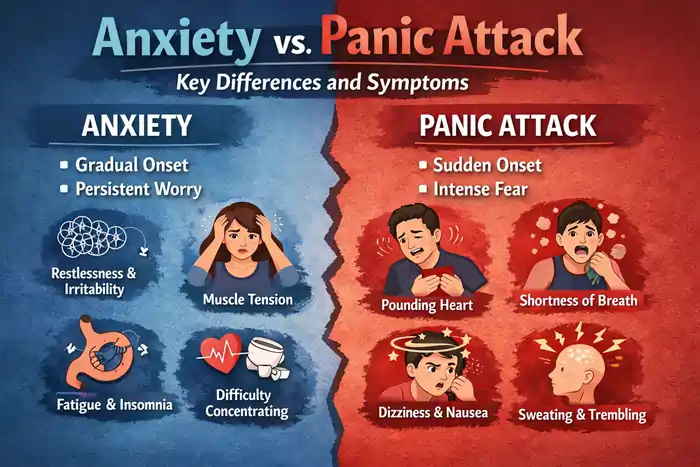
The main difference between anxiety and panic attacks is that anxiety develops gradually and can last for extended periods, while panic attacks occur suddenly, peak within minutes, and are more intense. Both may include physical symptoms such as chest pain, dizziness, and rapid heartbeat, but panic attacks are typically short‑lived and more severe, matching how NIMH and major clinics describe panic disorder and panic episodes.
Anxiety and panic attacks are often confused because they share similar physical and emotional symptoms. Many people experiencing intense fear or discomfort ask:
“Is this anxiety or a panic attack?”
“What’s the difference between anxiety and panic attack?”
“How do I know if I’m having a panic attack or anxiety?”
Understanding the difference between anxiety and panic attack is essential—not only for reassurance but also for proper diagnosis and treatment.
According to the World Health Organization (WHO) and the National Institute of Mental Health (NIMH), anxiety-related conditions are among the most common mental health disorders worldwide, often presenting with overlapping symptoms that can be difficult to distinguish.
What Is Anxiety?
Anxiety is a natural response to stress, typically linked to concerns about future events. It becomes clinically significant when symptoms are persistent, excessive, and interfere with daily functioning, which is how anxiety disorders are defined in DSM‑5–based criteria and NIMH overviews.
Common anxiety symptoms vs panic attack symptoms include:
- Ongoing worry
- Restlessness
- Fatigue
- Difficulty concentrating
- Muscle tension
- Sleep disturbances
Anxiety tends to build gradually and persist over time, which is a key distinction in understanding panic attack vs anxiety differences.
If you are unsure when anxiety becomes a disorder, you can explore this in detail in When Anxiety Becomes a Disorder, which explains how clinicians decide when everyday worry meets diagnostic thresholds.
This distinction is also emphasized in clinical frameworks such as the DSM‑5, which outlines how persistent symptoms and functional impairment define anxiety disorders.
What Is a Panic Attack?
A panic attack is a sudden surge of intense fear or discomfort that reaches its peak within minutes. Unlike anxiety, it is abrupt and often occurs without warning. NIMH describes panic attacks as sudden periods of intense fear with symptoms like racing heart, shortness of breath, chest pain, trembling, and feelings of impending doom.
Common panic attack symptoms vs anxiety symptoms include:
- Rapid heartbeat or heart palpitations (heart palpitations anxiety vs panic attack)
- Chest pain (chest pain anxiety vs panic attack)
- Shortness of breath (breathing anxiety vs panic attack)
- Dizziness or lightheadedness (dizziness anxiety vs panic attack)
- Sweating and shaking
- Fear of losing control or dying
The National Institute of Mental Health (NIMH) describes panic attacks as episodes that can feel like life‑threatening emergencies, even when no actual danger is present.
Anxiety vs Panic Attack: Key Differences
Here is a clear comparison of anxiety vs panic attack:
| Feature | Anxiety | Panic Attack |
|---|---|---|
| Onset | Gradual buildup | Sudden surge |
| Duration | Long‑lasting (hours, days, longer) | Short (peaks in 10–20 minutes) |
| Intensity | Mild to moderate | Severe, overwhelming |
| Trigger | Often stress‑related or ongoing worries | Often unexpected, may occur “out of the blue” |
| Symptoms | Persistent worry, tension, fatigue | Intense physical reaction, fear of dying or losing control |
This directly answers the question:
“How to tell anxiety vs panic attack?”
How Long Does Anxiety Last vs Panic Attack?
Understanding duration is essential:
- How long does anxiety last → Can persist for hours, days, or longer, often fluctuating but staying in the background.
- How long does a panic attack last → Typically peaks within 10–20 minutes and then gradually resolves, consistent with clinical descriptions from NIMH and major health centers.
This difference in panic attack duration vs anxiety is one of the most reliable ways to distinguish between the two.
Can Anxiety Turn Into a Panic Attack?
Yes—can anxiety turn into a panic attack is clinically recognized.
When anxiety builds without relief, it can escalate into a panic attack. This is particularly common in individuals with untreated anxiety disorders or panic disorder, where worry about future attacks itself becomes a trigger.
Similarly, can anxiety cause panic attacks is frequently observed in panic disorder, where repeated panic episodes occur over time.
What Does Anxiety Feel Like vs Panic Attack?
Understanding how each feels can help clarify confusion.
Anxiety:
- Persistent unease or nervousness
- Muscle tension and physical tightness
- Fatigue and feeling drained
- Difficulty concentrating or “mind going blank”
Panic Attack:
- Sudden overwhelming fear
- Intense chest pain or pressure
- Difficulty breathing, sensation of choking
- Feeling of losing control or going crazy
This comparison answers:
“What does anxiety feel like vs panic attack?”
Is Panic Attack Worse Than Anxiety?
Many people ask:
“Is panic attack worse than anxiety?”
Panic attacks are usually more intense but short‑lived. Anxiety is less intense but longer‑lasting.
Both conditions can significantly affect quality of life and may require treatment depending on severity, and public health data from the CDC show that persistent anxiety and panic symptoms often lead to higher care needs.
Anxiety vs Panic Attack Symptoms: Detailed Comparison
Shared Symptoms:
- Rapid heartbeat
- Shortness of breath
- Sweating
- Dizziness
- Chest discomfort
Anxiety‑Specific Symptoms:
- Chronic worry and rumination
- Long‑term fatigue
- Muscle tension and general tightness
Panic Attack‑Specific Symptoms:
- Sudden onset with a clear peak
- Intense fear or sense of impending doom
- Feeling of impending death or losing control
Panic Attack vs Heart Attack Symptoms
One of the most concerning questions is:
“Panic attack vs heart attack symptoms”
Both can include:
- Chest pain
- Shortness of breath
- Rapid heartbeat
However:
- Panic attack → symptoms peak quickly and improve, often within 10–20 minutes, and typically resolve without heart damage.mayoclinic+1
- Heart attack → symptoms worsen or persist and may include pain spreading to the arm, jaw, or back, requiring emergency care, as emphasized by the American Heart Association and cardiology centers.
Because symptoms can overlap, the AHA and cardiology experts advise seeking immediate medical evaluation for new, severe, or unexplained chest pain, even if you suspect it might be anxiety.
Causes of Anxiety and Panic Attacks
Causes of Anxiety Disorder:
- Chronic stress
- Genetic predisposition
- Brain chemistry and neurotransmitter imbalances
Causes of Panic Attacks:
- Sudden stress triggers
- Trauma or past frightening experiences
- Nervous system sensitivity and learned fear responses
Both involve activation of the fight‑or‑flight response, which releases adrenaline and prepares the body for perceived danger, a mechanism described in stress‑physiology reviews and NIMH materials.
Triggers of Anxiety vs Panic Attacks
Anxiety Triggers:
- Work pressure
- Financial stress
- Health concerns and uncertainty
Panic Attack Triggers:
- Sudden stress or shock
- Phobias (such as flying, heights, enclosed spaces)
- Sometimes no identifiable trigger at all, which is typical in panic disorder.
How Doctors Diagnose Anxiety vs Panic Attacks
Many people wonder how professionals distinguish between these conditions.
Diagnosis involves:
- Clinical interviews
- Detailed symptom history and timelines
- DSM‑5 criteria
- Screening tools such as GAD‑7 or panic disorder questionnaires
For a detailed breakdown of the diagnostic process, visit How Anxiety Is Diagnosed (DSM‑5 Criteria Explained), which walks through how clinicians use duration, intensity, and impairment to separate anxiety disorders, panic disorder, and medical causes.
This process ensures that symptoms are properly evaluated and not mistaken for underlying cardiac, respiratory, or endocrine conditions.
Anxiety Disorder vs Panic Disorder
It is important to differentiate:
- Anxiety disorder → persistent worry, tension, and associated symptoms over time (for example, generalized anxiety disorder).
- Panic disorder → recurrent, unexpected panic attacks plus ongoing worry about future attacks and behavior changes to avoid them, matching NIMH’s definition of panic disorder.
This reflects the clinical difference anxiety vs panic attack described in psychiatric guidelines and NIMH publications.
When Should You Seek Help?
You should seek professional help if:
- Symptoms occur frequently
- They interfere with daily life (work, school, relationships)
- You experience intense distress or avoidance
- You are unsure whether symptoms are anxiety or a medical condition
The CDC’s mental health resources emphasize early mental health support to prevent long-term complications and suggest not waiting until symptoms become disabling to ask for help.
How to Stop a Panic Attack Fast
If you are experiencing a panic attack, immediate strategies include:
- Slow, controlled breathing (e.g., inhale for 4, exhale for 6)
- Grounding techniques (naming objects you see, feel, hear)
- Focusing on your surroundings instead of internal sensations
These methods help regulate the nervous system and reduce symptom intensity, and are commonly recommended in CBT‑based panic treatment programs.
Treatment Options
Both anxiety and panic attacks are treatable.
Common treatments include:
- Therapy
- Cognitive Behavioral Therapy (CBT), recommended by WHO and NIMH as a first‑line treatment for many anxiety disorders and panic disorder.
- Medications
- SSRIs and other prescribed anti‑anxiety medications, often used for both generalized anxiety and panic disorder under medical supervision.
- Lifestyle Changes
- Regular exercise
- Proper sleep
- Stress management and limiting caffeine, alcohol, and nicotine
FAQ: Anxiety vs Panic Attack
1. How do I know if it’s anxiety or a panic attack?
A panic attack comes on suddenly, peaks within minutes, and feels overwhelmingly intense, while anxiety tends to build gradually, lasts longer, and is usually tied to ongoing worries or stress.
2. Can I have anxiety without ever having a panic attack?
Yes. Many people live with generalized anxiety, chronic worry, and physical tension but never experience a full panic attack with a sudden surge of extreme fear.
3. Can I have panic attacks without feeling anxious all the time?
Yes. People with panic disorder can have unexpected panic attacks even when they don’t feel chronically anxious between episodes, though they may worry about future attacks.
4. What does a panic attack feel like compared to anxiety?
Anxiety feels like ongoing unease, tension, and worry, while a panic attack feels like a wave of terror with intense symptoms such as chest pain, shortness of breath, shaking, and fear of losing control or dying.
5. How long do panic attacks usually last vs regular anxiety?
A panic attack typically peaks within 10–20 minutes and then slowly eases, while anxiety can linger for hours, days, or longer, often at a lower but constant intensity.
6. Can anxiety turn into a panic attack?
Yes. When anxiety builds without relief—especially in people prone to panic—it can escalate into a panic attack, which is common in those with untreated anxiety disorders or panic disorder.
7. Are panic attacks dangerous or life-threatening?
Panic attacks feel life‑threatening but usually are not dangerous by themselves in otherwise healthy people. However, because symptoms can mimic serious problems (like heart issues), new or severe episodes should be medically evaluated at least once.
8. How do doctors tell panic attacks apart from heart attacks?
Doctors look at onset, duration, risk factors, exam, and tests. Panic attacks often peak quickly and resolve, while heart attacks tend to worsen or persist and may show ECG or blood test changes. Any new, severe chest pain should be treated as an emergency.
9. Do I need tests if I think my symptoms are “just anxiety”?
If you have chest pain, shortness of breath, dizziness, or heart symptoms, it’s important to have a medical evaluation at least once to rule out physical conditions before assuming it is only anxiety or panic.
10. Can anxiety and panic attacks happen while I’m sleeping?
Yes. Nocturnal panic attacks can wake you from sleep with a racing heart and intense fear, and anxiety can cause trouble falling or staying asleep due to racing thoughts.
11. Is it possible to pass out from a panic attack?
It’s uncommon to lose consciousness during a panic attack, but severe hyperventilation or other medical issues can contribute to feeling faint. If you actually black out, you should be evaluated by a doctor.
12. What’s the difference between an anxiety disorder and panic disorder?
An anxiety disorder involves persistent worry and tension (for example, generalized anxiety disorder), while panic disorder involves recurrent, unexpected panic attacks plus significant fear or behavior changes related to those attacks.
13. When should I seek professional help for anxiety or panic?
You should seek help if symptoms are frequent, interfere with work, school, or relationships, cause significant distress, or if you’re unsure whether symptoms are anxiety or a medical condition.
14. When is anxiety or a panic attack a medical emergency?
Get immediate help (ER or emergency services) if you have new or intense chest pain, trouble breathing, weakness on one side, confusion, or thoughts of self‑harm or suicide, even if you suspect it is “just anxiety.”
15. Can lifestyle changes help with both anxiety and panic attacks?
Yes. Regular exercise, consistent sleep, limiting caffeine and alcohol, and practicing relaxation or breathing exercises can reduce both baseline anxiety and the likelihood or intensity of panic attacks.
16. What treatments work best for anxiety vs panic attacks?
Cognitive Behavioral Therapy (CBT) is highly effective for both anxiety disorders and panic disorder, and medications such as SSRIs are commonly used for both. Treatment is tailored based on whether symptoms are more chronic anxiety, recurrent panic, or both.
17. Can I manage a panic attack on my own once I know what it is?
Many people learn to ride out panic attacks using slow breathing, grounding techniques, and reassuring self‑talk (“this will pass, I am safe”), especially when combined with therapy that addresses underlying triggers.
18. Should I track my anxiety and panic symptoms?
Tracking when symptoms occur, what you were doing, and how long they last can help you and your clinician identify patterns, triggers, and progress with treatment, making care more targeted and effective.
Final Thoughts
Understanding the difference between anxiety and panic attack can reduce fear and improve how you respond to symptoms.
While both conditions can feel overwhelming, they are manageable with proper support, diagnosis, and treatment. If you are unsure about your symptoms, seeking professional guidance—starting with your primary care provider or a mental health professional—is always the safest and most effective step.
Medical Disclaimer
Content is based on current clinical guidelines and peer‑reviewed research from WHO, CDC, NIH/NIMH, and AHA. This article is for educational purposes only and does not replace professional medical advice, diagnosis, or treatment. Always consult a qualified healthcare provider for any mental health or chest‑pain concerns.
Written by: Eden Grace Ramos, RN
References
- World Health Organization (WHO) – Anxiety Disorders[who]
- National Institute of Mental Health (NIMH) – Panic Disorder and Anxiety Disorders
- Centers for Disease Control and Prevention (CDC) – Mental Health Conditions & Care
- American Psychiatric Association – DSM‑5 Anxiety and Panic
- American Heart Association / Cardiology Guidance on Chest Pain