
Cognitive behavioral therapy (CBT) for anxiety is one of the most effective, evidence‑based treatments for anxiety disorders, focusing on identifying and changing negative thought patterns and behaviors. According to the National Institute of Mental Health (NIMH), CBT helps individuals manage anxiety symptoms by improving coping strategies and emotional regulation. Unlike medication, CBT targets the root causes of anxiety by restructuring cognitive distortions and reducing avoidance behaviors. It is widely recommended as a first‑line treatment and can be used alone or alongside medications such as SSRIs for optimal results.
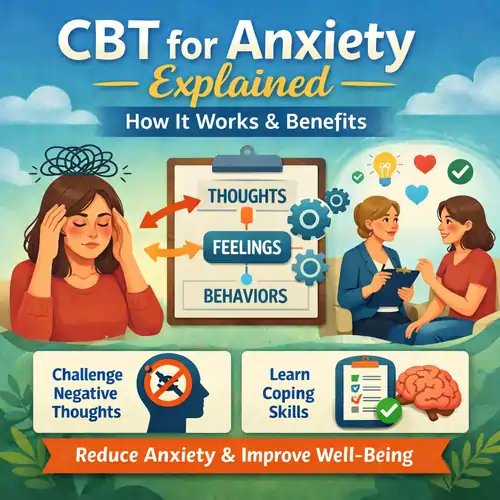
Introduction to CBT for Anxiety Explained
Cognitive behavioral therapy (CBT) is a structured, goal‑oriented form of psychotherapy that focuses on the connection between thoughts, emotions, and behaviors. It is widely used to treat anxiety disorders, including:
- Generalized anxiety disorder (GAD)
- Panic disorder
- Social anxiety disorder
- Phobias
The World Health Organization (WHO) highlights psychotherapy, including CBT, as a key component of effective mental health treatment.
Understanding how CBT for anxiety works can help individuals make informed decisions about their treatment.
What Is Cognitive Behavioral Therapy (CBT)?
Cognitive behavioral therapy (CBT) is based on the idea that negative thoughts influence emotions and behaviors.
Core principles of CBT:
- Thoughts affect emotions
- Emotions influence behavior
- Changing thoughts can change outcomes
CBT focus areas:
- Identifying negative thought patterns
- Challenging cognitive distortions
- Developing coping strategies
How CBT Works for Anxiety
1. Identifying Negative Thoughts
CBT helps individuals recognize automatic negative thoughts such as:
- Catastrophizing
- Overgeneralization
- Black‑and‑white thinking
2. Challenging Cognitive Distortions
Therapists guide individuals to question irrational beliefs and replace them with more balanced, realistic thoughts.
3. Behavioral Changes
CBT encourages gradual exposure to feared situations and reduces avoidance, which weakens the link between triggers and anxiety responses.
4. Skill Development
Individuals learn:
- Problem‑solving skills
- Relaxation techniques
- Emotional‑regulation and coping strategies
Types of CBT Techniques for Anxiety
- Cognitive restructuring – focuses on identifying and changing negative thought patterns.
- Exposure therapy – uses gradual exposure to feared situations or sensations to reduce fear and avoidance.
- Behavioral activation – encourages engagement in meaningful, value‑based activities to combat withdrawal.
- Mindfulness‑based CBT – combines CBT with mindfulness practices to increase awareness of thoughts and feelings without judgment.
Benefits of CBT for Anxiety
- Evidence‑based treatment – CBT is supported by extensive research and clinical trials across multiple anxiety disorders.
- Long‑term effectiveness – CBT provides lasting coping skills that patients can continue using after therapy ends.
- No dependency risks – CBT does not involve medication side effects or dependence.
- Personalized approach – treatment plans are tailored to each person’s specific fears, triggers, and goals.
CBT vs Medication for Anxiety
Both CBT and medication are effective treatments for anxiety.
CBT advantages:
- Addresses underlying thought and behavior patterns
- Builds long‑term skills for relapse prevention
Medication advantages:
- May offer faster symptom relief
- Useful for moderate to severe anxiety or when therapy access is limited
Combining CBT with appropriate medication often provides the best results, especially for more severe or long‑standing anxiety.
CBT vs Natural Remedies
Some individuals prefer or add alternative approaches such as supplements, herbal remedies, or relaxation practices. While these may help some people with symptom relief, CBT remains one of the most well‑studied and effective treatments for anxiety. Natural approaches are usually best used as complements, not replacements, for evidence‑based care.
How Long Does CBT Take?
The duration of CBT for anxiety varies from person to person.
Typical course:
- About 8–20 sessions
- Often delivered weekly or bi‑weekly
Progress depends on symptom severity, the specific anxiety disorder, and how consistently skills are practiced between sessions.
What to Expect in CBT Sessions
Session structure often includes:
- Reviewing symptoms and goals
- Discussing recent situations that triggered anxiety
- Identifying thoughts, feelings, and behaviors in those situations
- Practicing CBT techniques during the session
Homework assignments are a key part of CBT, allowing individuals to apply techniques in everyday life and build new habits.
Who Can Benefit from CBT?
CBT is effective for:
- Adults
- Children and adolescents (with age‑appropriate adaptations)
- Individuals with mild, moderate, or severe anxiety
It can also help people with co‑occurring conditions such as depression, health anxiety, or stress‑related problems.
Effectiveness of CBT for Anxiety Disorders
Research across generalized anxiety disorder, social anxiety disorder, panic disorder, phobias, and other conditions shows that CBT significantly reduces anxiety symptoms and improves quality of life. Clinical guidelines from multiple countries recommend CBT as a first‑line treatment for many anxiety disorders.
Limitations of CBT
- Requires active effort, homework, and willingness to face feared situations.
- Progress can take time, and some people may initially feel more anxious when starting exposure‑based work.
- Not everyone responds fully to CBT alone; some may need combined approaches or alternative therapies.
Combining CBT with Lifestyle Changes
For best results, CBT is often combined with:
- Healthy sleep habits
- A balanced, nutrient‑rich diet
- Regular physical activity
- Stress‑management strategies such as mindfulness or relaxation exercises
These habits support the brain and body, making it easier to use CBT skills effectively.
When to Seek CBT Treatment
Consider seeking CBT when:
- Anxiety interferes with work, school, or relationships.
- Symptoms persist for several weeks or months.
- Avoidance behaviors (such as avoiding social situations or travel) are increasing.
A licensed mental health professional can help determine whether CBT is appropriate and how it fits into an overall treatment plan.
Living with Anxiety During CBT
Recovery takes time and consistent practice. During CBT:
- Expect gradual, step‑by‑step progress rather than instant change.
- Use skills between sessions and track improvements.
- Build support systems among family, friends, or peer groups when possible.
Preventing Anxiety Relapse with CBT
To maintain gains after CBT:
- Continue practicing CBT techniques, especially in stressful times.
- Identify early warning signs of rising anxiety.
- Stay connected with supportive people or occasional booster sessions if needed.
Frequently Asked Questions (FAQs)
- What is CBT for anxiety?
CBT is a structured therapy that focuses on changing negative thought patterns and behaviors to reduce anxiety and improve coping. - How effective is CBT for anxiety?
CBT is highly effective and well‑supported by research; many people experience significant and lasting improvement. - How long does CBT take?
A typical course lasts 8–20 sessions, though some individuals may need shorter or longer treatment depending on their situation. - Can CBT replace medication?
For mild to moderate anxiety, CBT alone may be enough. For more severe anxiety, combining CBT with medication is often recommended. - What happens in CBT sessions?
Sessions involve discussing recent anxiety‑provoking situations, identifying thoughts and behaviors, and practicing new skills, with homework between visits. - Is CBT suitable for everyone?
CBT works for many people but not all. Some individuals may benefit more from other approaches or combined therapies. - Does CBT have side effects?
CBT has no physical side effects, but it can feel emotionally challenging at times as difficult thoughts and situations are addressed. - Can CBT cure anxiety?
CBT can greatly reduce or even eliminate symptoms for many people; others learn to manage anxiety effectively long‑term. - Is CBT better than medication?
CBT offers longer‑term skill building, while medication provides faster relief; the best option depends on the individual and often involves both. - Can children use CBT?
Yes. CBT can be adapted for children and teens and is widely used to treat pediatric anxiety. - What are cognitive distortions?
Cognitive distortions are inaccurate or exaggerated thought patterns (like catastrophizing) that fuel anxiety; CBT teaches people to correct them. - Can CBT help panic attacks?
Yes. CBT is very effective for panic disorder, helping reduce both panic attacks and the fear of having them. - Is CBT expensive?
Costs vary by provider, setting, and insurance coverage; some clinics and online programs offer lower‑cost options. - Can CBT be done online?
Yes. Online CBT is widely available and has been shown to be effective for many people. - What is exposure therapy in CBT?
Exposure therapy gradually helps people face feared situations or sensations, reducing avoidance and fear over time. - Can CBT prevent relapse?
CBT teaches long‑term skills that can lower relapse risk when they are practiced consistently. - Do I need a therapist for CBT?
Working with a trained therapist is ideal, though guided self‑help CBT resources can also be useful. - Can CBT help depression too?
Yes. CBT is a first‑line treatment for depression as well as anxiety. - How do I start CBT?
Consult a licensed mental health professional, such as a psychologist, psychiatrist, or clinical social worker, who is trained in CBT. - When should I seek CBT?
Seek CBT when anxiety starts to affect daily life, persists despite self‑help efforts, or causes significant distress.
Written by: Eden Grace Ramos, RN
Medical Disclaimer
This article is for informational and educational purposes only and does not replace professional medical advice. Cognitive behavioral therapy (CBT) and anxiety treatment should be guided by qualified healthcare professionals. Always consult a licensed physician or mental health specialist.