
Generalized anxiety disorder (GAD) is a mental health condition characterized by excessive and persistent worry that is difficult to control and lasts for months. Symptoms include restlessness, fatigue, difficulty concentrating, irritability, and sleep problems. GAD is diagnosed using DSM-5 criteria and can be treated with therapy, medication, and lifestyle changes.
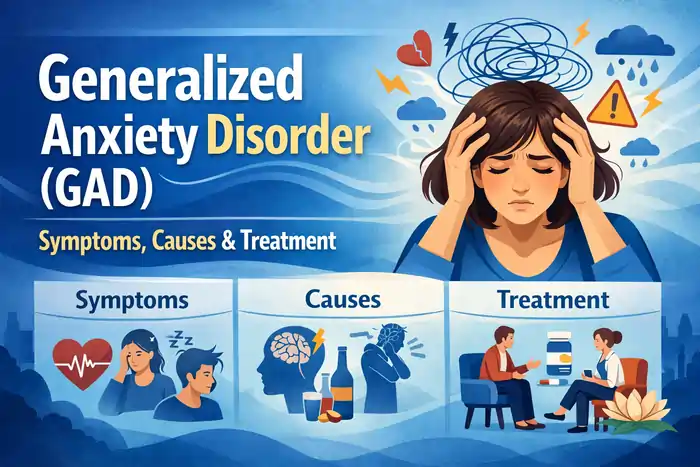
Many people experience anxiety from time to time. However, if worry becomes constant, overwhelming, and difficult to control, it may be more than normal stress. This is where generalized anxiety disorder becomes an important condition to understand.
People often ask:
- “What is generalized anxiety disorder?”
- “How do I know if I have GAD?”
- “What are the symptoms of GAD?”
Understanding generalized anxiety disorder (GAD) is essential for recognizing when anxiety becomes a long-term mental health condition.
What Is Generalized Anxiety Disorder (GAD)?
Generalized anxiety disorder is a condition marked by chronic worry symptoms and persistent anxiety symptoms that occur most days for at least six months.
Unlike normal anxiety, GAD symptoms are:
- Long-lasting
- Difficult to control
- Not limited to a single situation
This makes what is generalized anxiety disorder different from everyday stress.
GAD Symptoms: What to Look For
Recognizing generalized anxiety disorder symptoms early is key.
Emotional Symptoms
- Excessive worry GAD
- Fear without clear reason
- Constant overthinking
Physical Symptoms
- Fatigue anxiety disorder
- Muscle tension
- Headaches
- Sleep problems anxiety
Cognitive Symptoms
- Difficulty concentrating anxiety
- Racing thoughts
- Trouble focusing
Behavioral Symptoms
- Avoidance
- Procrastination
- Restlessness anxiety symptoms
These combined symptoms define GAD symptoms and distinguish them from short-term anxiety.
GAD Symptoms Checklist
A simple GAD symptoms checklist includes:
- Persistent worry
- Irritability anxiety disorder
- Restlessness
- Fatigue
- Difficulty concentrating
- Sleep disturbances
These reflect persistent anxiety symptoms and may indicate a disorder.
GAD vs Normal Anxiety
Understanding GAD vs normal anxiety is essential.
| Feature | Normal Anxiety | GAD |
|---|---|---|
| Duration | Short-term | Chronic |
| Trigger | Specific | Often unclear |
| Control | Manageable | Difficult |
| Impact | Minimal | Disruptive |
This comparison clarifies generalized anxiety disorder vs normal anxiety.
Causes of Generalized Anxiety Disorder
There is no single cause of GAD causes, but several factors contribute.
Biological Factors
- Brain chemistry anxiety
- Imbalance in neurotransmitters
Genetic Factors
- Genetics anxiety disorder
Environmental Factors
- Stress and anxiety disorder
- Trauma
- Life events
Research from
👉 National Institute of Mental Health (NIMH)
shows that multiple factors often interact.
Risk Factors for GAD
Common risk factors for GAD include:
- Family history
- Chronic stress
- Trauma exposure
- Personality traits
These contribute to how anxiety develops into disorder.
How GAD Affects Daily Life
One defining feature is GAD affecting daily life.
This may include:
- Reduced productivity
- Relationship strain
- Sleep disruption
- Poor concentration
These reflect anxiety interfering with work and quality of life.
DSM-5 Criteria for Generalized Anxiety Disorder
Diagnosis is based on DSM-5 generalized anxiety disorder criteria.
Key criteria include:
- Excessive anxiety for at least six months
- Difficulty controlling worry
- At least three symptoms such as fatigue or irritability
This forms the GAD diagnosis criteria used by professionals.
How GAD Is Diagnosed
Many people ask: “how GAD is diagnosed”
Diagnosis involves:
- Clinical interview
- Symptom assessment
- Screening tools
One commonly used tool is the GAD-7 anxiety test, which helps measure severity.
Clinical Diagnosis of GAD
A clinical diagnosis of GAD requires:
- Persistent symptoms
- Functional impairment
- DSM-5 criteria
Doctors also rule out other conditions.
GAD vs Panic Disorder
Understanding GAD vs panic disorder is important.
- GAD → constant worry
- Panic disorder → sudden panic attacks
Both may overlap but differ in pattern and intensity.
Long-Term Effects of GAD
If untreated, long-term effects of GAD may include:
- Depression
- Chronic stress
- Physical health problems
- Reduced quality of life
Treatment for Generalized Anxiety Disorder
Effective treatment for generalized anxiety disorder includes:
Therapy
- CBT for anxiety disorder (first-line treatment)
Medication
- SSRIs for anxiety
- Other prescribed medications
Lifestyle Changes
- Exercise
- Sleep
- Stress reduction
Natural Ways to Treat Anxiety
Many seek natural ways to treat anxiety such as:
- Mindfulness
- Meditation
- Breathing exercises
These complement clinical treatments.
When to Seek Help
You should seek help if:
- Symptoms persist
- Daily life is affected
- Worry is uncontrollable
This aligns with when to seek help for anxiety.
Final Thoughts
Understanding generalized anxiety disorder helps individuals recognize symptoms early and seek appropriate care.
If you are experiencing persistent anxiety symptoms, support and treatment are available.
Frequently Asked Questions
1. What is generalized anxiety disorder?
Generalized anxiety disorder is a condition involving excessive and persistent worry. It lasts for months and affects daily life. It often includes physical and emotional symptoms.
2. What are symptoms of GAD?
Symptoms include excessive worry, fatigue, and difficulty concentrating. Physical symptoms such as muscle tension may occur. Sleep problems are also common.
3. How do I know if I have GAD?
If worry is constant and difficult to control, it may be GAD. Symptoms must persist for months. Professional evaluation confirms diagnosis.
4. What causes generalized anxiety disorder?
Causes include genetics, brain chemistry, and stress. Environmental factors also contribute. Often multiple causes are involved.
5. Is GAD serious?
Yes, GAD can significantly affect daily life. It may impact work and relationships. Treatment helps manage symptoms.
6. How is GAD diagnosed?
Doctors use DSM-5 criteria and clinical evaluation. Screening tools may also be used. Diagnosis requires persistent symptoms.
7. What is the GAD-7 test?
The GAD-7 is a questionnaire used to assess anxiety severity. It measures symptom frequency. It supports diagnosis.
8. Can GAD go away on its own?
Mild anxiety may improve naturally. However, GAD often requires treatment. Symptoms may persist without help.
9. What is the difference between GAD and normal anxiety?
Normal anxiety is temporary and situation-based. GAD is persistent and excessive. It affects daily functioning.
10. Can GAD affect physical health?
Yes, GAD can cause physical symptoms. These include fatigue and muscle tension. Long-term effects may occur.
11. What treatments are available for GAD?
Treatment includes therapy, medication, and lifestyle changes. CBT is commonly used. Medications like SSRIs may help.
12. Is GAD treatable?
Yes, GAD is highly treatable. Many people improve with proper care. Early treatment is effective.
13. What are risk factors for GAD?
Risk factors include genetics and stress. Trauma also increases risk. Personality traits may contribute.
14. Can GAD get worse over time?
Yes, untreated GAD may worsen. Symptoms may increase in severity. Early intervention is important.
15. How long does GAD last?
GAD can last months or years. It is considered chronic. Treatment helps reduce duration and severity.
16. Can children have GAD?
Yes, children can develop GAD. Symptoms may appear differently. Early support is important.
17. Is GAD the same as panic disorder?
No, GAD involves ongoing worry. Panic disorder involves sudden attacks. They are different conditions.
18. Can lifestyle changes help GAD?
Yes, exercise and sleep help manage symptoms. Stress reduction is beneficial. These support treatment.
19. When should I seek help for GAD?
Seek help if symptoms persist or worsen. If daily life is affected, evaluation is needed. Early help improves outcomes.
20. Can GAD be cured?
GAD may not always be cured completely. However, it is manageable. Many people live well with treatment.
Written by: Eden Grace Ramos, RN
Medical Disclaimer
Content is based on current clinical guidelines and peer-reviewed research from WHO, CDC, NIH, and AHA. This article is for educational purposes only and does not replace professional medical advice, diagnosis, or treatment. Always consult a qualified healthcare provider for any mental health concerns.