
Anxiety is diagnosed through a clinical evaluation using DSM-5 criteria, symptom assessment, and screening tools such as the GAD-7. Doctors assess the duration, severity, and impact of symptoms, while also ruling out medical conditions. A formal diagnosis of anxiety disorder requires persistent symptoms that interfere with daily functioning.
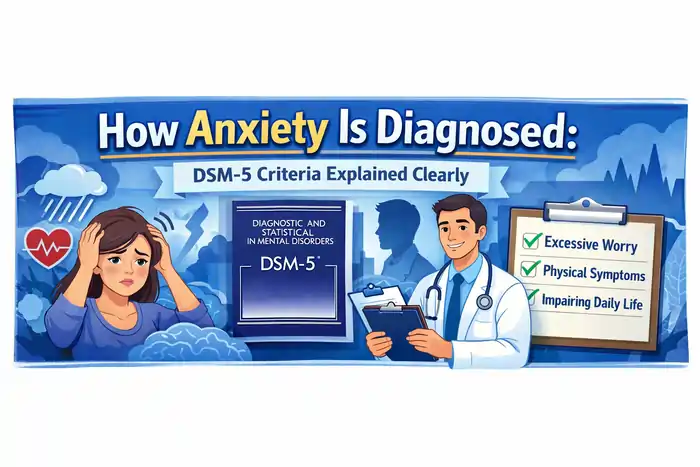
Anxiety is one of the most common mental health concerns worldwide, yet many people are unsure how it is actually diagnosed. Questions like “how anxiety is diagnosed”, “how do doctors diagnose anxiety”, and “is there a test for anxiety disorder” are frequently asked by individuals experiencing symptoms but seeking clarity.
Understanding the anxiety diagnosis criteria and the role of DSM-5 anxiety criteria is essential for recognizing when anxiety becomes a clinical condition that requires professional attention.
What Does It Mean to Diagnose Anxiety?
To understand how anxiety is diagnosed, it is important to know that there is no single test that confirms anxiety. Instead, diagnosis involves a structured process combining clinical judgment, standardized criteria, and symptom evaluation.
The diagnosis of anxiety disorder focuses on identifying patterns of excessive fear, worry, and physical symptoms that go beyond normal stress. This is known as a clinical diagnosis of anxiety, meaning it is based on professional assessment rather than a simple lab test.
How Do Doctors Diagnose Anxiety?
Many people ask: “how do doctors diagnose anxiety” or “can a doctor tell if you have anxiety?”
Doctors diagnose anxiety through a multi-step process that includes:
- Clinical interviews
- Symptom history
- Behavioral assessment
- Standardized tools
This process is often referred to as the anxiety diagnosis process step by step, and it ensures that symptoms are accurately evaluated.
Step-by-Step: How Anxiety Is Diagnosed
1. Clinical Interview
The first step in how doctors assess anxiety is a detailed conversation about your symptoms.
Doctors may ask:
- When did symptoms start?
- How often do they occur?
- What triggers them?
- How do they affect daily life?
This forms the foundation of a psychological evaluation anxiety process.
2. DSM-5 Criteria Evaluation
The most important framework used is the DSM-5 (Diagnostic and Statistical Manual of Mental Disorders).
The DSM-5 anxiety diagnosis checklist includes:
- Excessive worry occurring most days
- Symptoms lasting at least six months
- Difficulty controlling worry
- Physical or cognitive symptoms
This defines the diagnostic criteria for anxiety disorder and ensures consistency in diagnosis.
3. Screening Tools and Tests
Although there is no single diagnostic test, doctors use anxiety screening tests such as:
- GAD-7 anxiety test
- anxiety questionnaire diagnosis tools
These tools measure severity and support the mental health assessment for anxiety.
4. Medical Evaluation
Doctors also rule out physical conditions that may mimic anxiety, such as:
- Thyroid disorders
- Heart conditions
- Hormonal imbalances
This ensures that the clinical evaluation of anxiety disorder is accurate.
DSM-5 Criteria for Anxiety Disorder Explained
The DSM-5 criteria for anxiety disorder are the gold standard for diagnosis.
For example, generalized anxiety disorder DSM-5 criteria include:
- Persistent worry for at least six months
- Difficulty controlling worry
- Symptoms such as fatigue, irritability, and sleep problems
Understanding DSM-5 symptoms of anxiety helps clarify when anxiety becomes a disorder.
Is There a Test for Anxiety Disorder?
A common question is: “is there a test for anxiety disorder?”
The answer is no single test exists. Instead, diagnosis involves:
- Clinical interviews
- Screening tools
- Behavioral observation
This is why how do I get diagnosed with anxiety often requires multiple steps.
How to Know If You Need an Anxiety Diagnosis
Many people wonder: “how do I know if I have anxiety disorder” or “when anxiety needs diagnosis.”
You may need evaluation if:
- Symptoms are persistent
- They interfere with daily life
- They cause distress
This relates to how to confirm anxiety disorder through professional assessment.
Symptoms vs Diagnosis of Anxiety
Understanding symptoms vs diagnosis of anxiety is critical.
Symptoms alone do not confirm a disorder. Diagnosis requires:
- Duration
- Severity
- Functional impact
This distinction is key in how doctors check for anxiety.
Anxiety Disorder vs Panic Disorder
Another important distinction is between anxiety and panic disorders.
- Anxiety disorder → ongoing worry
- Panic disorder → sudden panic attacks
This difference is part of the clinical criteria for anxiety diagnosis.
How Long Does It Take to Diagnose Anxiety?
Many ask: “how long does it take to diagnose anxiety?”
Diagnosis can take:
- One visit (initial assessment)
- Multiple visits (complex cases)
The timeline depends on symptom complexity and evaluation depth.
What Questions Do Doctors Ask for Anxiety?
During assessment, doctors ask:
- How often do symptoms occur?
- What triggers them?
- How do they affect your life?
These questions are part of how do doctors check for anxiety.
What Happens After Diagnosis?
After diagnosis, treatment may include:
- Therapy (CBT)
- Medication
- Lifestyle changes
Understanding what happens when you get diagnosed with anxiety helps reduce uncertainty.
When to See a Doctor for Anxiety
You should seek help if:
- Symptoms persist
- Daily functioning is affected
- Distress is significant
This aligns with when to see a doctor for anxiety.
How to Seek Help for Anxiety
If you are wondering how to get checked for anxiety disorder, start by:
- Consulting a primary care doctor
- Speaking to a mental health professional
- Using screening tools
Final Thoughts
Understanding how anxiety is diagnosed empowers individuals to seek help confidently. Diagnosis is not about labeling—it is about understanding symptoms and finding effective treatment.
With proper evaluation and support, anxiety disorders are highly manageable.
Frequently Asked Questions
1. How is anxiety diagnosed?
Anxiety is diagnosed through clinical evaluation, DSM-5 criteria, and symptom assessment. Doctors evaluate how long symptoms last and how they affect daily functioning. Screening tools may also be used to support diagnosis.
2. What is the DSM-5 criteria for anxiety?
DSM-5 criteria include persistent worry, difficulty controlling symptoms, and physical or cognitive effects. Symptoms must last at least six months. They must also interfere with daily life.
3. Is there a test for anxiety disorder?
There is no single test for anxiety disorder. Doctors use questionnaires, interviews, and evaluation tools. These help assess symptom severity and patterns.
4. How do doctors diagnose anxiety?
Doctors diagnose anxiety through interviews, observation, and screening tools. They also review medical history. Physical conditions are ruled out.
5. Can a doctor confirm anxiety?
Yes, a doctor can confirm anxiety through clinical evaluation. They use standardized criteria like DSM-5. Diagnosis is based on patterns of symptoms.
6. What is a clinical diagnosis of anxiety?
A clinical diagnosis means a healthcare professional evaluates symptoms. It is based on established criteria. It does not rely on a single test.
7. What is the GAD-7 test?
The GAD-7 is a screening tool used to measure anxiety severity. It includes a set of questions about symptoms. It helps guide diagnosis and treatment.
8. How long does diagnosis take?
Diagnosis may happen in one visit or over multiple sessions. It depends on symptom complexity. Some cases require further evaluation.
9. When should I seek diagnosis?
You should seek diagnosis if symptoms persist or worsen. If anxiety affects daily life, evaluation is recommended. Early diagnosis improves outcomes.
10. Can anxiety be self-diagnosed?
Self-assessment can help identify symptoms. However, only a professional can provide a formal diagnosis. Clinical evaluation is necessary.
11. What are anxiety screening tools?
Screening tools include questionnaires like GAD-7. They assess symptom severity. They are not standalone diagnostic tools.
12. What happens after diagnosis?
After diagnosis, treatment options are discussed. These may include therapy, medication, or lifestyle changes. The goal is symptom management.
13. Can anxiety be misdiagnosed?
Yes, anxiety can be confused with other conditions. Physical illnesses may mimic symptoms. Proper evaluation helps avoid misdiagnosis.
14. What is DSM-5?
DSM-5 is a diagnostic manual used by professionals. It defines criteria for mental health conditions. It ensures standardized diagnosis.
15. How do doctors rule out other conditions?
Doctors may order tests or review medical history. This helps exclude physical causes. Accurate diagnosis depends on this step.
16. Is anxiety diagnosis accurate?
Diagnosis is generally accurate when using standardized criteria. Professional assessment improves reliability. Follow-up may refine diagnosis.
17. What is psychological evaluation?
It involves assessing thoughts, emotions, and behaviors. It includes interviews and questionnaires. It helps determine mental health conditions.
18. Can anxiety go undiagnosed?
Yes, many people remain undiagnosed. Symptoms may be mistaken for stress. Awareness helps improve diagnosis rates.
19. How to get diagnosed with anxiety?
Consult a healthcare provider. Discuss symptoms openly. Follow recommended evaluation steps.
20. Is anxiety treatable after diagnosis?
Yes, anxiety is highly treatable. Therapy and medication are effective options. Early treatment improves outcomes.
Written by: Eden Grace Ramos, RN
Medical Disclaimer
Content is based on current clinical guidelines and peer-reviewed research from WHO, CDC, NIH, and AHA. This article is for educational purposes only and does not replace professional medical advice, diagnosis, or treatment. Always consult a qualified healthcare provider for any mental health concerns.