
Social anxiety disorder, also known as social phobia, is a common mental health condition marked by an intense fear of social situations, fear of being judged, and avoidance of interactions. According to the National Institute of Mental Health (NIMH), individuals with this disorder experience social anxiety disorder symptoms like excessive self-consciousness, blushing, and difficulty speaking in public — severely impairing daily functioning.
Effective coping strategies include cognitive behavioral therapy (CBT), exposure therapy, medications, and lifestyle interventions such as mindfulness and stress management.
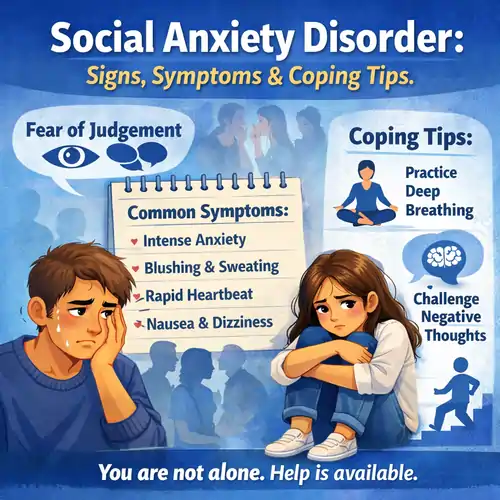
Introduction to Social Anxiety Disorder
Social anxiety disorder (SAD) is a chronic anxiety disorder involving intense fear of social and performance situations. It is officially recognized in the Diagnostic and Statistical Manual of Mental Disorders (DSM-5) as a clinically significant condition that extends beyond normal shyness.
The World Health Organization (WHO) reports that anxiety disorders are among the leading causes of global disability, emphasizing the importance of early diagnosis and treatment.
People with social anxiety often avoid social or professional scenarios where they fear potential judgment, which can negatively affect relationships, education, and career progression.
Understanding Social Anxiety Disorder
At its core, social anxiety disorder involves a persistent fear of negative evaluation. The American Psychological Association (APA) explains that this reaction stems from maladaptive thinking patterns and increased sensitivity to social criticism.
Key Features of Social Anxiety Disorder:
- Persistent fear of social situations
- Avoidance of interactions
- Extreme self-consciousness
- Fear of embarrassment or rejection
- Difficulty maintaining conversations
Signs and Symptoms of Social Anxiety Disorder
Recognizing the early signs of social anxiety disorder helps ensure faster treatment and emotional recovery.
1. Emotional Symptoms
- Intense fear of being judged
- Worry about embarrassment or rejection
- Persistent anxiety before social events
- Low self-esteem
2. Physical Symptoms
- Blushing and sweating
- Rapid heartbeat
- Trembling
- Nausea or stomach discomfort
- Shortness of breath
The Centers for Disease Control and Prevention (CDC) notes that these symptoms occur due to the body’s stress response activation.
3. Behavioral Symptoms
- Avoiding eye contact
- Withdrawing from social gatherings
- Speaking quietly or leaving events early
- Difficulty forming relationships
4. Cognitive Symptoms
- Negative self-talk
- Overanalyzing past interactions
- Fear of future embarrassment
Causes of Social Anxiety Disorder
Social anxiety disorder arises from a combination of genetic, biological, and environmental factors.
- Genetic Factors
The NIMH notes that those with a family history of anxiety disorders are at higher risk. - Brain Function
Research from the National Institutes of Health (NIH) suggests that an overactive amygdala, the brain’s fear center, contributes to heightened social fear responses. - Environmental Factors
The APA links childhood trauma, bullying, or public humiliation to the development of long-term anxiety patterns.
Diagnosis of Social Anxiety Disorder
Diagnosis includes a thorough clinical evaluation based on DSM-5 criteria.
The CDC recommends ruling out medical or neurological conditions before confirming a mental health diagnosis to ensure comprehensive care.
Effective Coping Strategies for Social Anxiety Disorder
- Cognitive Behavioral Therapy (CBT)
CBT remains the most effective intervention for social anxiety. It helps individuals restructure negative thought patterns and gradually increase confidence.
Supported by NICE guidelines, CBT is widely recommended as the first-line treatment. - Exposure Therapy
This approach involves gradual and repeated exposure to feared social scenarios to lessen avoidance behaviors.
Clinical studies from the NIH show that exposure therapy helps desensitize the brain’s fear response. - Medications
Common prescriptions include:- SSRIs (e.g., sertraline, paroxetine)
- SNRIs
- Beta-blockers (to manage physical symptoms)
The U.S. Food and Drug Administration (FDA) advises monitoring under medical supervision.
- Lifestyle Changes
The CDC’s stress management guide supports:- Mindfulness meditation
- Deep breathing and relaxation
- Regular exercise and quality sleep
- Balanced diet and reduced caffeine intake
- Self-Help Strategies
The Anxiety and Depression Association of America (ADAA) recommends:- Journaling to identify anxiety triggers
- Joining support groups
- Practicing social exposure techniques consistently
- Alternative Therapies
The NIH National Center for Complementary and Integrative Health (NCCIH) discusses evidence supporting complementary practices such as yoga, relaxation exercises, and biofeedback therapy as supportive approaches.
Living with Social Anxiety Disorder
Living with social anxiety disorder can be challenging, but with treatment, most individuals drastically improve their quality of life.
Maintaining consistency in therapy, participating in social practice, and building healthy coping skills are crucial. Over time, confidence grows, and avoidance behaviors decline.
Frequently Asked Questions (FAQs)
- What is social anxiety disorder?
A persistent fear of social interactions where a person worries about judgment or embarrassment, impacting education, work, and relationships. - What causes social anxiety disorder?
It results from genetics, brain chemistry, and negative life experiences. It often starts in adolescence or early adulthood. - What are common symptoms?
Emotional fear, physical symptoms like sweating or blushing, and avoidance behaviors are primary signs. - Is social anxiety the same as shyness?
No. Shyness is temporary; social anxiety disorder is severe, persistent, and functionally impairing. - Can social anxiety be treated?
Yes. CBT, exposure therapy, and medication produce excellent recovery outcomes. - What therapy works best?
CBT and exposure therapy are most effective for long-term improvement. - Can medication help?
Yes, SSRIs and beta-blockers reduce anxiety and physiological symptoms. - How does social anxiety affect life?
It limits opportunities, creates isolation, and reduces self-confidence. - Can children have social anxiety disorder?
Yes. Symptoms may manifest as extreme shyness or school avoidance. Early support is key. - What triggers social anxiety?
Public speaking, new people, or performance-based events are common triggers. - Can lifestyle changes help?
Yes. Regular exercise, mindfulness, and reducing caffeine improve emotional balance. - Is social anxiety permanent?
No. It’s treatable and manageable with continued therapy. - What is exposure therapy?
Gradual desensitization to feared situations that helps reduce long-term anxiety. - Can social anxiety cause depression?
Yes, isolation and chronic fear may lead to depressive symptoms. - How is social anxiety diagnosed?
Through professional evaluation using DSM-5 criteria and clinical observation. - What coping strategies work best?
Mindfulness, journaling, CBT exercises, and social practice. - Does caffeine worsen anxiety?
Yes. Caffeine heightens nervous system activity, increasing symptoms. - Can therapy work without medication?
Absolutely. CBT alone is effective for many cases. - What is anticipatory anxiety?
Fear before social events that triggers avoidance or physical tension. - When should I seek help?
If anxiety interferes with daily functioning or quality of life, seek professional help promptly.
Written by: Eden Grace Ramos, RN
Medical Disclaimer
This article is for educational purposes only and should not replace professional medical advice.
Social anxiety disorder requires evaluation and treatment by qualified healthcare professionals.
Always consult a licensed doctor or mental health specialist before starting or changing any treatment.
Content is supported by research and guidelines from: