
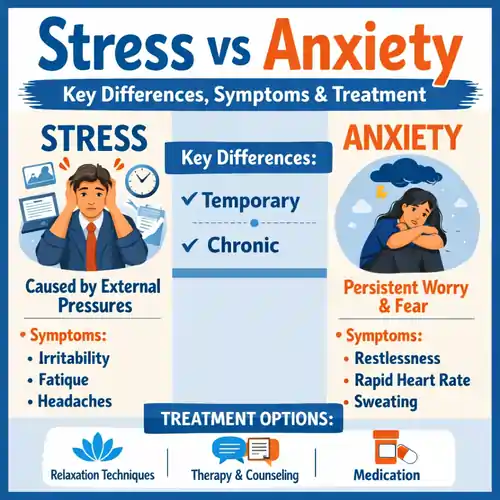
Stress vs anxiety is a common comparison in mental health, as both share overlapping symptoms but differ in cause and duration. According to the National Institute of Mental Health (NIMH), anxiety disorders involve persistent and excessive fear, while stress is typically linked to external pressures. Both can cause physical symptoms such as rapid heartbeat, muscle tension, and fatigue, but anxiety tends to last longer and may require clinical treatment. Understanding the difference between stress and anxiety helps individuals identify symptoms early and apply effective coping strategies.
Introduction to Stress vs Anxiety
Understanding the distinction between stress vs anxiety is essential for recognizing mental health concerns and taking appropriate action. According to the World Health Organization (WHO), anxiety disorders are among the most prevalent mental health conditions worldwide.
Stress is usually triggered by external situations such as work pressure or financial challenges, while anxiety may persist even without a clear cause. The American Psychological Association (APA) explains that stress is a response to demands, whereas anxiety is more internally driven and chronic.
What is Stress?
Stress is the body’s natural reaction to external demands or pressures.
Common Causes of Stress
- Work deadlines
- Financial problems
- Relationship conflicts
- Life transitions
When experiencing stress, the body activates the fight‑or‑flight response, releasing cortisol and adrenaline. The National Institutes of Health (NIH) explains how this biological response functions.
Types of Stress
- Acute stress (short‑term)
- Chronic stress (long‑term)
While short‑term stress can be helpful, chronic stress can negatively impact health.
What is Anxiety?
Anxiety is a persistent feeling of worry or fear that may not be linked to a specific trigger.
Types of Anxiety Disorders
- Generalized anxiety disorder (GAD)
- Panic disorder
- Social anxiety disorder
- Phobias
The NIMH provides a detailed overview of anxiety disorders and their symptoms. Unlike stress, anxiety symptoms can continue even after the stressor is gone.
Key Differences Between Stress and Anxiety
- Cause
- Stress → External triggers
- Anxiety → Internal or unclear triggers
- Duration
- Stress → Temporary
- Anxiety → Persistent
- Intensity
- Stress → Situation‑based
- Anxiety → Often disproportionate
Symptoms of Stress vs Anxiety
Physical Symptoms
- Rapid heartbeat
- Muscle tension
- Fatigue
- Headaches
- Sleep disturbances
The Centers for Disease Control and Prevention (CDC) explains how stress affects the body physically.
Emotional Symptoms
- Irritability
- Restlessness
- Difficulty concentrating
Behavioral Symptoms
- Avoidance
- Procrastination
- Social withdrawal
The Role of Hormones in Stress and Anxiety
Hormones play a crucial role in both stress and anxiety.
Key hormones include:
- Cortisol
- Adrenaline
- Thyroid hormones
Hormonal imbalance can intensify anxiety symptoms and stress responses. Learn more in this dedicated guide:
https://mededuhub.com/mental-health/anxiety/hormones-and-anxiety/
Medical Conditions Linked to Anxiety
Certain physical health conditions can mimic or trigger anxiety symptoms.
Examples include:
- Thyroid disorders
- Cardiovascular conditions
- Chronic illness
The CDC highlights the connection between physical and mental health
Lifestyle Factors That Affect Stress and Anxiety
Daily habits significantly influence stress levels and anxiety symptoms.
Key factors:
- Sleep quality
- Diet and nutrition
- Caffeine intake
The CDC’s stress and coping resource underscores the importance of healthy routines:
Read more about lifestyle influences.
Causes of Stress and Anxiety
- Biological factors
- Brain chemistry
- Hormonal imbalance
- Psychological factors
- Negative thinking patterns
- Personality traits
- Environmental factors
- Trauma
- Chronic stress
The APA explains how these factors interact in mental health conditions.
When Stress Becomes Anxiety
Prolonged chronic stress can evolve into anxiety disorders if not properly managed. Warning signs include:
- Persistent worry
- Difficulty relaxing
- Avoidance behaviors
Treatment for Stress and Anxiety
1. Cognitive Behavioral Therapy (CBT)
Cognitive behavioral therapy (CBT) is highly effective for both conditions. The National Institute for Health and Care Excellence (NICE) recommends CBT as a first‑line treatment.
2. Medications
- SSRIs
- SNRIs
The U.S. Food and Drug Administration (FDA) provides safety guidance for psychiatric medications.
3. Stress Management Techniques
- Mindfulness
- Meditation
- Deep breathing exercises
4. Lifestyle Changes
- Exercise
- Balanced diet
- Quality sleep
Living with Stress and Anxiety
Managing stress and anxiety requires consistent effort and awareness. Identifying triggers and applying coping strategies can significantly improve mental well‑being.
Frequently Asked Questions (FAQs)
1. What is the difference between stress and anxiety?
Stress vs anxiety differs mainly in cause and duration. Stress is usually triggered by external situations, while anxiety can persist without a clear cause. Anxiety also tends to last longer and may require treatment.
2. Can stress turn into anxiety?
Yes, prolonged stress can develop into anxiety disorders. Chronic exposure to stress affects brain chemistry and emotional regulation. Early management helps prevent this progression.
3. What are common symptoms of stress and anxiety?
Symptoms include rapid heartbeat, fatigue, and irritability. Emotional symptoms include worry and restlessness. Behavioral changes like avoidance are also common.
4. Is anxiety more serious than stress?
Anxiety can be more serious when it becomes chronic. It may interfere with daily functioning and relationships. Professional treatment may be needed.
5. What causes stress?
Stress is caused by external pressures such as work or finances. Life changes and responsibilities also contribute. It is usually temporary.
6. What causes anxiety?
Anxiety is caused by biological, psychological, and environmental factors. Brain chemistry and genetics play a role. It may occur without a clear trigger.
7. Can lifestyle affect stress and anxiety?
Yes, lifestyle factors significantly impact both conditions. Sleep, diet, and caffeine intake influence symptoms. Healthy habits improve mental health.
8. How are stress and anxiety treated?
Treatment includes therapy, medication, and lifestyle changes. CBT is highly effective. Stress management techniques also help.
9. Can anxiety be cured?
Anxiety can be managed effectively with treatment. Some individuals experience full recovery. Consistency is key.
10. Is stress always harmful?
No, short-term stress can be beneficial. It helps improve focus and performance. Chronic stress, however, is harmful.
11. What is chronic stress?
Chronic stress is long-term stress that persists over time. It can negatively affect physical and mental health. It may lead to anxiety disorders.
12. What are anxiety disorders?
Anxiety disorders are mental health conditions involving excessive fear. They include GAD, panic disorder, and phobias. They require proper treatment.
13. Can children experience stress and anxiety?
Yes, children can experience both stress and anxiety. Symptoms may appear differently compared to adults. Early support is important.
14. When should I seek help?
Seek help if symptoms interfere with daily life. Persistent anxiety or stress requires professional evaluation. Early intervention improves outcomes.
15. Can exercise reduce anxiety?
Yes, exercise reduces stress hormones and improves mood. It promotes mental well-being. Regular activity is beneficial.
16. Does caffeine increase anxiety?
Yes, caffeine can worsen anxiety symptoms. It stimulates the nervous system. Reducing intake helps manage symptoms.
17. Can therapy work without medication?
Yes, therapy alone can be effective. CBT is widely used. Treatment depends on severity.
18. Can stress affect physical health?
Yes, stress can cause headaches and fatigue. Chronic stress affects overall health. It may worsen existing conditions.
19. What coping strategies help most?
Mindfulness, relaxation, and social support are effective. Identifying triggers also helps. Consistency improves results.
20. Is anxiety permanent?
No, anxiety is manageable and often treatable. Many people recover with proper care. Ongoing support is important.
Written by: Eden Grace Ramos, RN
Medical Disclaimer
This article is for informational and educational purposes only and does not replace professional medical advice. Stress and anxiety disorders require proper diagnosis and treatment by qualified healthcare professionals. Always consult a licensed physician or mental health specialist.
Content is based on current clinical guidelines and research from: