
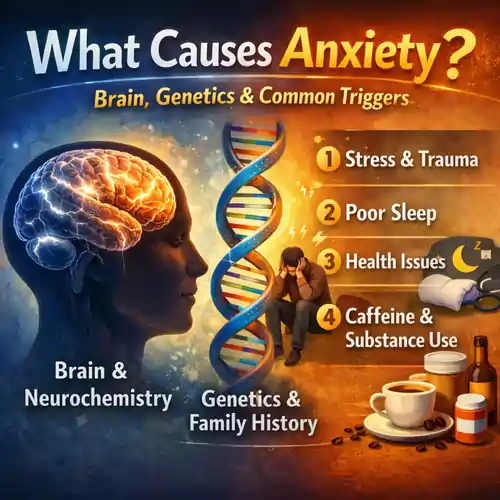
Anxiety is a complex mental health condition influenced by multiple factors, including brain function, genetics, and environmental triggers. According to the National Institute of Mental Health (NIMH), imbalances in neurotransmitters, overactivity in the amygdala, and elevated stress hormones like cortisol contribute to anxiety disorders. In addition, genetic predisposition, medical conditions, and lifestyle factors such as sleep and diet play a major role. Understanding the causes of anxiety helps individuals identify triggers and seek appropriate treatment and coping strategies.
Introduction to Anxiety
Anxiety is a natural response to stress, but when it becomes excessive or persistent, it may develop into an anxiety disorder. According to the World Health Organization (WHO), anxiety disorders are among the most common mental health conditions worldwide.
Understanding what causes anxiety is essential for proper diagnosis and management. Anxiety results from interactions between biological, psychological, and environmental factors rather than a single cause.
Understanding Anxiety and Its Mechanisms
At its core, anxiety is linked to the body’s fight‑or‑flight response, a survival system designed to protect against danger.
How the Anxiety Response Works
When the brain perceives a threat:
- The amygdala activates
- Stress hormones like cortisol and adrenaline are released
- The body prepares for action
The National Institutes of Health (NIH) explains this response in detail. While helpful in emergencies, this system becomes problematic when triggered too frequently or without real danger.
To better understand the difference between normal stress and anxiety, you can read Stress vs Anxiety: What’s the Difference?.
Brain and Anxiety: The Neurobiology
The brain and anxiety are deeply connected through key regions and chemicals.
1. The Amygdala
The amygdala processes fear and emotional responses. Overactivity in this area is strongly linked to heightened anxiety, as supported by NIH research: The Neurobiology of Anxiety Disorders.
2. The Prefrontal Cortex
This region regulates rational thinking and emotional control. Dysfunction can lead to poor regulation of anxious thoughts.
3. Neurotransmitters
Imbalances in neurotransmitters contribute to anxiety:
- Serotonin – mood regulation
- GABA – calming effect
- Dopamine – motivation
- Norepinephrine – alertness
The NIMH explains how these systems affect anxiety disorders.
Hormones and Anxiety
Hormones play a crucial role in anxiety levels.
Key hormones include:
- Cortisol
- Thyroid hormones
- Estrogen and progesterone
Hormonal imbalance can trigger anxiety symptoms, especially during stress or life changes. You can learn more in Hormones and Anxiety (Cortisol, Thyroid, Menstrual Cycle).
Genetics and Anxiety
Genetics and anxiety are closely linked. According to the NIMH, individuals with a family history of anxiety disorders are more likely to develop them. However, genetics interact with environmental factors, meaning not everyone with genetic risk will develop anxiety.
Environmental Causes of Anxiety
Environmental influences are major anxiety triggers.
Common environmental factors include:
- Trauma
- Loss
- Financial stress
- Relationship problems
The American Psychological Association (APA) highlights how chronic stress reshapes brain responses and increases anxiety risk.
Medical Conditions That Cause Anxiety
Certain physical conditions can mimic or trigger anxiety symptoms.
Examples include:
- Thyroid disorders
- Heart conditions
- Respiratory illnesses
The Centers for Disease Control and Prevention (CDC) explains the connection between physical and mental health. You can explore this topic further in Can Medical Conditions Cause Anxiety?.
Lifestyle Factors That Contribute to Anxiety
Lifestyle plays a significant role in anxiety development.
- Sleep – Poor sleep increases emotional instability and stress.
- Diet – Unbalanced nutrition affects brain function and mood.
- Caffeine – High intake can trigger rapid heartbeat and restlessness.
The CDC’s stress and coping guide supports these findings: Stress and Coping. You can read more in Anxiety and Lifestyle Factors (Sleep, Diet, Caffeine).
Psychological Causes of Anxiety
- Negative thinking patterns
- Catastrophic thinking
- Overthinking
- Personality traits
- Perfectionism
- Sensitivity
- Learned behavior
- Exposure to anxious environments can reinforce anxiety
Common Triggers of Anxiety
Understanding common triggers of anxiety is essential for prevention. These can include:
- Social pressure
- Work stress
- Health concerns
- Uncertainty
Triggers vary widely between individuals.
Types of Anxiety Disorders
- Generalized anxiety disorder (GAD)
- Panic disorder
- Social anxiety disorder
- Phobias
Each type has distinct causes and triggers.
How Anxiety Develops Over Time
Anxiety often follows a pattern:
- Stress exposure
- Increased sensitivity
- Avoidance behavior
- Reinforcement of fear
When Anxiety Becomes a Disorder
Anxiety becomes a disorder when it:
- Persists over time
- Interferes with daily life
- Causes significant distress
Managing the Causes of Anxiety
- Therapy
- Cognitive behavioral therapy (CBT)
- Exposure therapy
- Medication
- SSRIs
- SNRIs
- Lifestyle changes
- Exercise
- Sleep
- Nutrition
Prevention Strategies
- Stress management
- Healthy routines
- Early intervention
Living with Anxiety
Living with anxiety requires awareness and consistent care. Identifying triggers and practicing coping strategies can significantly improve quality of life.
Frequently Asked Questions (FAQs)
1. What causes anxiety?
Anxiety is caused by a combination of biological, psychological, and environmental factors. Brain chemistry, genetics, and life experiences all contribute. Understanding these factors helps in managing symptoms effectively.
2. Can brain chemistry cause anxiety?
Yes, imbalances in neurotransmitters can lead to anxiety. Chemicals like serotonin and GABA regulate mood and stress. When these are disrupted, anxiety symptoms may occur.
3. Is anxiety genetic?
Genetics can increase the risk of anxiety disorders. A family history of anxiety makes individuals more susceptible. However, environment also plays a major role.
4. Can stress cause anxiety?
Yes, chronic stress is a major trigger for anxiety. It keeps the body in a constant state of alertness. Over time, this can develop into an anxiety disorder.
5. What role do hormones play?
Hormones like cortisol influence anxiety levels. Imbalances can worsen symptoms. Hormonal changes can trigger anxiety episodes.
6. Can medical conditions cause anxiety?
Yes, certain illnesses can trigger anxiety symptoms. Conditions affecting the heart or thyroid are common examples. Proper diagnosis is important.
7. How does lifestyle affect anxiety?
Lifestyle factors like sleep and diet play a major role. Poor habits can worsen symptoms. Healthy routines improve mental well-being.
8. What are common triggers?
Triggers include stress, trauma, and uncertainty. Social situations may also cause anxiety. Triggers vary by individual.
9. Can anxiety develop over time?
Yes, anxiety often develops gradually. Repeated stress increases sensitivity. Avoidance behaviors reinforce it.
10. Is anxiety a mental illness?
Yes, anxiety disorders are recognized mental health conditions. They affect thoughts, emotions, and behavior. Treatment is available.
11. Can anxiety be prevented?
Not always, but risk can be reduced. Stress management and healthy habits help. Early intervention is key.
12. What is the fight-or-flight response?
It is the body’s natural reaction to danger. It prepares the body for action. In anxiety, it is triggered unnecessarily.
13. Can anxiety affect physical health?
Yes, it can cause physical symptoms like headaches. Chronic anxiety affects overall health. It may worsen existing conditions.
14. How is anxiety diagnosed?
Diagnosis involves clinical evaluation. Professionals assess symptoms and history. Standard criteria are used.
15. What treatments are available?
Treatments include therapy and medication. CBT is highly effective. Lifestyle changes also help.
16. Can therapy work without medication?
Yes, therapy alone can be effective. CBT is widely used. Treatment depends on severity.
17. Can caffeine trigger anxiety?
Yes, caffeine stimulates the nervous system. It can increase heart rate and nervousness. Reducing intake helps.
18. Is anxiety permanent?
No, anxiety is manageable and often treatable. Many people recover with proper care. Consistency is important.
19. When should I seek help?
Seek help when symptoms affect daily life. Early treatment improves outcomes. Professional support is effective.
20. Can anxiety lead to other disorders?
Yes, untreated anxiety can lead to depression. It may also contribute to other mental health issues. Early care prevents complications.
Written by: Eden Grace Ramos, RN
Medical Disclaimer
This article is for informational purposes only and does not replace professional medical advice. Anxiety disorders require proper diagnosis and treatment by qualified healthcare professionals. Always consult a licensed physician or mental health specialist.
Content is based on current clinical guidelines and research from: