
Daily habits to reduce anxiety naturally without medication focus on regulating your nervous system, improving sleep, balancing hormones, and building mental resilience. Simple routines like mindful breathing, consistent sleep schedules, physical activity, and healthy nutrition can significantly lower stress levels over time. When practiced consistently, these habits help your brain shift from a chronic “fight-or-flight” state into a calmer, more balanced mode—supporting long-term mental well-being.
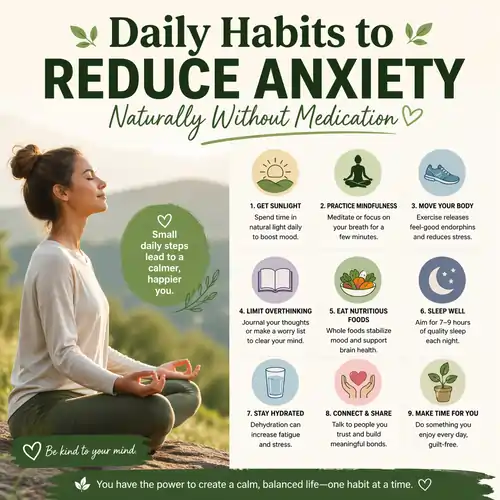
Anxiety has become one of the most common challenges in modern life. Whether it shows up as racing thoughts, restlessness, difficulty sleeping, or constant worry, it can quietly affect your productivity, relationships, and overall quality of life. While medication can be helpful for some individuals, many people are actively searching for daily habits to reduce anxiety naturally without medication.
The good news is that anxiety is highly responsive to lifestyle changes. Your brain and body are deeply connected, meaning small, consistent actions can reshape how your nervous system reacts to stress. This article explores evidence-based, practical, and sustainable habits you can integrate into your daily routine.
Understanding Anxiety: Why Daily Habits Matter
Before diving into solutions, it’s important to understand what anxiety actually is. Anxiety is your body’s natural response to perceived threats. It activates the sympathetic nervous system, commonly known as the “fight-or-flight” response.
However, modern anxiety is often triggered by non-life-threatening situations like work pressure, financial concerns, or social stress. When this response becomes chronic, your body stays in a heightened state of alert.
This is where natural anxiety management techniques come in. Daily habits work by:
- Regulating stress hormones like cortisol
- Activating the parasympathetic nervous system (rest-and-digest mode)
- Rewiring thought patterns through repetition
- Improving overall physical health, which directly impacts mental health
1. Start Your Day with Mindful Breathing
One of the most powerful daily habits to reduce anxiety naturally is mindful breathing.
When you’re anxious, your breathing becomes shallow and rapid. This signals your brain that something is wrong. By consciously slowing your breath, you send the opposite signal: that you are safe.
How to Practice:
- Inhale deeply for 4 seconds
- Hold for 4 seconds
- Exhale slowly for 6–8 seconds
- Repeat for 5–10 minutes
This technique, often called deep breathing exercises for anxiety, helps lower heart rate and reduce cortisol levels.
2. Maintain a Consistent Sleep Routine
Sleep and anxiety are closely linked. Poor sleep increases emotional reactivity, while anxiety disrupts sleep—creating a cycle.
A key natural way to reduce anxiety is improving your sleep hygiene.
Tips:
- Go to bed and wake up at the same time daily
- Avoid screens at least 1 hour before sleep
- Limit caffeine after midday
- Create a calming nighttime routine
Quality sleep enhances emotional regulation and reduces overthinking.
3. Move Your Body Daily
Regular physical activity is one of the most effective natural remedies for anxiety.
Exercise releases endorphins, which are natural mood boosters. It also reduces stress hormones and improves brain function.
Best Options:
- Walking (especially in nature)
- Yoga
- Strength training
- Light cardio
Even 20–30 minutes a day can make a significant difference.
4. Practice Mindfulness and Meditation
Mindfulness for anxiety relief helps you stay present instead of getting trapped in future worries.
Meditation trains your brain to observe thoughts without reacting to them.
Simple Practice:
- Sit quietly for 5–10 minutes
- Focus on your breath
- Notice thoughts without judgment
- Bring your attention back to breathing
Over time, this reduces rumination and improves emotional control.
5. Limit Caffeine and Sugar Intake
Diet plays a major role in mental health. Excess caffeine and sugar can trigger anxiety symptoms like:
- Rapid heartbeat
- Restlessness
- Irritability
Switching to anxiety-friendly nutrition habits can stabilize your mood.
Alternatives:
- Herbal teas (chamomile, peppermint)
- Water with lemon
- Balanced meals with protein, healthy fats, and fiber
6. Create a Structured Daily Routine
Uncertainty can increase anxiety. Having a predictable structure reduces mental load.
A consistent routine provides a sense of control and stability.
Include:
- Morning routine
- Work blocks
- Break times
- Evening wind-down
This is a key part of natural anxiety management techniques.
7. Reduce Screen Time and Social Media Exposure
Constant exposure to information can overwhelm your brain.
Social media, in particular, can increase comparison, fear, and overstimulation.
Tips:
- Set daily screen limits
- Avoid scrolling before bed
- Take regular digital detox breaks
This helps reduce mental clutter and emotional overload.
8. Spend Time in Nature
Nature has a calming effect on the nervous system. Studies show that spending time outdoors reduces cortisol levels and improves mood.
This is one of the simplest daily habits to reduce anxiety naturally without medication.
Ideas:
- Walk in a park
- Sit under trees
- Listen to natural sounds
Even 15 minutes a day can have noticeable benefits.
9. Practice Gratitude Daily
Gratitude shifts your focus from what’s wrong to what’s going well.
This simple habit rewires your brain for positivity.
How:
- Write 3 things you’re grateful for daily
- Reflect on positive experiences
- Express appreciation to others
Gratitude is a powerful mental health habit for reducing anxiety.
10. Stay Connected with Supportive People
Isolation can worsen anxiety. Human connection provides emotional support and reassurance.
Talking about your feelings can reduce their intensity.
Focus on:
- Trusted friends or family
- Support groups
- Meaningful conversations
Healthy relationships are essential for emotional well-being.
11. Practice Journaling for Emotional Release
Journaling for anxiety relief helps you process thoughts and emotions.
Writing down worries can make them feel more manageable.
Prompts:
- What am I feeling right now?
- What triggered this anxiety?
- What can I control?
This creates clarity and reduces mental overload.
12. Use Grounding Techniques
Grounding techniques bring you back to the present moment during anxiety spikes.
Example: 5-4-3-2-1 Method
- 5 things you see
- 4 things you feel
- 3 things you hear
- 2 things you smell
- 1 thing you taste
This is an effective natural anxiety relief technique.
13. Eat a Balanced Diet
Your gut and brain are connected. A healthy diet supports mental health.
Include:
- Omega-3 fatty acids
- Whole grains
- Leafy greens
- Lean proteins
This supports natural ways to reduce anxiety through nutrition.
14. Practice Self-Compassion
Being overly critical of yourself increases anxiety.
Self-compassion helps you respond to stress with kindness instead of judgment.
Try:
- Positive self-talk
- Accepting imperfections
- Treating yourself like a friend
15. Limit Alcohol Consumption
Alcohol may feel relaxing initially, but it can worsen anxiety later.
Reducing intake supports emotional stability.
16. Engage in Relaxing Activities
Hobbies help shift your focus away from stress.
Examples:
- Reading
- Drawing
- Listening to music
These activities support stress reduction techniques.
17. Set Realistic Goals
Overwhelming expectations can trigger anxiety.
Break tasks into smaller, manageable steps.
18. Practice Progressive Muscle Relaxation
This technique reduces physical tension.
Steps:
- Tense each muscle group
- Hold for 5 seconds
- Release slowly
19. Stay Hydrated
Dehydration can affect mood and energy levels.
Drink enough water throughout the day.
20. Seek Professional Guidance When Needed
While these daily habits to reduce anxiety naturally without medication are effective, persistent anxiety may require professional support.
Frequently Asked Questions (FAQ)
1. Can anxiety really be reduced without medication?
Yes, many people successfully manage anxiety through lifestyle changes and natural anxiety management techniques. Daily habits like exercise, mindfulness, and proper sleep can significantly improve symptoms over time. However, severe cases may still require professional evaluation.
2. How long does it take for natural habits to reduce anxiety?
Results vary depending on consistency and individual factors. Some people notice improvements within a few days, while others may take weeks to see changes. The key is maintaining consistent daily habits to reduce anxiety naturally.
3. What is the best daily habit for anxiety?
There is no single “best” habit, but mindful breathing and regular exercise are highly effective. These directly impact your nervous system and reduce stress hormones. Combining multiple habits yields better results.
4. Can diet affect anxiety levels?
Yes, diet plays a major role in mental health. Foods high in sugar and caffeine can increase anxiety symptoms. A balanced diet supports natural ways to reduce anxiety.
5. Is exercise necessary for anxiety relief?
Exercise is one of the most effective natural methods. It releases endorphins and reduces cortisol levels. Even light activity like walking can help.
6. Does sleep impact anxiety?
Poor sleep can worsen anxiety significantly. A consistent sleep routine improves emotional regulation. It is essential for overall mental health.
7. What are grounding techniques for anxiety?
Grounding techniques help bring your focus back to the present moment. They are useful during anxiety spikes. The 5-4-3-2-1 method is a common example.
8. Can mindfulness really help anxiety?
Yes, mindfulness for anxiety relief helps reduce overthinking. It trains your brain to observe thoughts without reacting. This improves emotional control over time.
9. Should I avoid caffeine completely?
Not necessarily, but limiting intake can help. Caffeine can trigger symptoms like restlessness and rapid heartbeat. Reducing consumption supports calmer energy levels.
10. How does journaling help anxiety?
Journaling allows you to process thoughts and emotions. It helps identify triggers and patterns. This makes anxiety feel more manageable.
11. Is social media bad for anxiety?
Excessive use can increase stress and comparison. Limiting screen time can reduce mental overload. Balance is important.
12. Can nature reduce anxiety?
Yes, spending time outdoors has a calming effect. It lowers stress hormones and improves mood. Even short walks can help.
13. Are breathing exercises effective?
Yes, they directly influence your nervous system. Slow breathing signals safety to your brain. This reduces anxiety quickly.
14. Can hydration affect anxiety?
Dehydration can impact mood and energy levels. Drinking enough water supports overall well-being. It’s a simple but important habit.
15. What role does routine play in anxiety?
A structured routine reduces uncertainty. It provides a sense of control and stability. This helps lower anxiety levels.
16. Is alcohol harmful for anxiety?
Alcohol can worsen anxiety after its initial effects wear off. Reducing intake helps maintain emotional balance. Moderation is key.
17. Can hobbies help reduce anxiety?
Yes, hobbies provide distraction and relaxation. They shift focus away from stress. This supports mental well-being.
18. How important is social support?
Very important, as connection reduces feelings of isolation. Talking to others can ease emotional burden. Support systems are essential.
19. What is progressive muscle relaxation?
It’s a technique that reduces physical tension. You tense and release muscle groups systematically. This promotes relaxation.
20. When should I seek professional help?
If anxiety interferes with daily life or persists despite lifestyle changes, consult a professional. Therapy and medical guidance can provide additional support. Early intervention is beneficial.
Disclaimer
This article is for informational purposes only and does not replace professional medical advice, diagnosis, or treatment. While these daily habits to reduce anxiety naturally without medication are evidence-based and widely recommended, individual results may vary. Always consult a qualified healthcare provider if you have persistent or severe anxiety, or before making significant changes to your health routine.