
Anxiety in children and teens often appears differently than in adults, showing up through behavioral changes, emotional distress, and physical symptoms. Common signs of anxiety in children and teens include excessive worry, irritability, avoidance of activities, sleep problems, and difficulty concentrating. Early recognition and supportive parenting strategies can significantly improve outcomes and help children develop healthy coping skills.
Anxiety in children and teens is increasingly recognized as a major concern in modern mental health. While occasional worry is a normal part of development, persistent or intense anxiety can interfere with a child’s daily life, academic performance, and relationships.
Understanding the signs of anxiety in children and teens is crucial for early intervention. Unlike adults, children may not always express their feelings clearly. Instead, anxiety often manifests through behaviors, physical complaints, or emotional outbursts.
This comprehensive guide will help parents recognize symptoms, understand causes, and apply effective natural anxiety management techniques to support their child’s well-being.
Understanding Anxiety in Children and Teens
Childhood anxiety disorders occur when fear or worry becomes excessive and persistent. These feelings can affect how a child thinks, feels, and behaves.
Common Types of Anxiety in Young People:
- Generalized anxiety disorder in children
- Social anxiety in teens
- Separation anxiety disorder
- Panic disorder in adolescents
- School-related anxiety
Each type may present differently, but they share common patterns of heightened fear and avoidance.
Why Anxiety Develops in Children and Teens
Several factors contribute to anxiety in children and teens:
1. Biological Factors
Genetics and brain chemistry play a role. Children with a family history of anxiety may be more susceptible.
2. Environmental Stressors
Stressful life events such as family conflict, academic pressure, or bullying can trigger anxiety.
3. Personality Traits
Children who are naturally shy or sensitive may be more prone to anxiety.
4. Learned Behavior
Children often model coping patterns from parents or caregivers.
Understanding these causes helps parents apply effective anxiety support strategies for kids and teens.
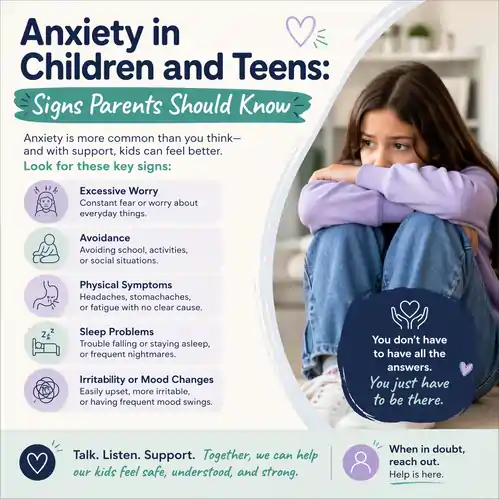
Early Signs of Anxiety in Children
Recognizing early signs of anxiety in children can prevent symptoms from worsening.
Emotional Signs:
- Excessive fear or worry
- Frequent crying or irritability
- Clinginess or fear of separation
Behavioral Signs:
- Avoidance of school or social activities
- Refusal to try new things
- Repetitive reassurance-seeking
Physical Symptoms:
- Stomachaches or headaches
- Fatigue or sleep disturbances
- Rapid heartbeat
These symptoms are common indicators of childhood anxiety symptoms.
Signs of Anxiety in Teens
Teen anxiety symptoms may differ due to developmental changes.
Emotional Signs:
- Persistent worry about performance or social acceptance
- Mood swings or irritability
- Feelings of being overwhelmed
Behavioral Signs:
- Withdrawal from friends and family
- Decline in academic performance
- Increased screen time or isolation
Physical Symptoms:
- Muscle tension
- Sleep problems
- Changes in appetite
Recognizing these patterns is key to identifying anxiety disorders in adolescents.
How Anxiety Affects Daily Life
Untreated anxiety in children and teens can impact:
- Academic performance
- Social relationships
- Self-esteem
- Physical health
Over time, it may increase the risk of depression or other mental health conditions.
Common Triggers of Anxiety in Young People
Understanding triggers helps in managing symptoms.
Common Triggers:
- Academic pressure
- Social situations
- Family changes
- Exposure to social media
- Fear of failure
These factors contribute to stress and anxiety in children and teens.
When to Be Concerned
Occasional anxiety is normal. However, parents should seek help if:
- Symptoms persist for weeks or months
- Anxiety interferes with daily activities
- Physical symptoms are frequent
- The child avoids normal routines
These may indicate clinical anxiety in children and adolescents.
How Parents Can Support Anxious Children and Teens
1. Open Communication
Encourage your child to talk about their feelings. Listen without judgment.
2. Validate Emotions
Acknowledge their feelings instead of dismissing them.
3. Teach Coping Skills
Introduce coping strategies for anxiety in kids such as breathing exercises.
4. Maintain Routine
A consistent schedule provides stability and security.
5. Limit Exposure to Stressors
Reduce overwhelming inputs like excessive screen time or pressure.
Effective Daily Habits to Reduce Anxiety
1. Mindful Breathing
Deep breathing exercises for anxiety calm the nervous system.
2. Physical Activity
Exercise supports natural anxiety relief.
3. Healthy Sleep Routine
Good sleep is essential for emotional regulation.
4. Balanced Nutrition
Diet influences mood and energy levels.
5. Relaxation Techniques
Activities like reading or drawing support stress reduction techniques.
Role of Schools and Environment
Schools play a significant role in identifying and supporting anxious children.
Supportive Strategies:
- Counseling services
- Teacher awareness
- Safe learning environments
Collaboration between parents and schools improves outcomes.
Professional Treatment Options
If needed, professional help may include:
- Cognitive Behavioral Therapy (CBT for children and teens)
- Counseling or psychotherapy
- Family therapy
These are evidence-based approaches for managing anxiety disorders in youth.
Preventing Anxiety in Children and Teens
While not all anxiety can be prevented, certain steps can reduce risk:
- Encourage resilience and problem-solving
- Promote healthy routines
- Foster supportive relationships
- Teach emotional regulation skills
These strategies support long-term mental health in children and adolescents.
Long-Term Outlook
With proper support, most children and teens can manage anxiety effectively. Early intervention leads to better outcomes and improved quality of life.
Frequently Asked Questions (FAQ)
1. What are the first signs of anxiety in children?
Early signs include excessive worry, clinginess, and physical complaints like stomachaches. Children may also avoid activities they previously enjoyed. Recognizing these symptoms early helps with timely support.
2. How does anxiety differ in teens compared to children?
Teens may show more withdrawal, irritability, and academic decline. They may also struggle with social pressures and self-image. These differences reflect developmental changes.
3. Can anxiety go away on its own?
Mild anxiety may improve with time and support. However, persistent anxiety often requires intervention. Early action is important for better outcomes.
4. What causes anxiety in children?
Causes include genetics, environment, and personality traits. Stressful events and learned behaviors also contribute. Each child’s experience is unique.
5. Is anxiety in kids normal?
Occasional anxiety is a normal part of development. It becomes a concern when it is persistent or severe. Monitoring patterns is essential.
6. How can parents help an anxious child?
Parents can provide support through communication and validation. Teaching coping skills and maintaining routines also helps. Professional guidance may be needed in some cases.
7. What are physical symptoms of anxiety?
Common symptoms include headaches, stomachaches, and fatigue. Rapid heartbeat and sleep problems are also common. These signs should not be ignored.
8. Can school cause anxiety?
Yes, academic pressure and social situations can trigger anxiety. Bullying and performance expectations also play a role. A supportive environment can reduce stress.
9. What is social anxiety in teens?
Social anxiety involves fear of judgment or embarrassment. Teens may avoid social interactions or feel extremely self-conscious. It can impact relationships and confidence.
10. When should parents seek help?
Help should be sought if anxiety affects daily life or persists over time. Professional evaluation can provide clarity and support. Early intervention is beneficial.
11. Can diet affect anxiety in kids?
Yes, nutrition impacts mood and energy levels. Balanced meals support brain health. Reducing sugar and caffeine may help.
12. Are breathing exercises effective for kids?
Yes, they help regulate the nervous system. Simple techniques can calm anxiety quickly. They are easy to practice daily.
13. What is CBT for children?
Cognitive Behavioral Therapy helps children change negative thought patterns. It teaches coping skills and problem-solving. It is widely used for anxiety treatment.
14. Can anxiety affect school performance?
Yes, anxiety can reduce focus and motivation. It may lead to avoidance of schoolwork. Support can improve outcomes.
15. Is screen time linked to anxiety?
Excessive screen time can increase stress and comparison. Limiting use may help reduce anxiety. Balance is important.
16. Can anxiety lead to depression?
Yes, untreated anxiety may increase the risk of depression. Early support reduces this risk. Monitoring mental health is important.
17. How can teens manage anxiety naturally?
Teens can use mindfulness, exercise, and journaling. Healthy routines also help. Consistency is key.
18. What are coping strategies for kids?
Coping strategies include breathing exercises, relaxation, and positive thinking. These tools help manage stress. Practice improves effectiveness.
19. Can family environment affect anxiety?
Yes, family dynamics influence emotional well-being. Supportive environments reduce anxiety risk. Open communication is essential.
20. Is professional therapy necessary?
Not always, but it can be very helpful. Therapy provides structured tools and guidance. It is recommended for persistent symptoms.
Disclaimer
This article is for informational purposes only and does not replace professional medical advice, diagnosis, or treatment. While the information about anxiety in children and teens and its management is based on current understanding and best practices, individual experiences may vary. Always consult a qualified healthcare provider or mental health professional if your child shows persistent or severe symptoms of anxiety.