
Anxiety in older adults is a common but often overlooked condition that can affect emotional, physical, and cognitive health. Key symptoms of anxiety in seniors include excessive worry, restlessness, sleep disturbances, fatigue, and physical complaints like muscle tension or heart palpitations. Early recognition and proper care strategies for elderly anxiety—including lifestyle changes, emotional support, and professional treatment—can significantly improve quality of life and overall well-being.
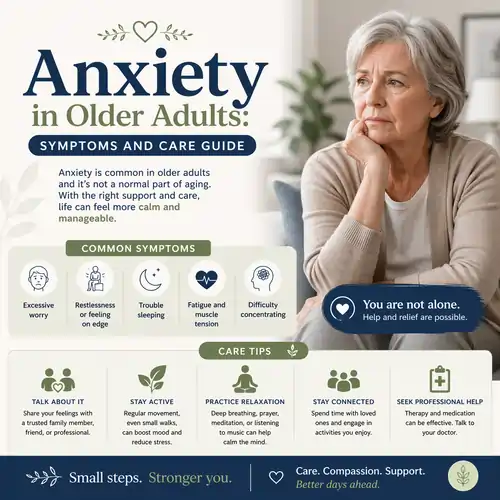
Anxiety in older adults is a growing mental health concern that is frequently underdiagnosed and undertreated. While aging brings many life transitions, persistent anxiety is not a normal part of aging. Understanding the symptoms of anxiety in seniors and how to provide effective care is essential for improving mental and physical health outcomes.
This comprehensive guide explores the causes, symptoms, risk factors, and care strategies for anxiety in elderly individuals, helping caregivers, families, and healthcare providers offer better support.
Understanding Anxiety in Older Adults
Anxiety disorders in older adults involve excessive and persistent worry that interferes with daily functioning. These disorders may include:
- Generalized anxiety disorder in seniors
- Panic disorder in older adults
- Phobias in elderly individuals
- Social anxiety in older adults
Unlike younger populations, anxiety in seniors may present more through physical symptoms than emotional expressions.
Why Anxiety in Seniors Is Often Overlooked
Many cases of elderly anxiety symptoms go unnoticed because they are mistaken for normal aging or physical illness.
Common Reasons:
- Symptoms overlap with medical conditions
- Seniors may underreport emotional distress
- Focus is often placed on physical health rather than mental health
Recognizing these gaps is critical for improving mental health in older adults.
Common Symptoms of Anxiety in Older Adults
Emotional Symptoms:
- Persistent worry or fear
- Irritability
- Feelings of unease or dread
Physical Symptoms:
- Muscle tension
- Rapid heartbeat
- Fatigue
- Gastrointestinal issues
Cognitive Symptoms:
- Difficulty concentrating
- Memory problems
- Racing thoughts
Behavioral Symptoms:
- Avoidance of activities
- Social withdrawal
- Changes in routine
These signs are key indicators of anxiety symptoms in elderly individuals.
Causes of Anxiety in Older Adults
Understanding the root causes helps in managing anxiety in seniors effectively.
1. Health-Related Concerns
Chronic illness, pain, and declining physical health can trigger anxiety.
2. Life Transitions
Retirement, loss of loved ones, and changes in independence can increase stress.
3. Medication Side Effects
Certain medications may contribute to anxiety symptoms in older adults.
4. Cognitive Changes
Memory decline or fear of cognitive impairment can lead to anxiety.
Risk Factors for Anxiety in Seniors
Several factors increase the likelihood of anxiety disorders in elderly populations:
- Chronic medical conditions
- Social isolation
- Financial concerns
- History of anxiety or depression
- Reduced mobility
Anxiety vs. Depression in Older Adults
Anxiety and depression in older adults often occur together.
Key Differences:
- Anxiety involves excessive worry
- Depression involves persistent sadness
However, both conditions can overlap, making diagnosis more complex.
How Anxiety Affects Daily Life
Untreated anxiety in older adults can impact:
- Physical health
- Sleep quality
- Social interactions
- Independence
It may also increase the risk of cognitive decline and reduced quality of life.
Recognizing Anxiety in Care Settings
Caregivers play a vital role in identifying elderly anxiety symptoms.
Watch for:
- Changes in behavior
- Increased dependence
- Unexplained physical complaints
Early detection improves outcomes.
Effective Care Strategies for Anxiety in Older Adults
1. Open Communication
Encourage seniors to express their feelings without judgment.
2. Maintain Routine
A consistent daily schedule provides stability.
3. Encourage Social Interaction
Reducing isolation helps improve emotional health.
4. Promote Physical Activity
Exercise supports natural anxiety relief.
5. Support Independence
Allowing autonomy boosts confidence and reduces anxiety.
Natural Ways to Reduce Anxiety in Seniors
1. Mindfulness Practices
Mindfulness for anxiety in older adults improves emotional regulation.
2. Breathing Exercises
Deep breathing exercises for anxiety calm the nervous system.
3. Healthy Diet
Nutrition supports mental health in elderly individuals.
4. Sleep Hygiene
Good sleep reduces stress and improves mood.
Role of Family and Caregivers
Family support is essential in managing anxiety in elderly individuals.
Key Actions:
- Provide reassurance
- Be patient and understanding
- Encourage professional help when needed
Medical Treatment Options
1. Therapy
Cognitive Behavioral Therapy (CBT for seniors) is effective for anxiety.
2. Medication
In some cases, medications may be prescribed under medical supervision.
3. Holistic Approaches
Combining therapy with lifestyle changes offers better results.
Preventing Anxiety in Older Adults
While not all anxiety can be prevented, these strategies help reduce risk:
- Encourage active lifestyles
- Foster social connections
- Monitor health conditions
- Promote mental stimulation
When to Seek Professional Help
Seek help if:
- Symptoms persist or worsen
- Anxiety interferes with daily activities
- Physical symptoms are frequent
Early intervention improves treatment outcomes for anxiety in seniors.
Long-Term Outlook
With proper care, most seniors can manage anxiety effectively. Consistent support and treatment lead to improved quality of life and emotional well-being.
Frequently Asked Questions (FAQ)
1. What are the common symptoms of anxiety in older adults?
Common symptoms include excessive worry, restlessness, and fatigue. Physical symptoms like muscle tension and rapid heartbeat are also common. Behavioral changes such as withdrawal may occur.
2. Is anxiety a normal part of aging?
No, anxiety is not a normal part of aging. Occasional worry is normal, but persistent anxiety is not. It should be addressed properly.
3. What causes anxiety in seniors?
Causes include health issues, life changes, and medication side effects. Social isolation and financial concerns may also contribute. Each case is unique.
4. How is anxiety different from depression in older adults?
Anxiety involves excessive worry and fear. Depression involves persistent sadness and loss of interest. Both can occur together.
5. Can chronic illness cause anxiety?
Yes, chronic illness can increase stress and uncertainty. This may lead to anxiety symptoms. Managing health conditions can help reduce anxiety.
6. How can caregivers help anxious seniors?
Caregivers can provide emotional support and reassurance. Encouraging routines and social interaction also helps. Professional guidance may be necessary.
7. Are physical symptoms common in elderly anxiety?
Yes, seniors often experience physical symptoms. These may include fatigue, muscle tension, and digestive issues. These symptoms can mimic other conditions.
8. Can anxiety affect memory in older adults?
Yes, anxiety can impact concentration and memory. Chronic stress affects cognitive function. Managing anxiety can improve mental clarity.
9. What are natural remedies for anxiety in seniors?
Natural remedies include mindfulness, exercise, and proper sleep. These support emotional balance and stress reduction. Consistency is important.
10. Is therapy effective for older adults?
Yes, therapy such as CBT is effective. It helps manage negative thought patterns. It is widely recommended.
11. Can medications cause anxiety in seniors?
Some medications may have side effects that increase anxiety. Reviewing medications with a doctor is important. Adjustments may be needed.
12. How does isolation affect anxiety?
Isolation can increase feelings of loneliness and stress. This may worsen anxiety symptoms. Social connection is important.
13. What role does sleep play in anxiety?
Poor sleep can worsen anxiety symptoms. A consistent sleep routine improves emotional regulation. Good sleep is essential.
14. Can anxiety lead to other health problems?
Yes, chronic anxiety can impact physical health. It may increase the risk of heart disease and other conditions. Managing anxiety is important.
15. How can seniors manage anxiety daily?
Daily routines, exercise, and mindfulness can help. Staying socially active is also beneficial. Small habits make a difference.
16. When should seniors seek professional help?
If anxiety interferes with daily life, help should be sought. Persistent symptoms require evaluation. Early treatment improves outcomes.
17. Is anxiety treatable in older adults?
Yes, anxiety is treatable at any age. Therapy and lifestyle changes are effective. Individualized care is important.
18. Can diet affect anxiety in seniors?
Yes, nutrition impacts brain health and mood. Balanced meals support emotional stability. Avoiding excess caffeine may help.
19. How can family support reduce anxiety?
Family support provides reassurance and stability. Open communication helps reduce stress. A supportive environment is key.
20. What is the long-term outlook for seniors with anxiety?
With proper care, most seniors can manage anxiety well. Treatment and support improve quality of life. Early intervention is beneficial.
Disclaimer
This article is for informational purposes only and does not replace professional medical advice, diagnosis, or treatment. While the information about anxiety in older adults and care strategies is based on current knowledge and best practices, individual experiences may vary. Always consult a qualified healthcare provider for personalized advice, especially if symptoms are persistent or severe.