
Anxiety vs depression are two common mental health conditions that often overlap but have distinct differences. Anxiety is primarily characterized by excessive worry, fear, and heightened alertness, while depression involves persistent sadness, low energy, and loss of interest in activities. Understanding the difference between anxiety and depression—as well as their shared symptoms—helps individuals seek appropriate treatment and improve overall mental well-being.
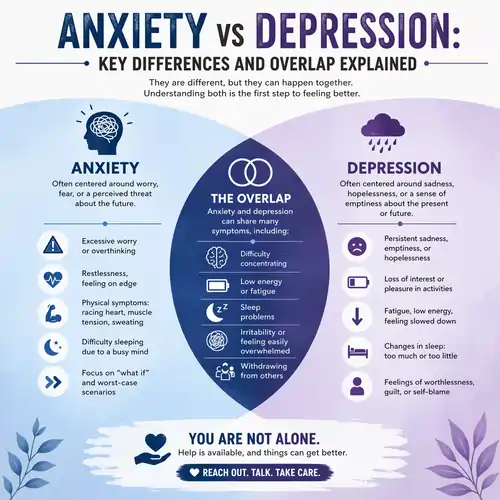
Mental health conditions such as anxiety and depression affect millions of people worldwide. While they are often discussed together, they are not the same. Understanding anxiety vs depression, including their symptoms, causes, and overlap, is essential for proper recognition, management, and treatment.
This comprehensive guide explores the key differences between anxiety and depression, their similarities, and practical ways to manage both conditions effectively.
Understanding Anxiety and Depression
What Is Anxiety?
Anxiety disorders involve excessive fear, worry, or nervousness that persists over time. Unlike normal stress, chronic anxiety interferes with daily life and can lead to both emotional and physical symptoms.
Common types include:
- Generalized anxiety disorder (GAD)
- Panic disorder
- Social anxiety disorder
- Phobias
What Is Depression?
Depression is a mood disorder characterized by persistent sadness, loss of interest, and low energy. It affects how a person feels, thinks, and behaves.
Common forms include:
- Major depressive disorder (MDD)
- Persistent depressive disorder (dysthymia)
- Seasonal affective disorder (SAD)
Key Differences Between Anxiety and Depression
Understanding the difference between anxiety and depression helps clarify how each condition affects the mind and body.
1. Emotional Experience
- Anxiety: Excessive worry, fear, and nervous anticipation
- Depression: Persistent sadness, hopelessness, and emptiness
2. Thought Patterns
- Anxiety: Racing thoughts and overthinking
- Depression: Negative thinking and lack of motivation
3. Energy Levels
- Anxiety: Restlessness and hyperactivity
- Depression: Fatigue and low energy
4. Focus and Concentration
- Anxiety: Difficulty focusing due to worry
- Depression: Difficulty concentrating due to low motivation
5. Sleep Patterns
- Anxiety: Trouble falling asleep
- Depression: Sleeping too much or too little
These distinctions highlight the symptoms of anxiety vs depression.
Symptoms of Anxiety vs Depression
Symptoms of Anxiety
- Excessive worry
- Restlessness
- Rapid heartbeat
- Muscle tension
- Difficulty concentrating
These are common anxiety symptoms.
Symptoms of Depression
- Persistent sadness
- Loss of interest in activities
- Fatigue
- Changes in appetite
- Feelings of worthlessness
These are key depression symptoms.
Overlap Between Anxiety and Depression
Despite their differences, there is significant overlap between anxiety and depression.
Shared Symptoms:
- Difficulty concentrating
- Sleep disturbances
- Irritability
- Fatigue
- Physical discomfort
Many individuals experience co-occurring anxiety and depression, also known as comorbid mental health conditions.
Why Anxiety and Depression Often Occur Together
The connection between anxiety and depression is complex.
Common Factors:
- Shared brain chemistry
- Chronic stress
- Negative thinking patterns
- Environmental triggers
This explains why anxiety and depression comorbidity is common.
Causes of Anxiety and Depression
Biological Factors
Imbalances in neurotransmitters like serotonin and dopamine contribute to both conditions.
Psychological Factors
Negative thought patterns and coping styles play a role.
Environmental Factors
Stressful life events, trauma, and lifestyle factors increase risk.
Understanding these helps explain causes of anxiety and depression.
Risk Factors
Certain factors increase vulnerability to mental health disorders:
- Family history
- Chronic stress
- Trauma
- Substance use
- Lack of support
How Anxiety and Depression Affect Daily Life
Untreated anxiety and depression can impact:
- Work performance
- Relationships
- Physical health
- Quality of life
Both conditions can lead to mental health impairment if not addressed.
Diagnosis of Anxiety and Depression
Proper diagnosis is essential.
Methods:
- Clinical evaluation
- Psychological assessments
- Medical history review
Healthcare professionals identify diagnosis of anxiety vs depression through structured criteria.
Treatment Options
1. Therapy
Cognitive Behavioral Therapy (CBT for anxiety and depression) is one of the most effective treatments.
2. Medication
Medications such as antidepressants may be prescribed.
3. Lifestyle Changes
Healthy habits support mental health recovery strategies.
Natural Ways to Manage Anxiety and Depression
1. Mindfulness Practices
Mindfulness for anxiety and depression improves emotional awareness.
2. Physical Activity
Exercise supports natural mood regulation.
3. Healthy Diet
Nutrition influences brain function and mood.
4. Sleep Hygiene
Quality sleep improves mental resilience.
Coping Strategies
1. Journaling
Journaling for mental health helps process emotions.
2. Breathing Exercises
Deep breathing exercises for anxiety calm the nervous system.
3. Social Support
Strong relationships improve emotional well-being.
When to Seek Professional Help
Seek help if:
- Symptoms persist
- Daily functioning is affected
- Emotional distress becomes overwhelming
Early intervention improves mental health outcomes.
Long-Term Outlook
With proper treatment and support, individuals can effectively manage anxiety and depression. Recovery is possible with consistent care and healthy habits.
Frequently Asked Questions (FAQ)
1. What is the difference between anxiety and depression?
Anxiety involves excessive worry and fear, while depression involves persistent sadness and low energy. Both affect mental health differently. Understanding the distinction helps with proper treatment.
2. Can you have anxiety and depression at the same time?
Yes, many people experience both conditions together. This is known as comorbidity. It is common and treatable.
3. What are common symptoms of anxiety?
Symptoms include worry, restlessness, and rapid heartbeat. Difficulty concentrating is also common. These symptoms can vary in severity.
4. What are common symptoms of depression?
Depression includes sadness, fatigue, and loss of interest. Changes in sleep and appetite may occur. It affects daily functioning.
5. What causes anxiety and depression?
Causes include biological, psychological, and environmental factors. Stress and trauma also contribute. Each case is unique.
6. How are anxiety and depression diagnosed?
Diagnosis involves clinical evaluation and assessments. Healthcare professionals use established criteria. Proper diagnosis ensures effective treatment.
7. Can anxiety lead to depression?
Yes, chronic anxiety can contribute to depression. Persistent stress affects mood over time. Managing anxiety helps reduce risk.
8. Is anxiety more common than depression?
Both conditions are common. Anxiety disorders are slightly more prevalent. However, they often occur together.
9. Can lifestyle changes help?
Yes, lifestyle changes support mental health. Exercise, sleep, and diet are important. Consistency is key.
10. What is CBT?
Cognitive Behavioral Therapy is a structured treatment. It helps change negative thought patterns. It is effective for both conditions.
11. Are medications necessary?
Not always, but they may be helpful in some cases. A healthcare provider determines the need. Never self-medicate.
12. Can stress cause anxiety and depression?
Yes, chronic stress is a major factor. It affects brain chemistry and emotional health. Managing stress is essential.
13. How long do these conditions last?
Duration varies among individuals. Some recover quickly, others take longer. Treatment improves outcomes.
14. Can sleep affect mental health?
Yes, poor sleep worsens symptoms. Good sleep improves emotional regulation. It is essential for recovery.
15. Is therapy effective?
Yes, therapy is highly effective. It provides tools to manage symptoms. It supports long-term recovery.
16. Can diet impact mood?
Yes, nutrition affects brain function. Balanced meals support emotional stability. Healthy eating is important.
17. What are coping strategies?
Coping strategies include mindfulness, journaling, and relaxation techniques. These help manage symptoms. Practice improves effectiveness.
18. When should I seek help?
Seek help if symptoms persist or worsen. Professional support provides guidance. Early intervention is beneficial.
19. Can anxiety and depression be cured?
They may not always be “cured” but can be managed effectively. Treatment improves quality of life. Many people recover.
20. Is recovery possible?
Yes, recovery is possible with proper care. Support and treatment improve outcomes. Consistency is important.
Disclaimer
This article is for informational purposes only and does not replace professional medical advice, diagnosis, or treatment. While this guide on anxiety vs depression and their differences and overlap is based on current knowledge and best practices, individual experiences may vary. Always consult a qualified healthcare provider or mental health professional for personalized advice, especially if symptoms are persistent or severe.