
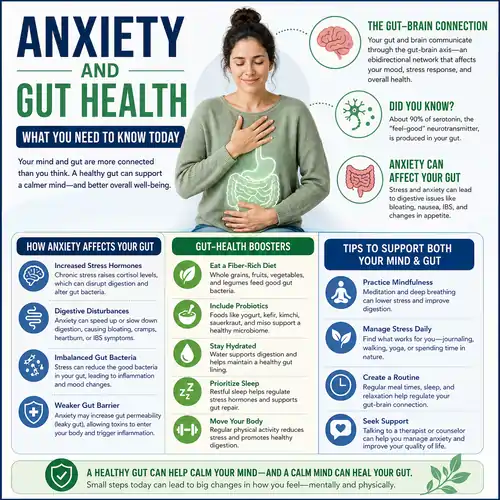
The brain-gut connection explains how anxiety and gut health are deeply linked through the gut-brain axis, a communication network between the brain and digestive system. When anxiety increases, it can disrupt digestion, leading to symptoms like bloating, nausea, irritable bowel syndrome (IBS), and stomach pain. Understanding how stress, gut microbiome, and mental health interact is key to managing both emotional and digestive symptoms effectively.
Introduction
If you’ve ever felt butterflies in your stomach, nausea before a stressful event, or sudden digestive discomfort during anxiety, you’ve already experienced the powerful link between anxiety and gut health. This relationship is not just psychological—it is rooted in biology through what experts call the brain-gut connection or gut-brain axis.
Modern research shows that your gut is often referred to as the “second brain.” It contains millions of neurons and communicates constantly with your central nervous system. This means that mental health conditions like anxiety disorders can directly affect your digestion, while gut problems can also influence mood, stress levels, and emotional well-being.
In this comprehensive guide, we’ll explore how anxiety affects gut health, the role of the gut microbiome, common symptoms, and proven ways to restore balance.
What Is the Brain-Gut Connection?
The brain-gut connection refers to the two-way communication system between the central nervous system (CNS) and the enteric nervous system (ENS).
Key Components of the Gut-Brain Axis
- Vagus nerve (main communication pathway)
- Gut microbiome (trillions of bacteria in the digestive tract)
- Neurotransmitters like serotonin
- Immune system signaling
This system allows the brain to influence digestion and the gut to send signals back to the brain.
How Anxiety Affects Gut Health
1. Stress Response and Digestion
When you experience anxiety, your body activates the fight-or-flight response, releasing stress hormones like cortisol and adrenaline. These hormones:
- Slow down digestion
- Reduce blood flow to the gut
- Disrupt normal bowel function
This is why anxiety often leads to stomach pain, cramps, or digestive discomfort.
2. Impact on Gut Motility
Gut motility refers to how food moves through your digestive system. Anxiety can either:
- Speed it up → causing diarrhea
- Slow it down → causing constipation
This imbalance is commonly seen in irritable bowel syndrome (IBS).
3. Gut Microbiome Imbalance
The gut microbiome plays a critical role in both digestion and mental health. Chronic stress and anxiety can:
- Reduce beneficial bacteria
- Increase harmful bacteria
- Disrupt microbial diversity
This imbalance, known as dysbiosis, contributes to symptoms like bloating, gas, and inflammation.
4. Serotonin and Mood Regulation
About 90% of serotonin is produced in the gut. This neurotransmitter affects both:
- Mood and emotional regulation
- Digestive function
When gut health is disrupted, serotonin production may also be affected, worsening anxiety symptoms.
Common Gut Symptoms Linked to Anxiety
People with anxiety disorders often experience:
- Bloating
- Nausea
- Stomach cramps
- Diarrhea
- Constipation
- Acid reflux
- Loss of appetite
These symptoms can occur even without underlying digestive disease.
Conditions Associated with Anxiety and Gut Health
Irritable Bowel Syndrome (IBS)
IBS is one of the most common conditions linked to the brain-gut axis. Symptoms include:
- Abdominal pain
- Changes in bowel habits
- Gas and bloating
Stress and anxiety often trigger or worsen IBS symptoms.
Functional Dyspepsia
This condition causes:
- Upper abdominal discomfort
- Early fullness
- Nausea
It is strongly associated with stress and anxiety.
Gastroesophageal Reflux Disease (GERD)
Anxiety can increase acid production and sensitivity, worsening acid reflux and heartburn.
Why the Gut Is Called the “Second Brain”
The gut contains over 100 million neurons, forming the enteric nervous system. This allows it to function independently while still communicating with the brain.
Key Functions of the Gut-Brain System
- Regulating digestion
- Producing neurotransmitters
- Influencing immune responses
- Affecting mood and cognition
The Role of Stress in Gut Health
Chronic stress is one of the biggest disruptors of gut health. It affects:
- Digestive enzyme production
- Gut permeability (leaky gut)
- Inflammation levels
Over time, this can lead to long-term digestive issues.
The Gut Microbiome and Mental Health
What Is the Gut Microbiome?
The gut microbiome consists of trillions of microorganisms that support digestion, immunity, and brain function.
How It Affects Anxiety
A healthy microbiome helps regulate:
- Serotonin production
- Stress response
- Inflammation
Imbalances can contribute to anxiety, depression, and mood disorders.
Signs Your Gut Health Is Affected by Anxiety
- Frequent digestive issues without clear cause
- Symptoms worsen during stress
- Relief after relaxation
- Coexisting anxiety or panic symptoms
Treatment and Management Strategies
1. Dietary Changes
Improving gut health starts with nutrition:
- High-fiber foods
- Fermented foods (probiotics)
- Prebiotic-rich foods
Avoid:
- Excess caffeine
- Processed foods
- High sugar intake
2. Probiotics and Supplements
Probiotics can help restore gut balance. Some strains may even improve anxiety symptoms.
3. Stress Management Techniques
- Mindfulness meditation
- Deep breathing
- Yoga
- Regular physical activity
These reduce the stress response and improve digestion.
4. Psychological Therapy
Cognitive Behavioral Therapy (CBT) is effective for both:
- Anxiety disorders
- Gut-related conditions like IBS
5. Medical Treatment
Doctors may recommend:
- Anti-anxiety medications
- Gut-specific treatments
- Lifestyle modifications
Lifestyle Tips for a Healthy Gut-Brain Connection
- Maintain a consistent sleep schedule
- Stay hydrated
- Eat regular meals
- Limit alcohol intake
- Build a balanced routine
When to See a Doctor
Seek medical advice if you experience:
- Persistent digestive symptoms
- Severe abdominal pain
- Unexplained weight loss
- Blood in stool
These may indicate conditions beyond anxiety-related gut issues.
Long-Term Outlook
With proper care, both anxiety and gut health issues can be managed effectively. Addressing both the mind and body leads to better outcomes.
Frequently Asked Questions (FAQs)
1. Can anxiety really affect gut health?
Yes, anxiety directly affects the gut-brain axis. It alters digestion and gut function. This can lead to symptoms like bloating and nausea.
2. What is the brain-gut connection?
The brain-gut connection is the communication between the brain and digestive system. It involves nerves, hormones, and bacteria. It plays a key role in both digestion and mental health.
3. Can anxiety cause IBS?
Anxiety does not directly cause IBS, but it can trigger or worsen symptoms. Stress affects gut motility and sensitivity. Managing anxiety helps control IBS.
4. Why do I feel nauseous when anxious?
Anxiety activates the stress response, affecting digestion. This can slow or disrupt stomach function. It often results in nausea.
5. Can gut health affect mental health?
Yes, the gut microbiome influences brain function and mood. It affects neurotransmitters like serotonin. Poor gut health can worsen anxiety and depression.
6. What foods help with anxiety and gut health?
Foods rich in fiber and probiotics support gut health. Examples include yogurt, vegetables, and whole grains. These help regulate digestion and mood.
7. Can stress cause diarrhea?
Yes, stress can speed up gut motility. This leads to diarrhea. It is a common symptom of anxiety.
8. What is leaky gut?
Leaky gut refers to increased intestinal permeability. It allows harmful substances to enter the bloodstream. It is linked to inflammation and gut issues.
9. Are probiotics helpful for anxiety?
Some probiotics may improve anxiety symptoms. They support a healthy gut microbiome. Results vary depending on the individual.
10. Can anxiety cause stomach pain daily?
Yes, chronic anxiety can cause persistent stomach pain. It affects digestion and muscle tension. Managing anxiety can reduce symptoms.
11. What is gut microbiome imbalance?
It is called dysbiosis. It occurs when harmful bacteria outweigh beneficial ones. This can affect digestion and mental health.
12. Can anxiety cause acid reflux?
Yes, anxiety can increase stomach acid and sensitivity. This can worsen acid reflux. Stress management helps reduce symptoms.
13. How do I calm my gut from anxiety?
Practice relaxation techniques like deep breathing. Improve diet and sleep habits. Seek professional help if needed.
14. Can children have gut issues from anxiety?
Yes, children can experience digestive symptoms due to anxiety. Their gut-brain connection is also active. Early support is important.
15. Does exercise help gut health?
Yes, exercise improves digestion and reduces stress. It supports a healthy microbiome. Regular activity is beneficial.
16. How long do anxiety gut symptoms last?
They can be temporary or chronic. Duration depends on stress levels. Treatment can shorten episodes.
17. Can gut problems cause anxiety?
Yes, poor gut health can influence brain function. This may lead to anxiety symptoms. The relationship works both ways.
18. What is the vagus nerve?
The vagus nerve connects the brain and gut. It plays a major role in the gut-brain axis. It regulates digestion and stress responses.
19. Is anxiety-related gut pain dangerous?
It is usually not dangerous. However, it can affect quality of life. Persistent symptoms should be evaluated.
20. When should I see a doctor?
Seek medical help if symptoms are severe or persistent. Warning signs should not be ignored. A proper diagnosis is essential.
Disclaimer
This content is for educational purposes only and is not a substitute for professional medical advice, diagnosis, or treatment. Always consult a qualified healthcare provider regarding concerns about anxiety, gut health, or digestive symptoms. If symptoms are severe or persistent, seek immediate medical attention.