
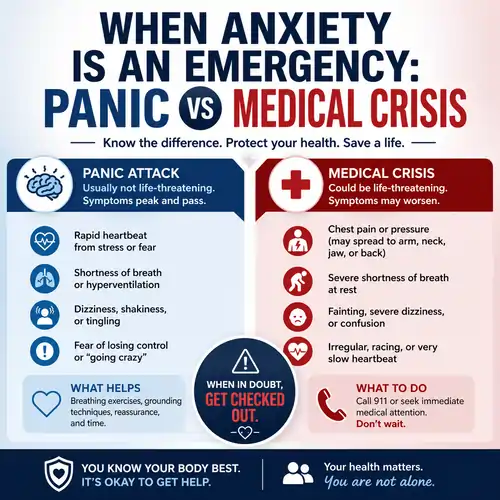
Anxiety can sometimes feel like a life-threatening emergency, especially during a panic attack, where symptoms like chest pain, shortness of breath, and heart palpitations closely resemble serious medical conditions. However, not all intense anxiety symptoms are harmless. Understanding the difference between a panic attack and a true medical emergency—such as a heart attack, stroke, or respiratory crisis—is critical for making safe and timely decisions. This guide helps you recognize warning signs, compare symptoms, and know exactly when to seek urgent medical care.
Introduction
Feeling sudden chest tightness, rapid heartbeat, or difficulty breathing can be terrifying. For many people, these symptoms immediately raise fears of a heart attack or another serious medical emergency. However, these same symptoms are also commonly experienced during panic attacks and severe anxiety episodes.
The challenge is that panic attack symptoms and medical crisis symptoms often overlap. Misinterpreting one for the other can lead to either unnecessary panic or dangerous delays in seeking treatment. This is why understanding the difference between anxiety vs medical emergency is not just helpful—it can be life-saving.
This article provides a comprehensive, medically grounded explanation of how to distinguish panic attacks, anxiety emergencies, and true medical crises, including actionable steps for responding safely.
What Is Anxiety and Panic Disorder?
Understanding Anxiety
Anxiety is a natural response to stress, activating the body’s fight-or-flight response. It prepares the body to respond to perceived danger by increasing heart rate, breathing, and alertness.
What Is a Panic Attack?
A panic attack is a sudden episode of intense fear or discomfort that peaks within minutes. It often occurs without a clear trigger and includes both physical symptoms and psychological symptoms.
Common Symptoms of a Panic Attack
During a panic attack, individuals may experience:
- Chest pain or chest tightness
- Heart palpitations or rapid heartbeat
- Shortness of breath or hyperventilation
- Dizziness or lightheadedness
- Sweating and chills
- Trembling or shaking
- Nausea or stomach discomfort
- Feeling of losing control
- Fear of dying
These symptoms can feel severe and real, often leading individuals to believe they are experiencing a medical emergency.
What Is a Medical Emergency?
A medical emergency is a condition that requires immediate medical attention to prevent serious harm or death. Examples include:
- Heart attack (myocardial infarction)
- Stroke
- Severe allergic reaction (anaphylaxis)
- Respiratory distress
- Seizures
These conditions often involve physical damage to organs and require urgent treatment.
Why Anxiety Feels Like an Emergency
The Fight-or-Flight Response
When anxiety is triggered, the body releases adrenaline and cortisol, causing:
- Increased heart rate
- Rapid breathing
- Muscle tension
- Heightened awareness
These physiological changes can mimic serious medical conditions.
Hyperventilation
Hyperventilation reduces carbon dioxide levels, leading to:
- Chest discomfort
- Dizziness
- Tingling sensations
This often intensifies the feeling of being in danger.
Panic Attack vs Medical Crisis: Key Differences
| Feature | Panic Attack | Medical Emergency |
|---|---|---|
| Onset | Sudden, often at rest | May occur during exertion |
| Duration | Peaks in minutes, subsides | Often persists or worsens |
| Chest Pain | Sharp, localized | Pressure, spreading pain |
| Heart Rate | Rapid but stable rhythm | May be irregular |
| Triggers | Stress, anxiety | Physical conditions |
| Response to Relaxation | Improves | Does not improve |
Red Flag Symptoms That Require Immediate Medical Attention
Regardless of anxiety history, seek emergency care if you experience:
- Severe chest pressure spreading to arm, jaw, or back
- Persistent shortness of breath
- Loss of consciousness
- Sudden weakness or numbness (possible stroke)
- Difficulty speaking
- Uncontrolled bleeding
These are signs of a medical crisis, not just anxiety.
High-Risk Individuals
You should be especially cautious if you have:
- High blood pressure
- Diabetes
- Heart disease history
- Smoking history
- Family history of cardiovascular disease
For these individuals, symptoms should never be dismissed as anxiety without evaluation.
When Anxiety Becomes an Emergency
While most panic attacks are not life-threatening, anxiety can become an emergency when:
- Symptoms are severe and persistent
- You cannot distinguish symptoms from a real medical issue
- There is risk of harm (e.g., fainting, injury)
- You experience suicidal thoughts
How Doctors Differentiate Panic vs Medical Emergency
Healthcare providers use:
- Electrocardiogram (ECG)
- Blood tests
- Imaging (if needed)
- Medical history
These tools help rule out life-threatening conditions.
What to Do During a Panic Attack
Immediate Steps
- Practice deep breathing
- Sit or lie down
- Focus on grounding techniques
- Remind yourself the symptoms are temporary
Avoid
- Excessive Googling
- Catastrophic thinking
- Stimulants like caffeine
When to Call Emergency Services
Call emergency services if:
- Symptoms are new and severe
- You have risk factors for heart disease
- Symptoms do not improve within minutes
- You are unsure about the cause
When in doubt, always prioritize safety.
Long-Term Management of Anxiety
Therapy
Cognitive Behavioral Therapy (CBT) helps identify and manage anxiety triggers.
Medication
- SSRIs
- Anti-anxiety medications
Lifestyle Changes
- Regular exercise
- Healthy diet
- Sleep hygiene
Practical Self-Check Guide
Ask yourself:
- Did symptoms start during stress?
- Do they improve with relaxation?
- Are there risk factors present?
If unsure, seek medical evaluation.
The Danger of Self-Diagnosis
Assuming all symptoms are due to anxiety can be dangerous. Some people ignore real medical emergencies, leading to delayed treatment.
Reassurance vs Safety
It is better to be evaluated and reassured than to ignore symptoms that could indicate a serious condition.
Long-Term Outlook
With proper understanding and treatment, individuals can manage anxiety symptoms effectively while remaining vigilant about real health risks.
Frequently Asked Questions (FAQs)
1. Can a panic attack feel like a heart attack?
Yes, a panic attack can mimic a heart attack with chest pain and shortness of breath. The symptoms can be intense and frightening. Proper medical evaluation helps confirm the cause.
2. How long does a panic attack last?
A panic attack usually peaks within minutes. Symptoms gradually decrease afterward. However, lingering anxiety may continue.
3. Should I go to the ER for anxiety?
If symptoms are severe or unclear, it is safer to seek emergency care. Chest pain should not be ignored. Doctors can rule out serious conditions.
4. What are warning signs of a heart attack?
Symptoms include pressure-like chest pain and pain spreading to the arm or jaw. It may also include sweating and nausea. Immediate medical care is required.
5. Can anxiety cause chest pain every day?
Yes, chronic anxiety can cause frequent chest pain. It is usually related to muscle tension or stress. Persistent symptoms should still be evaluated.
6. What triggers panic attacks?
Triggers include stress, trauma, and health anxiety. Sometimes attacks occur without warning. Identifying triggers helps manage them.
7. Is hyperventilation dangerous?
It is usually not dangerous but can feel severe. It causes dizziness and tingling. Controlled breathing can help.
8. Can anxiety cause fainting?
Yes, severe anxiety may lead to fainting in some cases. It is often due to hyperventilation or stress. Medical evaluation may be needed.
9. How do I calm down during a panic attack?
Focus on slow breathing and grounding techniques. Remind yourself the symptoms will pass. Avoid panic-driven reactions.
10. Can anxiety cause heart palpitations?
Yes, anxiety increases adrenaline, causing heart palpitations. These are usually harmless. Persistent symptoms should be checked.
11. What is the difference between anxiety and a medical emergency?
Anxiety symptoms often improve with relaxation. Medical emergencies do not improve and may worsen. Proper diagnosis is essential.
12. Can young people have heart attacks?
Yes, although rare, it is possible. Risk factors increase the likelihood. Symptoms should not be ignored.
13. Should I ignore symptoms if I have anxiety?
No, never ignore symptoms. Always rule out serious conditions first. Safety should come first.
14. Can panic attacks happen without warning?
Yes, they can occur suddenly. There may be no clear trigger. This unpredictability can increase fear.
15. Does anxiety affect breathing?
Yes, anxiety can cause rapid breathing or shortness of breath. This is part of the stress response. Breathing exercises can help.
16. What is a medical emergency?
It is a condition requiring immediate care to prevent harm. Examples include heart attack and stroke. Quick action is critical.
17. Can anxiety mimic stroke symptoms?
Yes, anxiety can cause numbness or weakness. These symptoms can resemble stroke. Immediate evaluation is important.
18. When should I call emergency services?
Call if symptoms are severe, sudden, or unclear. Do not wait if you suspect a serious condition. Early action saves lives.
19. Is it better to be safe than sorry?
Yes, always prioritize safety. Medical evaluation provides reassurance. Ignoring symptoms can be dangerous.
20. Can therapy help prevent panic attacks?
Yes, CBT and other therapies are effective. They help manage triggers and symptoms. Long-term treatment improves outcomes.
Disclaimer | When Anxiety Is an Emergency
This content is for informational purposes only and does not substitute professional medical advice, diagnosis, or treatment. Always consult a qualified healthcare provider regarding concerns about anxiety, panic attacks, or potential medical emergencies. If you experience severe or life-threatening symptoms, seek emergency medical attention immediately.