work-life balance tips for remote workers Key Takeaways
Working from home offers incredible flexibility, but it also blurs the lines between your professional and personal life.
- Clear boundaries and dedicated workspaces prevent burnout and improve focus.
- Scheduled breaks, managed technology usage, and honest communication help you unplug effectively.
- Implementing even a few of these strategies can dramatically boost your satisfaction and performance.
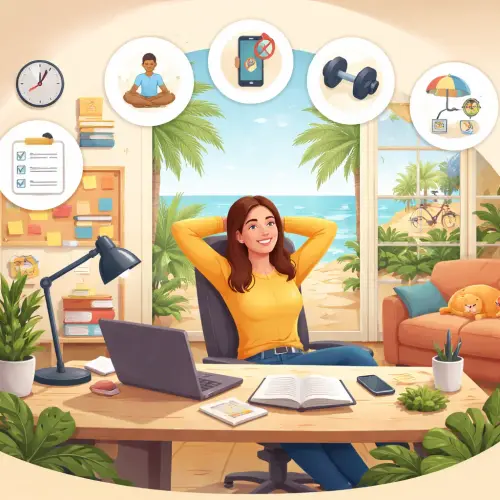
Why Work-Life Balance Tips for Remote Workers Matter Now More Than Ever
The remote work revolution has permanently reshaped how millions of people do their jobs. Without a commute or a physical separation between office and home, many remote workers find themselves answering emails late into the evening or skipping lunch breaks entirely. This constant availability can lead to stress, reduced creativity, and eventual burnout. For a related guide, see 10 Easy Meal Prep Ideas for Busy People: Smart, Save Time.
Applying work-life balance tips for remote workers helps you reclaim control over your schedule. It allows you to be fully present during work hours and equally present with family, hobbies, and personal downtime. The goal isn’t to work less; it’s to work smarter and live better.
Below, you’ll find nine actionable strategies designed specifically for the unique challenges of working remotely. Each tip includes a clear explanation and a quick summary to help you put it into practice today. For a related guide, see 10 Minimalist Home Ideas to Declutter (Smart and Easy).
The Hidden Cost of Blurred Boundaries
When your kitchen table doubles as your desk, it’s easy to feel like you’re always on the clock. Research from the American Psychological Association shows that remote workers who struggle to disconnect report higher rates of emotional exhaustion. That’s why intentional habits are not optional—they’re survival tools for a sustainable career.
Tip #1: Define a Dedicated Workspace
Your environment shapes your mindset. Choose a specific area in your home that is used exclusively for work. It could be a spare room, a corner of the living room, or even a well-organized closet. The key is consistency: this spot signals to your brain that it’s time to focus. For a related guide, see 15 Clean Girl Lifestyle Trends to Follow for a Simple Life.
Keep your workspace tidy and separate from relaxation zones. When you leave that area at the end of the day, you physically walk away from work. This simple act reinforces the mental separation needed for true balance.
- What to do: Designate one spot for work only.
- Why it helps: Creates a mental trigger for focus and a clear signal to stop working.
- Quick win: Add a plant or proper lighting to make the space inviting yet professional.
Tip #2: Set Firm Working Hours
Just because your office is always open doesn’t mean you should be. Commit to a start time and a finish time, and treat them as seriously as you would an in-person office schedule. Share these hours with your team and add them to your calendar so others respect your availability.
When your workday ends, close your laptop, log out of messaging apps, and silence work notifications. This is one of the most effective work-life balance tips for remote workers because it creates predictable boundaries that reduce anxiety and guilt.
- What to do: Establish and communicate your core working hours.
- Why it helps: Prevents overwork and sets expectations with colleagues.
- Quick win: Use an automatic email signature that includes your working hours.
Tip #3: Schedule Regular Micro-Breaks
Staring at a screen for hours without moving is a recipe for fatigue. Research from the University of Illinois suggests that brief diversions from a task can dramatically improve focus. Schedule short, intentional breaks every 60 to 90 minutes.
Stand up, stretch, grab a glass of water, or step outside for fresh air. These micro-breaks recharge your energy and prevent the afternoon slump. They also give your eyes and mind a much-needed rest.
- What to do: Take a 5-minute break every hour.
- Why it helps: Boosts concentration and reduces physical strain.
- Quick win: Set a timer or use a Pomodoro app to remind you.
Tip #4: Establish a Morning Routine
Rolling out of bed and immediately opening your laptop makes it easy for work to consume your entire day. Instead, create a morning ritual that prepares you mentally and physically. This could include exercise, meditation, reading, or simply enjoying a quiet cup of coffee.
A deliberate start to your day sets a positive tone and reinforces that you are in control of your schedule, not the other way around. Even 15 minutes of personal time before work can make a significant difference.
- What to do: Create a consistent pre-work routine.
- Why it helps: Reduces stress and builds emotional resilience.
- Quick win: Wake up 30 minutes earlier than your first meeting.
Tip #5: Practice Digital Minimalism
Constant notifications fracture your attention. Turn off all non-essential alerts on your phone and computer during work hours. Designate specific times to check email and messaging platforms rather than reacting to every ping instantly.
After work hours, consider a digital sunset—put your phone away at least one hour before bed. This helps your brain wind down and improves sleep quality. Managing your technology is a cornerstone of work-life balance tips for remote workers.
- What to do: Silence notifications and batch-check messages.
- Why it helps: Reduces distractions and lowers mental clutter.
- Quick win: Delete work apps from your personal phone if possible.
Tip #6: Move Your Body Every Day
Sitting for prolonged periods is linked to numerous health risks. Incorporate movement into your daily schedule, ideally at the same time each day. It doesn’t have to be an intense workout—a brisk walk, yoga session, or bike ride can be enough.
Physical activity releases endorphins, improves mood, and helps you sleep better. It also provides a natural punctuation mark between work and personal time, especially if you exercise right after your workday ends.
- What to do: Add 20-30 minutes of movement to your daily routine.
- Why it helps: Boosts mental health and physical energy.
- Quick win: Schedule a walk during your lunch break.
Tip #7: Communicate Boundaries with Family or Housemates
If you share your home with others, they might not realize when you’re truly unavailable. Have an open conversation about your work hours and what interruptions are acceptable. Use visual cues like a closed door or a “Do Not Disturb” sign.
Setting these expectations reduces friction and helps you maintain focus. It also helps your loved ones feel included in your success rather than excluded by your work demands.
- What to do: Discuss your schedule with everyone in your home.
- Why it helps: Minimizes interruptions and resentment.
- Quick win: Use a simple red/green sign on your door to indicate availability.
Tip #8: End Each Day with a Shutdown Ritual
A shutdown ritual is a sequence of actions that signals the end of your workday. This could include tidying your desk, writing a to-do list for tomorrow, and closing all browser tabs. The ritual creates a clean break and prevents work thoughts from lingering.
This is one of the most powerful work-life balance tips for remote workers because it trains your brain to compartmentalize. After five minutes of consistent practice, you’ll find it easier to switch off mentally.
- What to do: Perform the same closing routine each evening.
- Why it helps: Provides closure and reduces rumination.
- Quick win: Journal for two minutes about what you accomplished today.
Tip #9: Invest in Your Social Connections
Remote work can be isolating. Make a deliberate effort to maintain social ties with colleagues and friends outside of work. Schedule virtual coffee chats, join co-working spaces occasionally, or attend local meetups for remote professionals.
Social connection is a fundamental human need. Prioritizing it outside of work tasks helps you feel more grounded and less like a solitary machine. A healthy social life directly supports a healthy work-life balance.
- What to do: Plan regular social activities that don’t involve work.
- Why it helps: Combats loneliness and strengthens support networks.
- Quick win: Join an online community or local club related to a hobby.
Ready to Take Control of Your Remote Work Life?
You don’t need to implement all nine tips at once. Pick one or two that resonate most with your current situation and try them for a week. Small, consistent changes lead to lasting improvements in your productivity and happiness.
Remember, achieving balance is an ongoing practice, not a one-time fix. By applying these work-life balance tips for remote workers, you’re investing in your long-term career and well-being. Start today—your future self will thank you.
Useful Resources
- For scientific insights on focus and breaks, visit the American Psychological Association for their research on remote work and mental health.
- Discover practical productivity methods at the Todoist Productivity Methods guide, which offers frameworks like the Pomodoro Technique.
Frequently Asked Questions About work-life balance tips for remote workers
What is the most important work-life balance tip for remote workers ?
Setting firm working hours and sticking to them is often cited as the most critical step because it creates a clear boundary between work and personal time.
How can I stop checking work emails after hours?
Turn off work email notifications on your phone after your scheduled end time and remove work email apps from your personal device if possible.
What should I do if I feel guilty for not working?
Remind yourself that rest improves productivity. Tracking your accomplishments during work hours can help reduce guilt and build confidence in your output.
How many breaks should I take during a remote workday?
Most experts recommend a 5-minute break every 60 to 90 minutes, plus a longer lunch break to fully disconnect.
Can I achieve work-life balance without a separate home office?
Yes. Even a designated corner with a desk or table can create enough separation. The key is consistency and not working from your bed or sofa.
How do I communicate my boundaries to a demanding manager?
Schedule a calm, honest conversation where you explain your need for boundaries and suggest alternative solutions, such as clear priority lists.
What is a shutdown ritual and why do I need one?
A shutdown ritual is a short sequence of actions you perform at the end of your workday to signal to your brain that work is over. It reduces lingering stress.
How can I stay focused without someone watching me?
Use time-blocking techniques, set daily goals, and eliminate distractions. Tools like the Pomodoro Technique can help structure your focus periods.
Is working from home more productive than the office?
Productivity varies by individual and role, but many remote workers report higher focus due to fewer interruptions. However, it requires self-discipline and good habits.
Should I eat lunch away from my desk?
Absolutely. Eating away from your workspace gives your brain a true break and helps you return to work with renewed energy.
How do I handle loneliness while working remotely?
Schedule regular virtual coffee chats with colleagues, join online communities, or visit coworking spaces to maintain social connections.
What are the signs of remote work burnout?
Signs include constant fatigue, irritability, difficulty concentrating, reduced productivity, and feeling emotionally drained at the end of the day.
Can I use the same space for work and relaxation?
It’s possible but challenging. If you must use the same space, create visual cues like a rolling divider or a desk that you pack away at the end of the day.
How important is a morning routine for remote workers ?
Very important. A morning routine prepares your mind and body for work, reduces stress, and helps you feel in control of your day.
What technology tools help with work-life balance?
Apps like Focusmate for accountability, RescueTime for tracking screen time, and Calm or Headspace for meditation can be very helpful.
Should I work in different places around my home?
Variety can boost creativity, but it’s best to have one primary workspace and occasionally rotate for specific tasks like creative brainstorming.
How do I prevent my weekdays from blurring together?
Create daily rituals, schedule social activities, and intentionally plan different evening activities to give each day a distinct feel.
Can work-life balance tips for remote workers apply to hybrid roles?
Yes. The same principles of boundaries, breaks, and scheduled downtime apply regardless of whether you work from home a few days a week or full-time.
What is the best way to start implementing these tips?
Choose one tip that feels most urgent to you—like setting a fixed end time—and practice it consistently for one week before adding another.
How long does it take to see results from better work-life balance?
Many people notice reduced stress and improved sleep within the first two weeks of consistent boundary-setting and routine changes.