
Blood pressure readings are one of the most important indicators of cardiovascular health because they show how hard your heart and blood vessels are working and whether you may be at risk for hypertension, heart disease, stroke, or kidney disease. When blood pressure stays consistently elevated, it can damage blood vessels and organs over time, which is why understanding your numbers—and acting early—is so important.
What Blood Pressure Numbers Mean (Guide)
Blood pressure readings are one of the most important indicators of cardiovascular health. These numbers help healthcare providers assess how well your heart and blood vessels are functioning and whether you may be at risk for conditions such as hypertension, heart disease, stroke, or kidney disease. Blood pressure refers to the force of blood pushing against the walls of arteries as the heart pumps blood throughout the body, and when this pressure becomes consistently elevated, it can damage blood vessels and organs over time.
According to the World Health Organization, hypertension affects more than 1.28 billion adults worldwide, making it one of the most common chronic conditions globally, and many people with high blood pressure are unaware they have it because symptoms may not appear until serious complications develop, as outlined in the WHO hypertension fact sheet. In the United States, the Centers for Disease Control and Prevention reports that nearly half of adults have high blood pressure and many do not have it under control in its overview of high blood pressure statistics and control.
Understanding what blood pressure numbers mean can help individuals monitor their health, recognize warning signs early, and take steps to prevent cardiovascular disease. This guide explains how blood pressure readings work, what systolic and diastolic numbers represent, how blood pressure categories are defined, and what actions you can take if your readings are elevated.
What Is Blood Pressure?
Blood pressure measures the force exerted by circulating blood on the walls of arteries. Each heartbeat pushes blood through the circulatory system, delivering oxygen and nutrients to tissues throughout the body. Blood pressure is recorded using two numbers, measured in millimeters of mercury (mmHg).
Systolic Blood Pressure
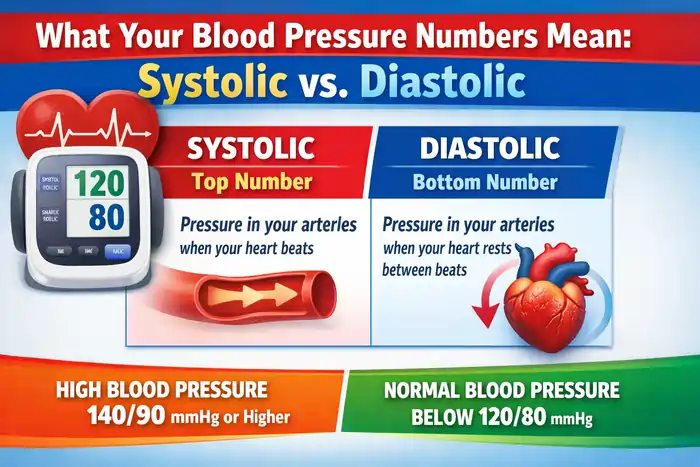
The systolic number represents the pressure in arteries when the heart contracts and pumps blood into the circulation. This is the top number in a blood pressure reading.
Diastolic Blood Pressure
The diastolic number represents the pressure in arteries when the heart relaxes between beats. This is the bottom number in a blood pressure reading.
For example:
- 120 / 80 mmHg
- 120 = systolic pressure
- 80 = diastolic pressure
The American Heart Association explains that elevated systolic or diastolic pressure can strain arteries and increase the risk of cardiovascular disease in its high blood pressure education on blood pressure categories and impact.
Why Blood Pressure Numbers Matter
Blood pressure readings provide important insights into cardiovascular health. Persistently elevated blood pressure can damage arteries and increase the risk of serious complications including:
- coronary artery disease
- heart attack
- stroke
- kidney disease
- vision loss
The National Heart, Lung, and Blood Institute notes that hypertension is a major contributor to cardiovascular disease and long-term organ damage in its overview of high blood pressure and its complications. Because blood pressure changes over time, regular monitoring helps detect problems early.
If you want a broader explanation of how hypertension develops and how it affects the body, you can naturally link phrases like “hypertension: understanding and managing high blood pressure” to your main hypertension guide at MedEduHub.
Blood Pressure Chart Explained
Health organizations classify blood pressure readings into categories to help guide diagnosis and treatment decisions. Below is a simplified chart based on widely used American Heart Association guidelines.
| Category | Systolic (mmHg) | Diastolic (mmHg) |
|---|---|---|
| Normal | Less than 120 | Less than 80 |
| Elevated | 120–129 | Less than 80 |
| Hypertension Stage 1 | 130–139 | 80–89 |
| Hypertension Stage 2 | 140 or higher | 90 or higher |
| Hypertensive Crisis | Above 180 | Above 120 |
These categories help healthcare providers determine whether lifestyle changes alone may be sufficient or whether medication may also be necessary.
Understanding Systolic Blood Pressure
Systolic pressure represents the peak force of blood against artery walls during a heartbeat. Higher systolic readings often occur due to artery stiffness, plaque buildup, increased blood volume, or temporary influences such as stress and physical activity. Systolic pressure tends to increase with age because arteries gradually become less flexible, and many experts consider systolic pressure to be a particularly important predictor of cardiovascular risk in older adults.
Understanding Diastolic Blood Pressure
Diastolic pressure reflects the pressure in arteries when the heart rests between beats. Although systolic pressure tends to receive more attention, elevated diastolic pressure can also indicate cardiovascular risk. Persistently high diastolic readings may signal increased vascular resistance, chronic hypertension, or underlying cardiovascular disease. Monitoring both systolic and diastolic numbers is essential for evaluating overall blood pressure health.
How Blood Pressure Is Measured
Blood pressure is typically measured using a blood pressure cuff and a device such as a sphygmomanometer or digital monitor. The cuff inflates around the upper arm to temporarily stop blood flow in the artery, and as it deflates, the device detects the pressure at which blood flow resumes.
Measurements may be taken in several settings:
- Clinic measurements: Healthcare providers commonly measure blood pressure during medical appointments.
- Home monitoring: Many patients use digital monitors to track blood pressure at home.
- Ambulatory monitoring: Portable devices measure blood pressure repeatedly over a 24‑hour period.
Home monitoring is increasingly recommended because it helps detect patterns that may not appear during clinic visits and can reduce “white coat” effects.
Why Blood Pressure May Vary
Blood pressure naturally fluctuates throughout the day. Factors that may influence readings include:
- physical activity
- stress or anxiety
- caffeine consumption
- medications
- time of day
Temporary increases do not necessarily indicate hypertension, but persistent elevation across multiple readings and days should be evaluated by a healthcare provider.
Silent Hypertension
Many people with high blood pressure experience no symptoms. For this reason, hypertension is often called a “silent killer.” Even when blood pressure reaches dangerous levels, individuals may feel normal. You can link phrases like “silent hypertension and why high blood pressure often goes unnoticed” to your MedEduHub guide on silent hypertension to explain this phenomenon in more depth.
Regular blood pressure checks are essential because symptoms often appear only after complications develop.
Risk Factors for High Blood Pressure
Several factors increase the likelihood of developing hypertension. The CDC highlights age, family history, obesity, poor diet (particularly high sodium and low potassium), physical inactivity, smoking, and diabetes as major risk factors in its high blood pressure information at CDC’s hypertension portal.
Understanding these risk factors helps individuals take preventive action earlier by making lifestyle changes and attending regular checkups.
When Blood Pressure Becomes Dangerous
Extremely high blood pressure can cause a hypertensive crisis, which requires immediate medical attention. A hypertensive crisis generally involves readings around or above:
- 180 systolic, and/or
- 120 diastolic
Symptoms may include:
- severe headache
- chest pain
- shortness of breath
- confusion
- vision changes
Anyone experiencing these symptoms along with very high readings should seek emergency medical care immediately.
Lifestyle Changes That Improve Blood Pressure
Lifestyle habits strongly influence blood pressure levels. The American Heart Association recommends several strategies for maintaining healthy blood pressure in its healthy living and hypertension resources:
- Healthy diet: A heart‑healthy diet includes fruits and vegetables, whole grains, lean proteins, and healthy fats such as those found in nuts, seeds, and olive oil. The DASH diet (Dietary Approaches to Stop Hypertension) is specifically designed to lower blood pressure.
- Reducing sodium: Excess sodium causes the body to retain fluid, increasing blood pressure; many experts recommend limiting sodium intake to about 1,500–2,300 mg per day.
- Regular exercise: Physical activity strengthens the heart and improves circulation; most guidelines suggest about 150 minutes of moderate exercise per week.
- Weight management: Maintaining a healthy weight reduces strain on the cardiovascular system.
- Stress management: Chronic stress may raise blood pressure and contribute to unhealthy behaviors; practices such as meditation, deep breathing, and adequate sleep can help reduce stress.
If you want a deeper look at lifestyle-based strategies, you can link “ways to lower blood pressure naturally” to your dedicated article that covers these habits step‑by‑step.
Importance of Regular Monitoring
Monitoring blood pressure regularly allows individuals and healthcare providers to identify trends and respond quickly to changes. Home blood pressure monitoring may be recommended for people who:
- have hypertension
- are at risk of cardiovascular disease
- are adjusting medications
Tracking readings over time provides valuable insights into how lifestyle habits and treatments affect blood pressure and can make clinic visits more productive.
Frequently Asked Questions
What do blood pressure numbers mean?
They represent the force of blood pushing against artery walls during (systolic) and between (diastolic) heartbeats.
What is a normal blood pressure reading?
Normal blood pressure is typically considered below 120/80 mmHg in most adult guidelines.
When should I worry about my blood pressure?
Blood pressure readings consistently above about 130/80 mmHg should be evaluated by a healthcare provider, especially if you have other risk factors.
Can blood pressure change throughout the day?
Yes. Blood pressure naturally fluctuates based on activity, stress, meals, and other factors, which is why multiple readings over time are more informative than a single measurement.
Can lifestyle changes lower blood pressure?
Yes. Healthy diet, regular exercise, weight management, reduced sodium intake, and stress reduction can significantly lower blood pressure for many people.
Final Thoughts
Understanding what blood pressure numbers mean is an important step toward protecting long-term cardiovascular health. Blood pressure readings provide valuable insights into how the heart and blood vessels are functioning and help detect potential problems early. Because hypertension often develops without noticeable symptoms, regular monitoring is essential. By recognizing blood pressure categories, understanding risk factors, and adopting healthy lifestyle habits, individuals can significantly reduce their risk of cardiovascular disease and related complications. Learning how to interpret your blood pressure numbers empowers you to take a more active role in maintaining your heart health.
⚠️ Medical Disclaimer
The information provided on MedEduHub is for educational purposes only and does not replace professional medical advice, diagnosis, or treatment. If you experience symptoms such as chest pain, severe headache, shortness of breath, or vision problems, seek medical attention immediately. Always consult a licensed healthcare provider before starting or changing any treatment plan.
Written by: Eden Grace Ramos-Arsenio, RN
Medical Sources & References
This article aligns with current guidance from the World Health Organization hypertension fact sheet, the CDC high blood pressure information hub, American Heart Association materials on blood pressure categories and management, and National Heart, Lung, and Blood Institute resources on high blood pressure.