
The duration of anxiety treatment varies widely depending on the type and severity of the anxiety disorder, the chosen treatment method, and individual response. Many people begin to see improvement within 4 to 8 weeks, especially with cognitive behavioral therapy (CBT) or medications such as SSRIs, though full recovery may take several months. According to the National Institute of Mental Health (NIMH), combining therapy, medication, and lifestyle changes often leads to the best outcomes. Understanding the typical anxiety treatment timeline helps set realistic expectations and supports long‑term recovery.
Introduction to Anxiety Treatment Timeline
Understanding how long does anxiety treatment take is one of the most common concerns for individuals starting their mental health journey. Anxiety is not a one‑size‑fits‑all condition, and recovery timelines can vary significantly.
The World Health Organization (WHO) emphasizes that mental health treatment should be individualized and may involve a combination of psychological therapy, medication, and lifestyle changes. Rather than focusing on a fixed timeline, it is more helpful to understand the stages of anxiety recovery and the factors that influence progress.
What Affects How Long Anxiety Treatment Takes
1. Type of Anxiety Disorder
Different anxiety disorders respond differently to treatment, including:
- Generalized anxiety disorder (GAD)
- Panic disorder
- Social anxiety disorder
- Phobias
Each condition has its own treatment timeline and response rate, and clinical guidelines from organizations such as NIMH and WHO reflect these differences.
2. Severity of Symptoms
Mild anxiety may improve relatively quickly, while severe, chronic, or treatment‑resistant anxiety can take longer to stabilize and may require multiple treatment approaches.
3. Type of Treatment Used
Common treatments and their typical timelines include:
- Therapy (especially CBT and exposure‑based therapies)
- Medication (such as SSRIs and SNRIs)
- Lifestyle changes (sleep, exercise, diet, stress management)
These are often combined for best results, as highlighted by NIMH.
4. Individual Factors
- Genetics and family history
- Environmental stressors
- Consistency with treatment (appointments, medication adherence, practicing skills)
All of these can affect how quickly a person responds to treatment.
How Long Does Therapy Take for Anxiety?
Cognitive Behavioral Therapy (CBT)
CBT for anxiety is one of the most effective and well‑studied treatments. You can interlink from here to your CBT article with anchor text such as “CBT for anxiety explained”.
Typical timeline:
- About 8 to 20 sessions
- Usually weekly or bi‑weekly
When results begin:
- Many individuals notice improvement within 4 to 6 weeks when they attend sessions regularly and practice homework skills between visits.
Other Therapy Types
- Exposure therapy – often used for phobias, social anxiety, and panic disorder.
- Mindfulness‑based therapy – integrates mindfulness exercises with CBT principles.
These may follow similar multi‑week timelines depending on structure and consistency.
How Long Do Anxiety Medications Take to Work?
SSRIs and SNRIs
SSRIs and SNRIs are commonly prescribed medications for anxiety disorders.
- Initial effects: often 2–4 weeks before noticeable symptom changes.
- Full effect: usually 6–8 weeks, sometimes longer, with dosage adjustments as needed.
For background on medication types, you can internally link to your “Best Medications for Anxiety Disorders” article from this section.
Benzodiazepines
Benzodiazepines work much faster but are intended for short‑term or acute use due to dependence risk.
- Timeline: relief within minutes to hours after a dose.
- Typically used as a temporary aid while longer‑term treatments (like SSRIs and CBT) take effect.
How Long Do Lifestyle Changes Take to Improve Anxiety?
- Exercise: Many people notice mood and anxiety benefits within 2–4 weeks of regular activity.
- Sleep improvements: Better sleep habits can reduce anxiety and irritability within 1–2 weeks.
- Diet changes: Shifting to a balanced, nutrient‑rich diet often brings gradual improvement over several weeks.
You can cross‑link here to your “Anxiety and Lifestyle Factors: Sleep, Diet & Caffeine” article for more detail.
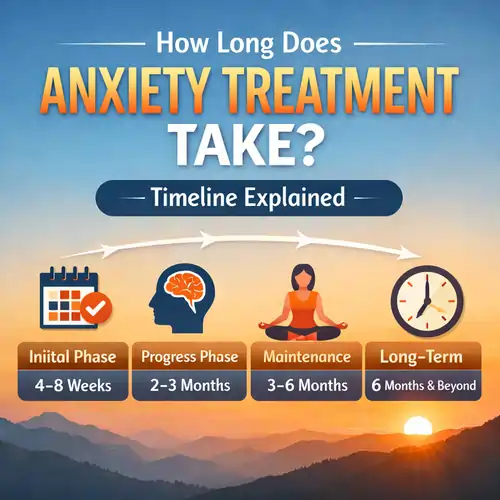
Stages of Anxiety Treatment
- Initial Phase (Weeks 1–4)
- Assessment and diagnosis
- Starting therapy and/or medication
- Early symptom management and psychoeducation
- Improvement Phase (Weeks 4–12)
- Reduced anxiety symptoms
- Better coping skills and fewer avoidance behaviors
- Stabilization Phase (3–6 Months)
- More consistent symptom control
- Improved daily functioning at work, school, and socially
- Maintenance Phase (6+ Months)
- Preventing relapse
- Continuing therapy skills or periodic check‑ins
- Ongoing lifestyle habits and, when appropriate, gradual medication tapering
Short‑Term vs Long‑Term Anxiety Treatment
Short‑term treatment:
- Often used for mild or situational anxiety.
- May involve brief CBT, short‑term medication, or targeted lifestyle changes.
Long‑term treatment:
- More likely needed for chronic or recurrent anxiety.
- Can involve ongoing therapy, extended medication use, and long‑term self‑management strategies.
Can Anxiety Be Treated Quickly?
Some individuals experience rapid improvement, especially when:
- Symptoms are mild
- Treatment starts early
- There are strong supports and low ongoing stress
However, most cases require time and consistent work; “quick fixes” rarely address underlying patterns.
Why Anxiety Treatment Takes Time
- Brain chemistry adjustment – Medications need time to regulate neurotransmitters like serotonin and norepinephrine.
- Behavioral change – Therapy involves learning, practicing, and reinforcing new behaviors and thought patterns.
- Habit formation – Lifestyle changes take time to establish and maintain before their full benefits are felt.
How to Speed Up Anxiety Recovery (Safely)
- Follow treatment plans consistently.
- Attend therapy regularly and complete homework exercises.
- Take medication exactly as prescribed and attend follow‑up appointments.
- Support brain and body health with sleep, nutrition, movement, and stress‑management practices.
Signs That Treatment Is Working
- Reduced frequency or intensity of worry and physical symptoms.
- Improved sleep and daytime energy.
- Better emotional control and fewer panic episodes.
- Increased ability to participate in daily activities without avoidance.
Progress is often gradual, so tracking symptoms over time can help you see patterns of improvement.
When Treatment Takes Longer Than Expected
Treatment may take longer due to:
- Severe or long‑standing anxiety
- Coexisting conditions (such as depression, trauma, or substance use)
- Major ongoing life stressors
- Inconsistent engagement with treatment
In such cases, healthcare providers may adjust therapy type, change or add medications, or increase the level of support.
Combining Treatments for Faster, Stronger Results
The most effective approach often includes:
- Therapy (such as CBT) to change thoughts and behaviors
- Medication to reduce symptom intensity when indicated
- Lifestyle changes to support overall mental and physical health
This combined strategy is frequently recommended by organizations like NIMH and WHO.
Relapse and Long‑Term Management
Even after improvement, anxiety can return, especially during stressful periods.
Prevention strategies:
- Continue using techniques learned in therapy.
- Maintain healthy routines and stress‑management practices.
- Schedule booster sessions or check‑ins if early warning signs appear.
When to Seek Professional Help
Seek professional help if:
- Symptoms persist beyond several weeks.
- Anxiety worsens or spreads into more areas of life.
- Daily functioning at work, school, or home is affected.
- You experience panic attacks or thoughts of self‑harm.
Early treatment usually leads to better and faster outcomes.
Living with Anxiety During Treatment
Recovery is a gradual process. During treatment:
- Be patient with yourself and the process.
- Track progress (journaling or rating symptoms can help).
- Celebrate small improvements and milestones.
Over time, most individuals see meaningful reductions in symptoms and improved quality of life.
Realistic Expectations for Anxiety Recovery
There is no single “correct” timeline for anxiety recovery. Most people improve over months rather than days, and some need long‑term management rather than a one‑time cure. Consistency, professional support, and self‑care are the keys to sustainable progress.
Frequently Asked Questions (FAQs)
1. How long does anxiety treatment take?
Anxiety treatment duration varies depending on severity and method. Many people see improvement within weeks. Full recovery may take months.
2. How long does CBT take for anxiety?
CBT usually lasts 8–20 sessions. Improvement often begins within a few weeks. Consistency is important.
3. How fast do anxiety medications work?
Benzodiazepines work quickly. SSRIs take several weeks. Full effects may take up to two months.
4. Can anxiety be cured in a few weeks?
Mild anxiety may improve quickly. Chronic anxiety takes longer. Treatment varies by individual.
5. Why does anxiety treatment take time?
It involves changes in brain chemistry and behavior. Therapy requires practice. Lifestyle changes take time to show results.
6. What is the fastest treatment for anxiety?
Fast-acting medications provide quick relief. However, long-term solutions involve therapy and lifestyle changes. A balanced approach is best.
7. Can therapy work faster than medication?
Therapy may show early results. Medication takes time to build effects. Both have different timelines.
8. How long should I stay on anxiety medication?
This depends on your condition and response. Some take medication for months or longer. A doctor determines duration.
9. Can anxiety return after treatment?
Yes, relapse can occur. Continued management helps prevent it. Ongoing support is beneficial.
10. How do I know treatment is working?
You may notice reduced symptoms and improved mood. Daily functioning improves. Progress may be gradual.
11. Can lifestyle changes speed up recovery?
Yes, healthy habits support treatment. Exercise and sleep improve outcomes. Consistency is key.
12. What if treatment isn’t working?
A doctor may adjust your plan. Different therapies or medications may be tried. Ongoing evaluation is important.
13. Is anxiety treatment lifelong?
Not always. Some people recover fully. Others require long-term management.
14. How long does severe anxiety take to treat?
Severe anxiety may take months or longer. Treatment involves multiple approaches. Patience is necessary.
15. Can children recover faster from anxiety?
Children may respond quickly with early treatment. However, timelines vary. Support is essential.
16. Does early treatment shorten recovery time?
Yes, early intervention improves outcomes. It prevents symptoms from worsening. Prompt care is beneficial.
17. Can anxiety improve without treatment?
Mild cases may improve naturally. However, untreated anxiety can worsen. Professional help is recommended.
18. How long does exposure therapy take?
Exposure therapy timelines vary. Many complete treatment within weeks to months. Progress depends on consistency.
19. Can anxiety be managed long-term?
Yes, many people manage anxiety effectively. Ongoing strategies help maintain stability. Support systems are important.
20. When should I seek help for anxiety?
Seek help if anxiety affects daily life. Persistent symptoms require evaluation. Early treatment improves outcomes.
Written by: Eden Grace Ramos, RN
Medical Disclaimer
This article is for informational and educational purposes only and does not replace professional medical advice. Anxiety treatment timelines and mental health care should be guided by qualified healthcare professionals. Always consult a licensed physician or mental health specialist before starting, changing, or stopping any treatment.