
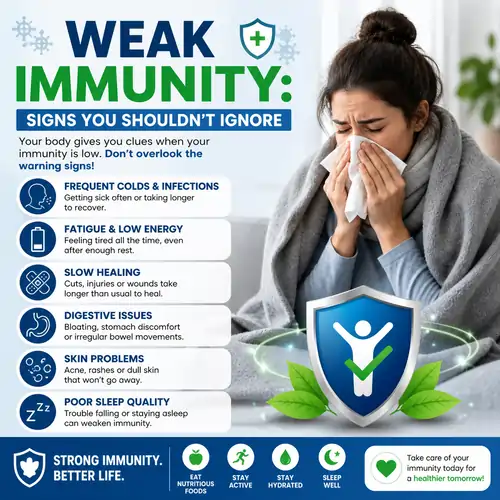
Common signs of weak immunity include frequent infections, constant fatigue, slow wound healing, digestive issues, and prolonged illness recovery. A weakened immune system may result from poor nutrition, stress, lack of sleep, or underlying health conditions. Recognizing these early warning signs of low immunity allows you to take proactive steps to strengthen your body’s natural defenses.
Introduction: Why Recognizing Weak Immunity Matters
Your immune system is designed to protect your body from harmful invaders such as viruses, bacteria, and toxins. However, when your defenses are compromised, your body becomes more vulnerable to illness. Many people overlook subtle symptoms of weak immune system, assuming they are minor or temporary.
Ignoring these signs of low immunity can lead to chronic health issues, frequent infections, and reduced quality of life. Understanding the early signs of weak immune system helps you take timely action and improve your overall health.
This guide explores the most important warning signs of weak immunity, their causes, and how to strengthen your immune system naturally.
Understanding the Immune System
The immune system function relies on a complex network of cells and organs, including:
- White blood cells
- Antibodies
- Lymphatic system
- Bone marrow
- Spleen
These components work together to detect and eliminate harmful pathogens. When your immune system health declines, your body struggles to defend itself effectively.
What Causes Weak Immunity?
Several factors contribute to low immune system function, including:
- Poor diet lacking immune boosting nutrients
- Chronic stress affecting immune response
- Lack of sleep disrupting immune system recovery
- Sedentary lifestyle reducing immune system strength
- Underlying medical conditions
Understanding these causes helps identify why your immune system is weak.
Top Signs of Weak Immunity You Shouldn’t Ignore
1. Frequent Infections and Illness
One of the most obvious signs of weak immune system is getting sick often.
Examples:
- Recurrent colds
- Frequent flu episodes
- Repeated infections
Why It Happens:
Your body struggles to fight off pathogens due to poor immune system defense.
2. Constant Fatigue and Low Energy
Persistent tiredness is a common symptom of low immunity.
Explanation:
The immune system uses energy to fight infections. When overworked, it leads to chronic fatigue.
3. Slow Wound Healing
If cuts or injuries take longer to heal, it may indicate weak immune response.
Why:
Immune cells play a key role in tissue repair. Poor function delays healing.
4. Digestive Problems and Gut Issues
Your gut is closely linked to your immune system health.
Symptoms:
- Bloating
- Diarrhea
- Constipation
Poor gut health weakens immune system balance.
5. Frequent Cold Sores or Infections
Recurring viral infections signal low immune system strength.
Example:
- Herpes outbreaks
- Skin infections
6. High Stress Levels
Chronic stress directly impacts immune system function.
Effects:
- Increased cortisol
- Reduced immune cell activity
Stress weakens your body’s ability to fight infections.
7. Poor Sleep Quality
Sleep is essential for immune system recovery.
Signs:
- Insomnia
- Irregular sleep patterns
Lack of sleep reduces immune system efficiency.
8. Allergies and Inflammation
Frequent allergies may indicate an overactive or weak immune response.
Symptoms:
- Sneezing
- Skin irritation
9. Frequent Digestive Infections
Recurring stomach infections suggest poor immune defense system.
10. Long Recovery Time from Illness
If you take longer to recover, it may signal weak immunity symptoms.
How Weak Immunity Affects Your Health
A compromised immune system can lead to:
- Increased infection risk
- Chronic inflammation
- Reduced energy levels
- Poor overall health
Ignoring immune system warning signs can worsen these conditions.
When to See a Doctor
Seek medical advice if you experience:
- Persistent infections
- Severe fatigue
- Unexplained symptoms
Professional evaluation helps identify underlying causes of immune system weakness.
How to Strengthen a Weak Immune System
1. Improve Nutrition
Eat foods rich in immune boosting vitamins and minerals such as:
- Vitamin C
- Vitamin D
- Zinc
2. Get Enough Sleep
Aim for 7–9 hours to support immune system recovery.
3. Manage Stress
Practice relaxation techniques to improve immune response.
4. Stay Active
Regular exercise enhances immune system strength.
5. Maintain Gut Health
Include probiotics for immune system support.
6. Stay Hydrated
Water supports immune system function.
Preventing Weak Immunity
Adopting healthy habits reduces the risk of low immune system function:
- Balanced diet
- Regular exercise
- Proper sleep
- Stress management
Consistency is key to maintaining strong immune health.
Common Myths About Weak Immunity
Myth 1: Only Sick People Have Weak Immunity
Even healthy individuals can have hidden immune system issues.
Myth 2: Supplements Fix Everything
Lifestyle changes are essential for improving immune system health.
Myth 3: Symptoms Are Always Obvious
Many signs of weak immunity are subtle.
FAQ: Signs of Weak Immunity
1. What are the common signs of weak immunity?
Common signs of weak immunity include frequent illness, fatigue, and slow healing. These symptoms indicate poor immune response. Early recognition is important.
2. Why do I get sick often?
Frequent illness suggests a weakened immune system. It may result from poor lifestyle or nutrition. Improving habits can help.
3. Can stress weaken immunity?
Yes, stress reduces immune cell activity. It weakens the body’s defense system. Managing stress improves health.
4. Does poor sleep affect immunity?
Yes, sleep is essential for immune recovery. Lack of sleep weakens immune response. Good sleep improves immunity.
5. How does diet impact immunity?
A poor diet lacks essential nutrients. This weakens immune function. Healthy eating supports immunity.
6. Can weak immunity cause fatigue?
Yes, the immune system uses energy. Chronic activation leads to fatigue. Proper care improves energy levels.
7. Are digestive issues linked to immunity?
Yes, gut health affects immune balance. Poor digestion weakens defenses. Probiotics can help.
8. When should I see a doctor?
Consult a doctor for persistent symptoms. Severe fatigue or infections need evaluation. Early treatment is important.
9. Can exercise improve immunity?
Yes, moderate exercise boosts immune function. It improves circulation and reduces inflammation. Regular activity is beneficial.
10. Do supplements help weak immunity?
They can help if deficiencies exist. However, they should support lifestyle changes. Consult a professional.
11. How long does it take to improve immunity?
It varies based on health and habits. Improvements may take weeks. Consistency is key.
12. Can hydration affect immunity?
Yes, hydration supports cellular function. It improves nutrient delivery. Drinking enough water is important.
13. Are frequent infections a warning sign?
Yes, repeated infections indicate weak immunity. The body struggles to fight pathogens. Medical advice may be needed.
14. Does aging affect immunity?
Yes, immunity declines with age. Older adults need more support. Healthy habits help maintain strength.
15. Can allergies indicate weak immunity?
They may indicate immune imbalance. Overactive responses can signal issues. Proper management is important.
16. Is slow healing a sign of weak immunity?
Yes, delayed healing shows poor immune function. The body struggles to repair tissues. Nutrition and care help.
17. Can mental health affect immunity?
Yes, mental stress impacts immune response. It weakens defenses over time. Managing mental health improves immunity.
18. What foods help improve immunity?
Fruits, vegetables, and proteins support immune health. They provide essential nutrients. A balanced diet is key.
19. Can lifestyle changes fix weak immunity?
Yes, consistent healthy habits improve immunity. Diet, sleep, and exercise are important. Results take time.
20. What is the fastest way to improve immunity?
There is no instant fix. Combining healthy habits works best. Consistency leads to long-term improvement.
Disclaimer
This article is for informational purposes only and does not constitute medical advice. While recognizing signs of weak immunity can help improve health, it is important to consult a qualified healthcare provider for proper diagnosis and treatment. Individual health needs vary, and professional guidance is essential for managing immune-related conditions.