
Anxiety and insomnia are closely linked conditions where excessive worry and mental overactivity disrupt sleep. Common anxiety insomnia symptoms include difficulty falling asleep, frequent waking, racing thoughts, and physical tension at night. Understanding the connection between anxiety and sleep problems helps individuals apply effective insomnia and anxiety management strategies to improve rest and overall mental health.
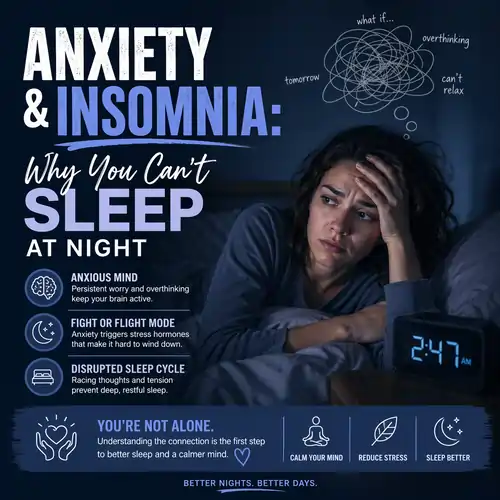
Struggling to fall asleep or waking up in the middle of the night with a racing mind is a common experience for many people dealing with anxiety and insomnia. While occasional sleeplessness can happen to anyone, persistent sleep problems often signal a deeper issue related to stress and mental health.
Understanding why anxiety causes insomnia is the first step toward breaking the cycle. This comprehensive guide explores the causes, symptoms, and proven ways to manage sleep anxiety and insomnia naturally.
Understanding Anxiety and Insomnia
What Is Anxiety?
Anxiety disorders involve excessive worry, fear, or nervousness that can interfere with daily life. When these feelings persist, they can affect both mental and physical health, including sleep patterns.
What Is Insomnia?
Insomnia is a sleep disorder characterized by difficulty falling asleep, staying asleep, or waking up too early. It is often linked to stress and anxiety-related sleep problems.
The Connection Between Anxiety and Sleep
The relationship between anxiety and insomnia is bidirectional.
- Anxiety makes it difficult to relax and fall asleep
- Lack of sleep increases anxiety levels
This creates a cycle known as sleep anxiety cycle.
Why Anxiety Keeps You Awake at Night
1. Racing Thoughts
One of the main causes of insomnia due to anxiety is an overactive mind. Thoughts about work, relationships, or worries can intensify at night.
2. Hyperarousal
Anxiety triggers the fight-or-flight response, keeping the body alert when it should be resting.
3. Increased Cortisol Levels
Elevated stress hormones interfere with the natural sleep-wake cycle.
4. Fear of Not Sleeping
Many people develop sleep anxiety, where worrying about sleep itself makes insomnia worse.
Common Symptoms of Anxiety and Insomnia
Recognizing symptoms of anxiety-related insomnia is essential.
Sleep-Related Symptoms:
- Difficulty falling asleep
- Frequent waking during the night
- Waking up too early
- Non-restorative sleep
Anxiety Symptoms at Night:
- Racing thoughts
- Restlessness
- Rapid heartbeat
- Muscle tension
These are key signs of chronic insomnia and anxiety.
Types of Anxiety That Affect Sleep
1. Generalized Anxiety Disorder (GAD)
Generalized anxiety disorder and insomnia often occur together, causing persistent worry that disrupts sleep.
2. Panic Disorder
Nighttime panic attacks can lead to sleep disturbances and anxiety.
3. Social Anxiety
Fear of upcoming events can trigger pre-sleep anxiety.
Effects of Insomnia on Mental Health
Chronic sleep deprivation and anxiety can lead to:
- Increased stress levels
- Poor concentration
- Mood instability
- Reduced immune function
This reinforces the connection between mental health and sleep disorders.
Risk Factors for Anxiety and Insomnia
Certain factors increase the likelihood of anxiety-related sleep disorders:
- Chronic stress
- Poor sleep habits
- Excessive screen time
- Caffeine intake
- Irregular routines
How to Recognize Sleep Anxiety Early
Early signs include:
- Fear of going to bed
- Overthinking at night
- Checking the clock frequently
These indicate early insomnia and anxiety symptoms.
Effective Ways to Manage Anxiety and Insomnia
1. Practice Sleep Hygiene
Improving sleep hygiene for insomnia is essential.
- Maintain a consistent sleep schedule
- Create a relaxing bedtime routine
- Limit screen exposure
2. Mindfulness Techniques
Mindfulness for sleep anxiety helps calm the mind.
3. Breathing Exercises
Deep breathing exercises for anxiety and sleep reduce physical tension.
4. Cognitive Behavioral Therapy
CBT for insomnia and anxiety (CBT-I) is highly effective in changing negative thought patterns.
5. Limit Stimulants
Reducing caffeine supports natural sleep improvement.
Natural Remedies for Anxiety and Insomnia
1. Physical Activity
Exercise helps regulate sleep and reduce stress.
2. Relaxation Techniques
Activities like meditation support stress reduction techniques for sleep.
3. Balanced Diet
Nutrition supports hormonal balance and sleep health.
Building a Healthy Sleep Routine
Consistency is key to overcoming chronic insomnia caused by anxiety.
Tips:
- Go to bed at the same time daily
- Avoid naps late in the day
- Use the bed only for sleep
When to Seek Professional Help
Seek help if:
- Insomnia persists for weeks
- Anxiety interferes with daily life
- Sleep problems worsen
Professional support improves treatment outcomes for insomnia and anxiety.
Long-Term Outlook
With proper strategies, most individuals can break the cycle of anxiety and insomnia. Consistent habits and support lead to better sleep and improved mental health.
Frequently Asked Questions (FAQ)
1. What is anxiety-related insomnia?
It is a sleep disorder caused by excessive worry and stress. Anxiety keeps the mind active at night. This makes it difficult to fall asleep.
2. Why does anxiety get worse at night?
Distractions decrease at night, making thoughts more noticeable. The mind becomes more focused on worries. This increases anxiety.
3. Can insomnia increase anxiety?
Yes, lack of sleep affects emotional regulation. It can worsen stress and anxiety symptoms. This creates a cycle.
4. How can I calm anxiety before bed?
Relaxation techniques and breathing exercises help. Limiting screen time is also beneficial. Creating a routine improves sleep.
5. What are common symptoms of sleep anxiety?
Symptoms include racing thoughts and restlessness. Physical tension is also common. Difficulty sleeping is a key sign.
6. Is insomnia a mental health condition?
It is a sleep disorder often linked to mental health. Anxiety and stress are common causes. Treatment may involve multiple approaches.
7. Can exercise improve sleep?
Yes, exercise reduces stress hormones. It helps regulate sleep patterns. Regular activity improves rest.
8. Does caffeine affect insomnia?
Yes, caffeine is a stimulant. It can delay sleep and worsen anxiety. Limiting intake helps.
9. What is CBT-I?
Cognitive Behavioral Therapy for Insomnia is a structured treatment. It addresses negative sleep habits and thoughts. It is highly effective.
10. Can meditation help with sleep?
Yes, meditation calms the mind. It reduces stress and anxiety. This improves sleep quality.
11. How long does anxiety insomnia last?
It varies depending on the individual. Some cases are temporary, others chronic. Treatment improves outcomes.
12. Is medication necessary for insomnia?
Not always, but it may help in severe cases. A healthcare provider determines the need. Always seek professional advice.
13. Can diet affect sleep?
Yes, nutrition influences sleep quality. Balanced meals support overall health. Avoid heavy meals before bedtime.
14. What is sleep hygiene?
Sleep hygiene refers to healthy sleep habits. It includes routines and environment. Good hygiene improves sleep.
15. Can stress cause insomnia?
Yes, stress is a major factor. It keeps the mind active. Managing stress helps improve sleep.
16. How do I stop overthinking at night?
Techniques like journaling and mindfulness help. Breathing exercises are also effective. Practice consistently.
17. Can insomnia affect physical health?
Yes, chronic insomnia impacts the body. It weakens immunity and increases health risks. Proper sleep is essential.
18. What are natural remedies for insomnia?
Natural remedies include exercise, meditation, and routine. These reduce stress and improve sleep. Consistency is key.
19. When should I see a doctor?
If sleep problems persist or worsen. Professional evaluation provides guidance. Early help improves recovery.
20. Is anxiety insomnia treatable?
Yes, it is manageable with proper strategies. Therapy and lifestyle changes are effective. Recovery is possible.
Disclaimer
This article is for informational purposes only and does not replace professional medical advice, diagnosis, or treatment. While this guide on anxiety and insomnia and why you can’t sleep at night is based on current knowledge and best practices, individual experiences may vary. Always consult a qualified healthcare provider for personalized advice, especially if symptoms are persistent or severe.