
Anxiety in women is closely linked to hormonal fluctuations that affect brain chemistry, mood regulation, and stress response. Changes in estrogen and progesterone levels, especially during menstruation, pregnancy, postpartum, and menopause, can trigger or worsen anxiety symptoms. Understanding how hormones and mental health in women interact allows for better management through lifestyle changes, coping strategies, and appropriate medical support.
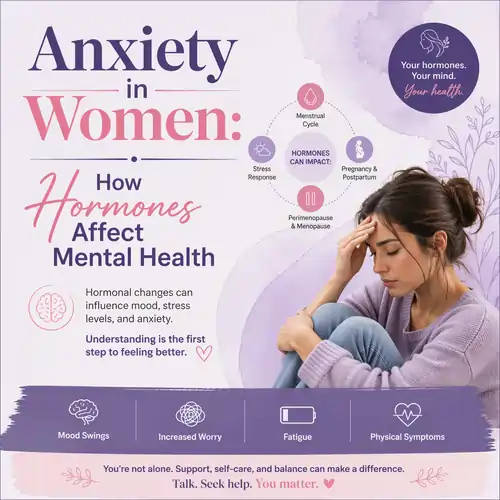
Anxiety in women is a complex and often misunderstood condition influenced by biological, psychological, and social factors. Among these, hormones play a central role. Women are nearly twice as likely as men to experience anxiety disorders, and this difference is largely attributed to hormonal fluctuations across different life stages.
Understanding the connection between hormones and mental health in women is essential for recognizing symptoms early and implementing effective natural anxiety management techniques. This guide explores how hormonal changes impact anxiety, the stages when women are most vulnerable, and practical strategies to maintain emotional balance.
Understanding Anxiety in Women
Anxiety disorders in women involve persistent worry, fear, or nervousness that interferes with daily functioning. These may include:
- Generalized anxiety disorder in women
- Panic disorder in women
- Social anxiety disorder in women
- Hormonal anxiety symptoms
Unlike situational stress, these conditions are ongoing and often influenced by internal biological processes.
The Role of Hormones in Mental Health
Hormones are chemical messengers that regulate many body functions, including mood.
Key Hormones Involved:
- Estrogen and anxiety
- Progesterone and mood changes
- Cortisol and stress response
- Serotonin regulation in women
These hormones interact with neurotransmitters in the brain, directly affecting emotional stability.
How Estrogen Affects Anxiety
Estrogen and anxiety are closely connected.
Estrogen helps regulate serotonin, a neurotransmitter responsible for mood stabilization. When estrogen levels drop, serotonin activity may decrease, leading to increased anxiety.
Effects of Low Estrogen:
- Mood swings
- Irritability
- Increased worry
- Sleep disturbances
This explains why hormonal anxiety in women often occurs during periods of hormonal fluctuation.
Progesterone and Emotional Balance
Progesterone and mood changes also play a significant role.
Progesterone has a calming effect on the brain. However, fluctuations can cause:
- Fatigue
- Irritability
- Anxiety symptoms
Imbalances in progesterone contribute to anxiety symptoms in women.
Cortisol and Chronic Stress
Cortisol and stress response are critical in understanding anxiety.
Chronic stress leads to elevated cortisol levels, keeping the body in a constant state of alert. This contributes to:
- Restlessness
- Difficulty concentrating
- Sleep problems
Managing cortisol is essential for reducing stress and anxiety in women.
Hormonal Anxiety Across Life Stages
1. Menstrual Cycle and Anxiety
Hormonal changes during the menstrual cycle can significantly affect mood.
Many women experience premenstrual anxiety symptoms, including:
- Irritability
- Mood swings
- Increased sensitivity
This is often linked to fluctuations in estrogen and progesterone.
2. PMS and PMDD
Premenstrual syndrome (PMS) and premenstrual dysphoric disorder (PMDD) are common.
PMDD is a severe form of PMS that includes:
- Intense anxiety
- Depression
- Emotional instability
Understanding these conditions helps manage hormonal anxiety symptoms effectively.
3. Pregnancy and Anxiety
Anxiety during pregnancy is influenced by rapid hormonal changes.
Common causes include:
- Physical changes
- Fear of childbirth
- Hormonal shifts
This period requires special attention to maternal mental health.
4. Postpartum Anxiety
Postpartum anxiety symptoms are often overlooked.
After childbirth, hormone levels drop sharply, leading to:
- Excessive worry
- Sleep disturbances
- Restlessness
Early recognition is key to managing postpartum mental health.
5. Perimenopause and Anxiety
Perimenopause anxiety occurs as hormone levels begin to fluctuate before menopause.
Symptoms include:
- Mood swings
- Sleep issues
- Increased anxiety
This stage is a major contributor to hormonal anxiety in women.
6. Menopause and Mental Health
Menopause and anxiety are closely linked due to declining estrogen levels.
Women may experience:
- Increased stress sensitivity
- Mood instability
- Sleep disturbances
Managing these changes is essential for long-term well-being.
Common Symptoms of Anxiety in Women
Recognizing anxiety symptoms in women is essential.
Emotional Symptoms:
- Persistent worry
- Irritability
- Feeling overwhelmed
Physical Symptoms:
- Rapid heartbeat
- Muscle tension
- Fatigue
Behavioral Symptoms:
- Avoidance
- Difficulty focusing
- Sleep disturbances
Risk Factors for Anxiety in Women
Several factors increase the likelihood of anxiety disorders in women:
- Hormonal fluctuations
- Chronic stress
- Trauma or life events
- Family history
Understanding these helps in prevention and early intervention.
Natural Ways to Manage Hormonal Anxiety
1. Balanced Nutrition
A healthy diet supports hormonal balance and mental health.
2. Regular Exercise
Exercise reduces cortisol and boosts mood.
3. Sleep Hygiene
Quality sleep stabilizes emotional regulation.
4. Stress Management Techniques
Practices like meditation support natural anxiety relief.
5. Limit Caffeine
Reducing stimulants helps manage anxiety symptoms.
Effective Coping Strategies
1. Mindfulness Practices
Mindfulness for anxiety in women improves emotional control.
2. Breathing Exercises
Deep breathing exercises for anxiety calm the nervous system.
3. Journaling
Journaling for anxiety relief helps process emotions.
4. Social Support
Strong relationships improve mental resilience.
Medical Treatment Options
In some cases, professional treatment may be necessary.
Options Include:
- Cognitive Behavioral Therapy (CBT for anxiety in women)
- Hormone therapy
- Medication when appropriate
Consulting a healthcare provider ensures safe and effective care.
Long-Term Mental Health Strategies
Maintaining mental health in women requires consistency:
- Build healthy routines
- Monitor hormonal cycles
- Seek support when needed
When to Seek Professional Help
Seek help if:
- Symptoms persist
- Anxiety interferes with daily life
- Emotional distress becomes overwhelming
Early intervention improves outcomes.
Frequently Asked Questions (FAQ)
1. Why is anxiety more common in women?
Hormonal fluctuations play a major role in anxiety prevalence among women. Changes in estrogen and progesterone affect brain chemistry and stress response. Social and environmental factors may also contribute.
2. How do hormones affect anxiety?
Hormones regulate neurotransmitters like serotonin. Fluctuations can disrupt emotional balance. This can lead to increased anxiety symptoms.
3. Can menstrual cycles cause anxiety?
Yes, hormonal changes during the menstrual cycle can trigger anxiety. Many women experience mood changes before menstruation. This is linked to estrogen and progesterone shifts.
4. What is PMDD?
PMDD is a severe form of PMS. It includes intense emotional symptoms like anxiety and depression. It requires medical evaluation and management.
5. Is postpartum anxiety common?
Yes, many women experience anxiety after childbirth. Hormonal changes and lifestyle adjustments contribute. Early support is important.
6. How does menopause affect anxiety?
Declining estrogen levels can increase anxiety symptoms. Women may also experience sleep disturbances and mood swings. Managing these changes is essential.
7. Can diet affect hormonal anxiety?
Yes, nutrition influences hormone balance and brain function. A healthy diet supports emotional stability. Avoiding excessive sugar and caffeine may help.
8. Is exercise helpful for anxiety?
Exercise reduces stress hormones and improves mood. It is one of the most effective natural strategies. Regular activity supports mental health.
9. What are natural remedies for anxiety in women?
Natural remedies include mindfulness, exercise, and proper sleep. These support hormone balance and stress reduction. Consistency is key.
10. Can therapy help hormonal anxiety?
Yes, therapy provides tools to manage anxiety. CBT is particularly effective. It helps change negative thought patterns.
11. What is cortisol’s role in anxiety?
Cortisol is a stress hormone. High levels can increase anxiety symptoms. Managing stress helps regulate cortisol.
12. How does sleep affect anxiety?
Poor sleep worsens emotional regulation. A consistent sleep routine improves mental resilience. Quality sleep is essential.
13. Are anxiety symptoms different in women?
Yes, symptoms may fluctuate with hormonal changes. Women may experience more mood-related symptoms. Individual experiences vary.
14. Can birth control affect anxiety?
Hormonal contraceptives can influence mood. Some women may experience increased or reduced anxiety. It varies depending on the individual.
15. Is anxiety during pregnancy normal?
Mild anxiety can occur during pregnancy. Hormonal changes and life adjustments contribute. Persistent symptoms should be addressed.
16. What is perimenopause anxiety?
Perimenopause anxiety occurs before menopause. Hormonal fluctuations can trigger mood changes. It is a common experience.
17. Can stress worsen hormonal anxiety?
Yes, stress increases cortisol levels. This can intensify anxiety symptoms. Stress management is important.
18. How can women balance hormones naturally?
Healthy lifestyle habits support hormone balance. This includes diet, exercise, and stress reduction. Consistency is essential.
19. When should I see a doctor for anxiety?
If symptoms persist or interfere with daily life, seek help. Professional evaluation provides guidance. Early treatment improves outcomes.
20. Is hormonal anxiety treatable?
Yes, hormonal anxiety can be managed effectively. Treatment may include lifestyle changes, therapy, or medication. Individualized care is important.
Disclaimer
This article is for informational purposes only and does not replace professional medical advice, diagnosis, or treatment. While this guide on anxiety in women and hormonal mental health is based on current knowledge and best practices, individual experiences may vary. Always consult a qualified healthcare provider for personalized advice, especially if symptoms are persistent or severe.