
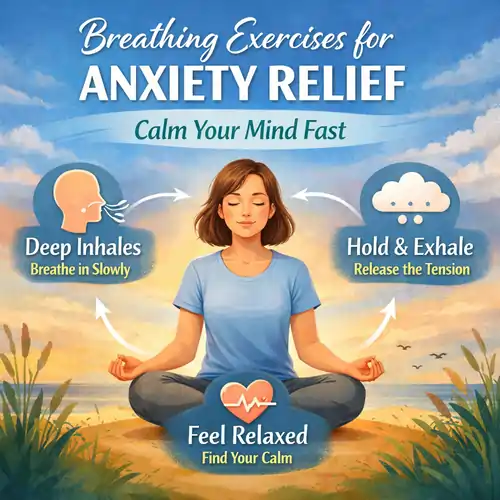
If you’re feeling overwhelmed, breathing exercises for anxiety relief can help calm your mind within minutes, especially when you use structured patterns like slow, deep breathing and box breathing described in medical stress‑management guides from the American Lung Association. Simple techniques like deep breathing, box breathing, and 4‑7‑8 breathing regulate your nervous system, reduce stress, and restore emotional balance, as outlined in practical anxiety tips from Healthline. Clinical and educational materials from organizations such as the American Psychiatric Association and peer‑reviewed research supported by the National Institutes of Health describe controlled breathing as an effective way to manage stress and anxiety naturally and safely.
Introduction
Anxiety can strike anytime—during work, before an important event, or even while resting—often bringing rapid heartbeat, shallow breathing, and racing thoughts as described in evidence‑based coping guides for anxiety. The good news is you can take control almost instantly using breathing exercises for anxiety relief that are simple, portable, and supported by breathwork and stress‑management research.
Breathing is directly linked to your nervous system, and by consciously slowing and deepening your breath, you signal your brain and body to relax, which is a core principle in breath‑based relaxation programs discussed in breathwork reviews for stress management. This makes anxiety breathing techniques one of the fastest natural remedies available, with NIH‑indexed reviews showing that slow breathing can significantly reduce anxiety and physiological arousal in studies on the effect of slow breathing in regulating anxiety and brief structured respiration practices.
Why Breathing Works for Anxiety
When anxiety hits, your body activates the fight‑or‑flight response, often leading to rapid, shallow breathing, increased heart rate, muscle tension, and heightened alertness as outlined in university‑level explainers on stress physiology. Using controlled breathing for anxiety activates the parasympathetic nervous system—the part responsible for relaxation—helping reverse those stress responses.
Guides from the American Lung Association explain that slow, intentional breathing can shift the body out of stress mode and into a calmer state by lowering arousal and stabilizing heart rate.
Key Benefits of Breathing Exercises for Anxiety Relief
- Slows heart rate and reduces physical arousal.
- Lowers perceived stress and may reduce cortisol over time in some studies.
- Improves oxygen flow and breathing efficiency, especially with techniques like pursed‑lip breathing.
- Reduces panic and anxious feelings in the moment, even with brief daily practice documented in structured breathwork trials.
- Enhances mental clarity, focus, and emotional regulation.
Reviews on stress and mental health from global health and research bodies emphasize that stress‑management tools, including breathing and relaxation, contribute to overall well‑being and resilience.
Signs You Need Anxiety Breathing Techniques
You may benefit from breathing exercises for stress and anxiety if you experience shortness of breath, tight chest, racing thoughts, dizziness, or restlessness—symptoms commonly listed in practical guides on coping with anxiety. Educational resources from university mental‑health programs note that early use of skills such as controlled breathing can help prevent symptoms from escalating toward a full panic response.
Best Breathing Exercises for Anxiety Relief
1. Deep Breathing (Diaphragmatic Breathing)
Deep breathing for anxiety, also called diaphragmatic or belly breathing, appears in many APA‑linked and clinical handouts on relaxation and stress reduction from the American Psychiatric Association.
This diaphragmatic breathing technique promotes full oxygen exchange and reduces stress signals from the body to the brain. Harvard‑affiliated explanations of the relaxation response show how deep breathing helps lower stress‑related arousal, as demonstrated in Harvard’s relaxation‑response training.
2. Box Breathing (4×4 Method)
Box breathing for anxiety is used by athletes, healthcare workers, and first responders as a quick reset strategy and is included in educational guides such as Two Breathing Techniques That Can Help Reduce Stress.
Benefits:
Box breathing stabilizes your breathing rhythm, improves focus, and reduces panic by engaging the parasympathetic nervous system. Mental‑health articles and extension programs recommend box breathing as a core tool for anxiety and high‑pressure situations.
3. 4‑7‑8 Breathing Technique
The 4‑7‑8 breathing exercise is a powerful relaxation technique often recommended for anxiety and sleep in integrative and behavioral health content, including popular health articles on how to cope with anxiety.
Why it works:
The extended exhale helps slow your heart rate and downshift your nervous system into a more relaxed state. Many clinical and self‑care resources describe 4‑7‑8 breathing as a practical pattern for immediate anxiety relief and better sleep.
4. Alternate Nostril Breathing
Alternate nostril breathing is a mindfulness breathing technique rooted in yoga and often incorporated into stress‑reduction programs, with evidence from trials such as the alternate nostril breathing cardiorespiratory study.
Benefits:
Alternate nostril breathing appears to balance autonomic function, reduce stress, and enhance clarity; clinical research has shown improvements in cardiorespiratory parameters after several weeks of practice.
5. Pursed‑Lip Breathing
Pursed‑lip breathing is especially useful for immediate anxiety relief and for people who also experience shortness of breath or lung conditions, and it is widely taught by respiratory organizations.
Why it works:
This slow breathing technique helps keep airways open longer, improves airflow, and can reduce the sensation of breathlessness, which indirectly calms the nervous system, as explained by the American Lung Association and lung‑health guides on pursed‑lip breathing.
6. Resonant (Coherent) Breathing
Resonant breathing, sometimes called coherent breathing, involves breathing at a steady, comfortable rhythm—often around 5–6 breaths per minute—and is used in biofeedback and stress‑regulation programs.
Benefits:
This style of slow breathing can synchronize heart and breath, improve heart rate variability, and reduce anxiety symptoms, as shown in NIH‑indexed research like the slow breathing and anxiety regulation review.
7. Belly Breathing for Stress Relief
Belly breathing for anxiety, another form of abdominal or diaphragmatic breathing, is often taught in clinical stress‑management materials and self‑help content.
Clinical and educational reviews note that regular abdominal breathing enhances oxygen exchange, reduces muscle tension, and supports lower perceived stress and improved mood, as seen in breathwork studies such as Brief structured respiration practices enhance mood and reduce stress.
How Fast Do Breathing Exercises Work?
Most breathing techniques for anxiety relief begin to work within 1–5 minutes when practiced with slow, steady rhythm. Health organizations and hospital‑based guidance report that even a few minutes of focused deep breathing can significantly reduce acute stress symptoms, similar to the short breathing practices evaluated in NIH‑indexed trials.
When to Use Breathing Exercises
You can use quick breathing exercises for anxiety:
- Before presentations or interviews.
- During early signs of a panic episode.
- At bedtime to unwind.
- While commuting or stuck in traffic.
- During stressful conversations or decisions.
Clinical trial descriptions, such as the exam‑anxiety breathing trial, encourage using coping strategies like breathing proactively, not just during crises, to build resilience over time.
Common Mistakes to Avoid
Common mistakes include breathing too fast or forcefully, straining or holding your breath uncomfortably, ignoring rhythm and consistency, and only practicing during high anxiety instead of also on calm days. Educational resources connected with Harvard and psychiatric organizations stress that proper pacing, gentle breaths, and regular practice are essential for the relaxation response, as demonstrated in Harvard’s relaxation‑response training.apayoutubeextension.
Combining Breathing with Other Techniques
For better results, combine breathing exercises for anxiety relief with meditation, grounding exercises, progressive muscle relaxation, and healthy lifestyle supports like sleep, movement, and social connection. Professional groups such as the American Psychiatric Association highlight multi‑strategy approaches—breathing plus cognitive and behavioral skills—as especially effective for mental‑health outcomes.
Long‑Term Benefits of Breathing Exercises
When practiced daily, structured breathing exercises can support greater emotional resilience, self‑regulation, and overall mental health. Research on breathwork for stress management—including NIH‑indexed articles like Brief structured respiration practices enhance mood and reduce stress—suggests that slow breathing can improve heart rate variability, promote better sleep, and reduce negative mood over time.
Best Routine for Daily Practice
You can use a simple, evidence‑inspired daily plan like:
- Morning: 5 minutes of deep diaphragmatic breathing to set a calm baseline, mirroring routines in professional relaxation‑technique guides.
- Afternoon: 2–3 minutes of box breathing during work or study breaks, as suggested in university breathing‑technique articles.
- Night: Several rounds of 4‑7‑8 breathing before sleep to wind down, as recommended in many anxiety and sleep self‑help resources.
Who Should Use These Techniques?
These natural anxiety‑relief techniques are generally suitable for students, professionals, people experiencing mild to moderate anxiety symptoms, and anyone under stress who wants a practical tool for self‑regulation, as reflected in clinical designs like the breathing exercises and exam anxiety trial.
Scientific Support Behind Breathing Exercises
Multiple studies confirm that slow, structured breathing techniques reduce anxiety, improve mood, and support healthier physiological patterns like heart rate variability, including the NIH‑indexed slow breathing and anxiety review and brief respiration practice trial. Broader reviews on stress management describe breathwork as a safe, simple strategy that effectively engages the body’s relaxation response when practiced regularly.
Written by: Eden Grace Ramos, RN
Medical Disclaimer
This article is for informational and educational purposes only and does not replace professional medical advice. Anxiety treatment timelines and mental health care should be guided by qualified healthcare professionals. Always consult a licensed physician or mental health specialist before starting, changing, or stopping any treatment.
Resources
For further reading and evidence‑based guidance on breathing exercises for anxiety relief, see:
- American Lung Association – Simple Breathing Exercises to Help You Manage Stresslung
- American Psychiatric Association – Relaxation Techniques for Mental Wellnesspsychiatry
- NIH / PubMed Central – The effect of slow breathing in regulating anxiety and Brief structured respiration practices enhance mood and reduce stress
- ClinicalTrials.gov – The Effects of Breathing Exercises on Exam Anxietyclinicaltrials
- Utah State University Extension – Two Breathing Techniques That Can Help Reduce Stressextension