
How to stop overthinking and break anxiety spirals fast starts with calming your nervous system and interrupting repetitive thought patterns. Techniques like mindful breathing, grounding exercises, cognitive reframing, and behavioral activation can quickly reduce mental overwhelm. When practiced consistently, these natural anxiety management techniques help you regain control, improve focus, and prevent recurring cycles of worry.
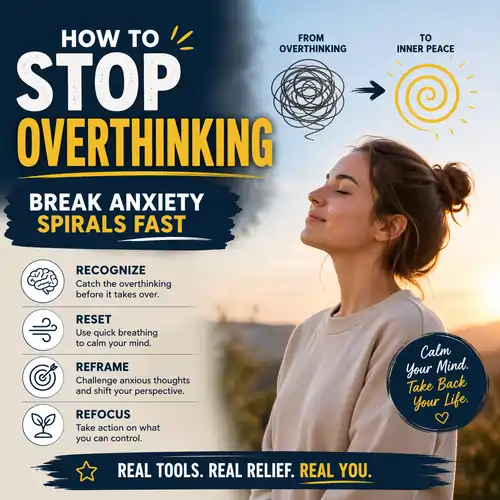
Overthinking can feel like being trapped in your own mind. One thought leads to another, and before you know it, you’re stuck in a loop of worry, doubt, and mental exhaustion. This pattern, often referred to as an anxiety spiral, can disrupt your sleep, reduce productivity, and impact your overall well-being.
Learning how to stop overthinking is not about eliminating thoughts entirely. Instead, it’s about changing your relationship with those thoughts and developing mental health habits that promote clarity and calmness. In this guide, we’ll explore practical, science-backed strategies to help you break anxiety cycles and regain control of your mind.
Understanding Overthinking and Anxiety Spirals
To effectively apply techniques to stop overthinking, it’s important to understand how these patterns develop.
Overthinking often stems from the brain’s attempt to solve problems or avoid potential threats. However, instead of reaching solutions, the mind gets stuck in repetitive loops known as rumination.
Common Signs of Overthinking:
- Constant replaying of past events
- Excessive worry about the future
- Difficulty making decisions
- Trouble sleeping due to racing thoughts
An anxiety spiral occurs when these thoughts intensify, triggering physical symptoms like increased heart rate, shallow breathing, and restlessness.
Why Overthinking Happens
Your brain is wired to protect you. When it perceives uncertainty or risk, it activates the fight-or-flight response.
In modern life, this response is often triggered by non-threatening situations like work stress or social pressure. This leads to chronic activation of stress hormones such as cortisol.
Understanding this mechanism helps you apply natural ways to reduce anxiety effectively.
1. Interrupt the Thought Loop Immediately
One of the most effective ways to stop overthinking fast is to interrupt the cycle.
Techniques:
- Say “stop” out loud or mentally
- Shift your focus to a physical activity
- Use a timer to limit thinking time
This technique is part of cognitive behavioral strategies for anxiety, helping you break automatic patterns.
2. Practice Mindful Breathing
Mindful breathing is a powerful tool to calm your nervous system.
How to Do It:
- Inhale for 4 seconds
- Hold for 4 seconds
- Exhale for 6–8 seconds
This deep breathing exercise for anxiety reduces heart rate and signals safety to your brain.
3. Use Grounding Techniques
Grounding helps you reconnect with the present moment.
5-4-3-2-1 Method:
- 5 things you see
- 4 things you feel
- 3 things you hear
- 2 things you smell
- 1 thing you taste
This is one of the most effective grounding techniques for anxiety spirals.
4. Challenge Negative Thoughts
Overthinking often involves distorted thinking patterns.
Try Cognitive Reframing:
- Is this thought realistic?
- What evidence supports it?
- What is a more balanced perspective?
This is a core part of cognitive restructuring for anxiety.
5. Take Action Instead of Overanalyzing
Overthinking thrives on inaction. Taking even small steps can break the cycle.
Examples:
- Make a quick decision
- Start a task for 5 minutes
- Focus on progress, not perfection
This method aligns with behavioral activation for anxiety.
6. Limit Information Overload
Too much input can overwhelm your brain.
Reduce:
- Social media usage
- News consumption
- Multitasking
This supports mental clarity and stress reduction.
7. Set Boundaries for Thinking Time
Schedule a specific “worry time” each day.
This technique helps contain overthinking instead of letting it spread throughout the day.
8. Move Your Body
Physical activity is one of the most effective natural remedies for anxiety.
Exercise releases endorphins and reduces stress hormones.
9. Improve Sleep Quality
Sleep deprivation increases overthinking.
Tips:
- Maintain a consistent sleep schedule
- Avoid screens before bed
- Practice relaxation techniques
This supports sleep hygiene for anxiety relief.
10. Practice Mindfulness Meditation
Mindfulness for overthinking helps you observe thoughts without reacting.
This reduces emotional intensity and improves focus.
11. Write Down Your Thoughts
Journaling for overthinking helps externalize worries.
It creates distance between you and your thoughts.
12. Focus on What You Can Control
Overthinking often involves uncontrollable scenarios.
Redirect your energy toward actionable steps.
13. Reduce Caffeine Intake
Caffeine can increase anxiety symptoms like restlessness and racing thoughts.
Switching to calming beverages supports natural anxiety relief.
14. Practice Self-Compassion
Being overly critical fuels overthinking.
Treat yourself with kindness and understanding.
15. Engage in Relaxing Activities
Activities like reading, music, or hobbies help shift your focus.
These support stress reduction techniques.
16. Break Tasks into Smaller Steps
Large tasks can feel overwhelming.
Breaking them down reduces mental pressure.
17. Use Positive Affirmations
Replace negative thoughts with constructive statements.
This supports cognitive behavioral therapy techniques.
18. Stay Connected with Others
Talking to someone can provide perspective and emotional relief.
19. Accept Uncertainty
Trying to control everything increases anxiety.
Acceptance reduces resistance and mental tension.
20. Seek Professional Support if Needed
If overthinking becomes persistent, professional help can provide structured guidance.
Frequently Asked Questions (FAQ)
1. What causes overthinking and anxiety spirals?
Overthinking is often triggered by uncertainty, fear, or past experiences. The brain tries to solve problems but gets stuck in repetitive loops. This can lead to anxiety spirals when stress responses are activated.
2. How can I stop overthinking immediately?
You can interrupt the thought cycle using grounding techniques or physical movement. Deep breathing exercises can also calm your nervous system quickly. These methods help shift focus away from repetitive thoughts.
3. Is overthinking a mental disorder?
Overthinking itself is not a disorder but a symptom. It is often linked to anxiety or stress-related conditions. Persistent cases may require professional evaluation.
4. Can mindfulness reduce overthinking?
Yes, mindfulness helps you observe thoughts without reacting. This reduces emotional intensity and rumination. Over time, it improves mental clarity.
5. How does exercise help overthinking?
Exercise releases endorphins that improve mood. It also reduces stress hormones like cortisol. This helps break anxiety cycles.
6. Does sleep affect overthinking?
Poor sleep increases emotional reactivity and stress. A consistent sleep routine improves mental resilience. This reduces overthinking tendencies.
7. Are breathing exercises effective?
Yes, they regulate your nervous system. Slow breathing signals safety to your brain. This reduces anxiety quickly.
8. Can diet influence overthinking?
Yes, caffeine and sugar can worsen symptoms. A balanced diet supports brain function. This helps maintain emotional stability.
9. What is cognitive reframing?
It is a technique to challenge negative thoughts. You replace them with balanced perspectives. This reduces anxiety.
10. Is journaling helpful for overthinking?
Yes, journaling externalizes your thoughts. It helps you process emotions and identify patterns. This reduces mental clutter.
11. How do grounding techniques work?
They focus your attention on the present moment. This interrupts anxiety spirals. It reduces emotional intensity.
12. Can social media increase overthinking?
Excessive use can lead to comparison and stress. Limiting exposure helps reduce mental overload. Balance is important.
13. How long does it take to stop overthinking?
It varies depending on consistency and habits. Some improvements can be immediate. Long-term change requires regular practice.
14. Is overthinking linked to anxiety?
Yes, overthinking is a common symptom of anxiety. It often triggers or worsens anxiety spirals. Managing one helps the other.
15. Can talking to someone help?
Yes, sharing thoughts provides perspective. It reduces emotional burden. Support systems are important.
16. What are quick grounding techniques?
The 5-4-3-2-1 method is effective. It uses your senses to anchor you in the present. This calms your mind.
17. Can overthinking be controlled naturally?
Yes, through consistent habits and techniques. Lifestyle changes can significantly reduce symptoms. Natural approaches are effective for many people.
18. What is behavioral activation?
It involves taking action despite anxiety. Small steps break the cycle of avoidance. This improves mood and motivation.
19. Does hydration affect mental clarity?
Yes, dehydration can impact mood and focus. Drinking enough water supports brain function. It’s an important habit.
20. When should I seek help for overthinking?
If it interferes with daily life or persists, seek professional support. Therapy can provide structured tools and guidance. Early intervention is beneficial.
Disclaimer | How to Stop Overthinking
This article is for informational purposes only and does not replace professional medical advice, diagnosis, or treatment. While these strategies for how to stop overthinking and break anxiety spirals fast are evidence-based and widely recommended, individual results may vary. Always consult a qualified healthcare provider if symptoms persist or worsen, or before making significant changes to your mental health routine.