
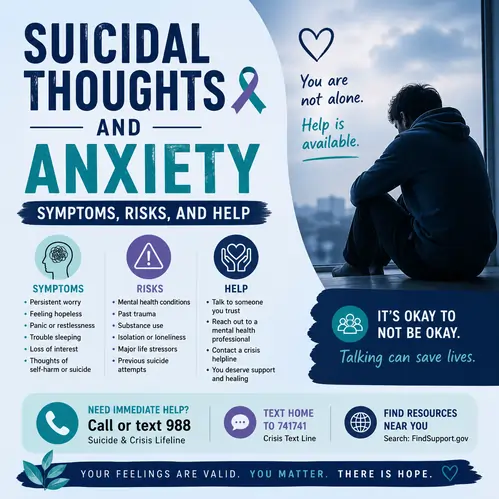
Suicidal thoughts and anxiety are closely linked mental health concerns that can significantly impact emotional well-being and daily functioning. While anxiety disorders can intensify feelings of fear, hopelessness, and distress, the presence of suicidal ideation is a serious warning sign that requires immediate attention. Understanding the symptoms, risk factors, and when to seek help is critical for early intervention and recovery. This guide provides clear, supportive, and medically grounded information to help individuals recognize warning signs and access appropriate care.
Introduction
Living with anxiety can be overwhelming. Persistent worry, panic attacks, and constant fear can drain emotional and physical energy. For some individuals, especially when anxiety becomes severe or chronic, these feelings may evolve into hopelessness, emotional exhaustion, and eventually suicidal thoughts.
It is important to understand that experiencing suicidal ideation does not mean a person truly wants to die. Often, it reflects a desire to escape intense emotional pain. Recognizing this distinction is key to providing effective support and intervention.
This comprehensive guide explores the relationship between anxiety disorders and suicidal thoughts, including symptoms, risk factors, and actionable steps for seeking help.
Understanding Anxiety and Its Impact
What Is Anxiety?
Anxiety is a natural response to stress, involving the fight-or-flight response. It prepares the body to respond to perceived threats by increasing heart rate, alertness, and breathing.
However, when anxiety becomes persistent, it can develop into anxiety disorders, including:
- Generalized anxiety disorder (GAD)
- Panic disorder
- Social anxiety disorder
- Health anxiety
These conditions can significantly impair daily functioning and emotional stability.
What Are Suicidal Thoughts?
Suicidal thoughts, also known as suicidal ideation, refer to thinking about, considering, or planning suicide. They can range from passive thoughts like “I wish I could disappear” to more active planning.
Types of Suicidal Ideation
- Passive suicidal thoughts (no plan or intent)
- Active suicidal thoughts (with intent or planning)
Both types are serious and should never be ignored.
The Link Between Anxiety and Suicidal Thoughts
Emotional Overload
Chronic anxiety can create constant mental tension. Over time, this leads to:
- Emotional exhaustion
- Feelings of helplessness
- Loss of control
This emotional overload may contribute to suicidal ideation.
Fear and Catastrophic Thinking
People with anxiety often experience catastrophic thinking, where they expect the worst outcomes. This can lead to:
- Persistent fear
- Hopelessness about the future
- Difficulty coping with stress
Coexisting Mental Health Conditions
Anxiety disorders often coexist with:
- Depression
- Substance use disorders
- Post-traumatic stress disorder (PTSD)
These conditions significantly increase the risk of suicidal thoughts.
Common Symptoms of Anxiety Linked to Suicidal Thoughts
Emotional Symptoms
- Persistent worry and fear
- Feelings of hopelessness
- Irritability
- Difficulty concentrating
Physical Symptoms
- Chest pain
- Heart palpitations
- Shortness of breath
- Fatigue
- Muscle tension
Behavioral Symptoms
- Withdrawal from social activities
- Avoidance behaviors
- Changes in sleep patterns
- Loss of interest in daily activities
Warning Signs of Suicidal Thoughts
Recognizing warning signs can save lives. Key indicators include:
- Talking about wanting to die
- Expressing feelings of being a burden
- Sudden withdrawal or isolation
- Giving away possessions
- Drastic mood changes
Risk Factors
Psychological Risk Factors
- Severe anxiety disorders
- Depression
- History of trauma
Biological Risk Factors
- Imbalances in brain chemicals
- Genetic predisposition
Environmental Risk Factors
- Stressful life events
- Financial problems
- Relationship issues
When Anxiety Becomes an Emergency
Anxiety becomes a mental health emergency when:
- Suicidal thoughts are present
- There is intent or planning
- The person cannot ensure their own safety
- There is risk of self-harm
When to Seek Help
Seek immediate help if:
- Thoughts of suicide are frequent
- You feel unable to cope
- You have a plan or intent
- Symptoms are worsening
Early intervention can prevent crisis escalation.
What to Do If You Have Suicidal Thoughts
Immediate Steps
- Reach out to a trusted person
- Contact a mental health professional
- Go to a safe place
Crisis Support
If you are in immediate danger, contact emergency services or a crisis hotline in your area.
How to Help Someone Else
- Listen without judgment
- Encourage professional help
- Stay with them if they are at risk
- Avoid dismissing their feelings
Treatment Options
Psychotherapy
Cognitive Behavioral Therapy (CBT) helps individuals:
- Challenge negative thoughts
- Develop coping strategies
- Reduce anxiety symptoms
Medication
- Antidepressants (SSRIs)
- Anti-anxiety medications
These help regulate mood and reduce symptoms.
Lifestyle Changes
- Regular exercise
- Healthy diet
- Adequate sleep
- Stress management
Coping Strategies
- Practice mindfulness
- Use grounding techniques
- Limit exposure to stress triggers
- Build a support system
Breaking the Stigma
Mental health stigma often prevents people from seeking help. Understanding that anxiety and suicidal thoughts are medical conditions—not personal failures—is essential.
Long-Term Outlook
With proper treatment, individuals can recover and manage symptoms effectively. Early intervention improves outcomes and reduces long-term risk.
Frequently Asked Questions (FAQs)
1. Can anxiety cause suicidal thoughts?
Yes, severe anxiety can lead to suicidal thoughts. Emotional overwhelm and chronic stress contribute to this risk. Professional help is important.
2. Are suicidal thoughts always serious?
Yes, all suicidal thoughts should be taken seriously. Even passive thoughts indicate distress. Early support can prevent escalation.
3. What are the first warning signs?
Early signs include withdrawal and hopelessness. Changes in mood and behavior are common. Recognizing them early is critical.
4. Can panic attacks lead to suicidal thoughts?
Yes, frequent panic attacks can increase emotional distress. This may contribute to hopelessness. Treatment helps reduce risk.
5. Is anxiety linked to depression?
Yes, anxiety and depression often occur together. This increases the risk of suicidal ideation. Integrated treatment is important.
6. When should I seek help?
Seek help when symptoms interfere with daily life. Immediate help is needed for suicidal thoughts. Do not delay support.
7. What treatments are available?
Treatments include therapy, medication, and lifestyle changes. CBT is highly effective. A personalized plan works best.
8. Can medication help?
Yes, medications like SSRIs can reduce symptoms. They help regulate mood and anxiety. A doctor should guide treatment.
9. How can I support someone?
Listen without judgment and encourage help. Stay present and supportive. Avoid dismissing their feelings.
10. Are suicidal thoughts temporary?
They can be temporary with proper support. However, they should never be ignored. Early intervention is key.
11. What triggers suicidal thoughts?
Triggers include stress, trauma, and mental health conditions. Life events can also contribute. Identifying triggers helps prevention.
12. Can lifestyle changes help?
Yes, healthy habits improve mental health. Exercise and sleep are important. They support emotional stability.
13. Is therapy effective?
Yes, therapy is highly effective. It teaches coping strategies. Long-term improvement is possible.
14. Can children experience this?
Yes, children can have anxiety and suicidal thoughts. Early support is crucial. Professional help is recommended.
15. Does social media affect mental health?
Yes, excessive use can increase anxiety. It may contribute to negative thinking. Limiting exposure helps.
16. Can anxiety feel life-threatening?
Yes, anxiety can feel intense and overwhelming. Physical symptoms may mimic emergencies. Understanding helps reduce fear.
17. Should I talk about suicidal thoughts?
Yes, talking helps reduce isolation. It allows others to support you. Professional guidance is important.
18. What is a mental health crisis?
A crisis involves immediate risk of harm. It requires urgent intervention. Safety is the priority.
19. Can recovery happen?
Yes, recovery is possible with treatment. Many people improve significantly. Support plays a key role.
20. Where can I get help?
You can contact mental health professionals or hotlines. Support groups are also helpful. Immediate help is available in emergencies.
Disclaimer | Suicidal Thoughts and Anxiety
This content is for educational purposes only and is not a substitute for professional medical advice, diagnosis, or treatment. If you or someone you know is experiencing suicidal thoughts or a mental health crisis, seek immediate help from a qualified healthcare provider or emergency services. Support is available, and you do not have to face this alone.