
Workplace anxiety is a common mental health issue caused by stressors such as high workload, job insecurity, poor management, and lack of work-life balance. Key workplace anxiety symptoms include excessive worry, difficulty concentrating, irritability, fatigue, and physical tension. Effective workplace anxiety management strategies—such as stress reduction techniques, healthy routines, communication skills, and professional support—can help improve productivity, emotional well-being, and overall job satisfaction.
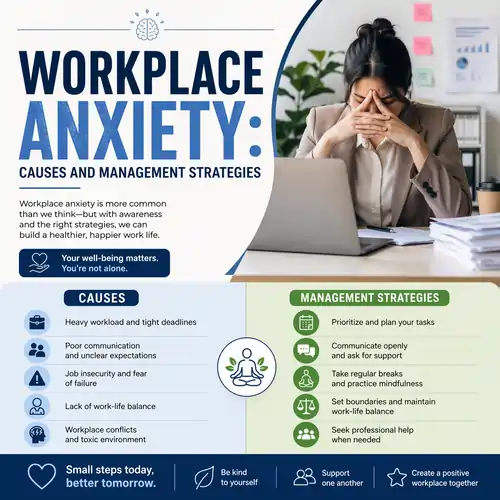
Workplace anxiety is increasingly recognized as a significant mental health challenge affecting employees across industries. While some level of stress at work is normal, persistent and overwhelming anxiety can interfere with performance, relationships, and overall well-being.
Understanding the causes of workplace anxiety and implementing effective workplace anxiety management strategies is essential for maintaining both mental health and professional success. This comprehensive guide explores symptoms, triggers, risk factors, and practical ways to manage anxiety in the workplace.
Understanding Workplace Anxiety
Work-related anxiety refers to excessive worry, fear, or stress associated with job responsibilities, environment, or expectations. It is closely related to occupational stress and anxiety disorders, which can develop when workplace pressures become chronic.
Unlike temporary stress, chronic workplace anxiety persists over time and may require intervention.
Common Symptoms of Workplace Anxiety
Recognizing symptoms of workplace anxiety is the first step toward managing it.
Emotional Symptoms:
- Persistent worry about job performance
- Irritability or frustration
- Feeling overwhelmed
Physical Symptoms:
- Muscle tension
- Headaches
- Fatigue
- Rapid heartbeat
Cognitive Symptoms:
- Difficulty concentrating
- Racing thoughts
- Negative thinking patterns
Behavioral Symptoms:
- Avoidance of tasks
- Procrastination
- Reduced productivity
These are key indicators of anxiety at work.
Major Causes of Workplace Anxiety
Understanding the root causes of workplace anxiety helps in developing targeted solutions.
1. High Workload and Pressure
Excessive tasks and unrealistic deadlines can lead to job stress and anxiety.
2. Job Insecurity
Fear of losing employment contributes to workplace stress and anxiety.
3. Poor Work Environment
Toxic workplaces, lack of support, or conflict with colleagues increase anxiety levels.
4. Lack of Control
Limited decision-making power can create feelings of helplessness.
5. Work-Life Imbalance
Long hours and lack of personal time contribute to burnout and anxiety at work.
Risk Factors for Workplace Anxiety
Certain individuals may be more prone to work-related anxiety disorders:
- High-achieving personalities
- Perfectionism
- Previous mental health conditions
- Poor coping mechanisms
- Lack of support systems
Effects of Workplace Anxiety on Daily Life
Untreated workplace anxiety can impact:
- Job performance
- Physical health
- Relationships
- Sleep quality
It may also lead to burnout syndrome and reduced overall quality of life.
Workplace Anxiety vs Normal Stress
It’s important to distinguish between normal stress and chronic workplace anxiety.
Normal Stress:
- Temporary
- Motivating
Workplace Anxiety:
- Persistent
- Overwhelming
- Interferes with functioning
How to Recognize Workplace Anxiety Early
Early detection allows for timely intervention.
Warning Signs:
- Constant worry about work
- Avoiding responsibilities
- Physical discomfort before work
Recognizing these signs supports early workplace anxiety intervention strategies.
Effective Workplace Anxiety Management Strategies
1. Time Management Skills
Improving organization reduces overwhelm and supports stress management at work.
2. Set Realistic Goals
Breaking tasks into smaller steps prevents mental overload.
3. Practice Mindfulness
Mindfulness for workplace anxiety improves focus and emotional control.
4. Use Breathing Techniques
Deep breathing exercises for anxiety calm the nervous system during stressful moments.
5. Take Regular Breaks
Short breaks improve productivity and reduce stress levels.
Natural Ways to Reduce Workplace Anxiety
1. Physical Activity
Exercise reduces cortisol and supports natural anxiety relief.
2. Healthy Diet
Balanced nutrition improves energy and mood stability.
3. Sleep Hygiene
Quality sleep enhances emotional resilience.
4. Limit Caffeine
Reducing stimulants helps control anxiety symptoms.
Improving Workplace Environment
A supportive environment reduces workplace stress and anxiety.
Key Factors:
- Clear communication
- Supportive leadership
- Positive team culture
Communication and Boundaries
Learning to communicate effectively is essential.
Tips:
- Express concerns clearly
- Set boundaries with workload
- Avoid overcommitment
This supports healthy work-life balance.
Role of Employers in Managing Anxiety
Organizations play a key role in reducing workplace anxiety.
Strategies:
- Provide mental health resources
- Encourage flexible work arrangements
- Promote open communication
Professional Treatment Options
1. Therapy
Cognitive Behavioral Therapy (CBT for workplace anxiety) helps change negative thought patterns.
2. Counseling
Professional support provides coping tools.
3. Medication
In some cases, medication may be recommended.
Preventing Workplace Anxiety
Prevention is key for long-term well-being.
Strategies:
- Maintain work-life balance
- Build resilience
- Develop coping skills
- Foster supportive relationships
Long-Term Outlook
With proper strategies, most individuals can effectively manage workplace anxiety. Consistent habits and support lead to improved mental health and job satisfaction.
Frequently Asked Questions (FAQ)
1. What is workplace anxiety?
Workplace anxiety is stress or worry related to job responsibilities or environment. It can affect emotional and physical health. Persistent anxiety may require intervention.
2. What causes workplace anxiety?
Common causes include workload, job insecurity, and poor work environment. Personal factors may also contribute. Each situation is unique.
3. What are the symptoms of workplace anxiety?
Symptoms include worry, fatigue, and difficulty concentrating. Physical symptoms like headaches may occur. Behavioral changes are also common.
4. How is workplace anxiety different from stress?
Stress is temporary and can be motivating. Anxiety is persistent and overwhelming. It interferes with daily functioning.
5. Can workplace anxiety affect productivity?
Yes, it can reduce focus and efficiency. It may lead to procrastination. Managing anxiety improves performance.
6. How can I manage anxiety at work?
Use techniques like mindfulness and time management. Take breaks and set boundaries. Seek support when needed.
7. Is workplace anxiety common?
Yes, many employees experience it. It is becoming more recognized. Awareness is increasing.
8. Can employers help reduce anxiety?
Yes, supportive environments reduce stress. Employers can offer resources and flexibility. Open communication is important.
9. What is burnout?
Burnout is extreme exhaustion from prolonged stress. It affects motivation and productivity. It often accompanies anxiety.
10. Can therapy help workplace anxiety?
Yes, therapy provides effective coping strategies. CBT is commonly used. It improves mental resilience.
11. Does sleep affect workplace anxiety?
Poor sleep worsens anxiety symptoms. A consistent routine improves emotional stability. Good sleep is essential.
12. Can diet influence anxiety?
Yes, nutrition affects mood and energy. Balanced meals support mental health. Avoiding excess caffeine helps.
13. How do I set boundaries at work?
Communicate your limits clearly. Avoid overcommitment. Prioritize tasks effectively.
14. Can remote work reduce anxiety?
It may reduce some stressors but introduce others. Balance is important. Individual experiences vary.
15. What are quick ways to calm anxiety at work?
Breathing exercises and short breaks help. Grounding techniques are also effective. These methods provide immediate relief.
16. When should I seek professional help?
If anxiety persists or affects daily life. Professional guidance provides support. Early help improves outcomes.
17. Can anxiety lead to physical health problems?
Yes, chronic anxiety affects the body. It may increase health risks. Managing anxiety is important.
18. How can I improve work-life balance?
Set clear boundaries between work and personal life. Schedule time for rest and activities. Balance reduces stress.
19. Is workplace anxiety treatable?
Yes, it is manageable with proper strategies. Therapy and lifestyle changes are effective. Support is key.
20. Can anxiety affect relationships at work?
Yes, it can impact communication and interactions. It may lead to misunderstandings. Managing anxiety improves relationships.
Disclaimer
This article is for informational purposes only and does not replace professional medical advice, diagnosis, or treatment. While this guide on workplace anxiety and management strategies is based on current knowledge and best practices, individual experiences may vary. Always consult a qualified healthcare provider or mental health professional if symptoms are persistent or severe.