
What Is Type 2 Diabetes?
Type 2 diabetes occurs when:
The body becomes resistant to insulin (insulin resistance), and
The pancreas cannot produce enough insulin to maintain normal blood glucose levels.
The National Institute of Diabetes and Digestive and Kidney Diseases explains that insulin resistance develops gradually and may exist for years before blood glucose levels rise enough to meet diagnostic criteria, as described in its overview of type 2 diabetes.
When insulin does not function properly, glucose builds up in the bloodstream (hyperglycemia), damaging blood vessels and organs over time.
How Common Is Type 2 Diabetes?
The CDC estimates that more than 37 million Americans have diabetes, and many cases remain undiagnosed, according to its National Diabetes Statistics Report. Globally, WHO reports rising prevalence due to aging populations, urbanization, unhealthy diets, and sedentary lifestyles in its fact sheet on diabetes as a chronic metabolic disease.
If you want a detailed checklist of subtle early symptoms, visit our guide to early warning signs of diabetes. Early detection significantly reduces the risk of long-term complications.
Causes and Risk Factors
Insulin Resistance
Insulin resistance is the core mechanism of type 2 diabetes. The pancreas compensates by producing more insulin, but over time beta-cell function declines. The American Diabetes Association outlines insulin resistance as a major metabolic driver of type 2 diabetes progression in its section on type 2 diabetes and insulin resistance.
Overweight and Obesity
Excess visceral fat increases inflammatory signaling and worsens insulin resistance. WHO identifies overweight and obesity as major modifiable risk factors in its obesity and overweight fact sheet.
Physical Inactivity
Regular exercise improves glucose uptake and insulin sensitivity. The CDC recommends at least 150 minutes of moderate activity weekly in its advice on being active with diabetes.
Family History
Genetics significantly influence diabetes risk, particularly in first-degree relatives, as noted across NIDDK and ADA diabetes overviews.
Prediabetes
Prediabetes is defined by elevated glucose levels that do not yet meet diabetes criteria. According to the CDC, many individuals with prediabetes are unaware of their condition, as detailed on its prediabetes information page.
Symptoms of Type 2 Diabetes
Common symptoms include:
Increased thirst
Frequent urination
Fatigue
Blurred vision
Slow wound healing
Recurrent infections
The NIH notes that type 2 diabetes may develop silently for years before symptoms become noticeable in its overview of diabetes symptoms and causes.
For a full breakdown of early warning signs, see our article on early warning signs of diabetes.
How Type 2 Diabetes Is Diagnosed
Diagnosis is confirmed using blood tests.
According to the American Diabetes Association Standards of Care, diagnostic thresholds include:
Fasting plasma glucose ≥ 126 mg/dL
HbA1c ≥ 6.5%
Random plasma glucose ≥ 200 mg/dL with symptoms
These thresholds are detailed in ADA’s Standards of Medical Care in Diabetes. Early diagnosis allows early intervention.
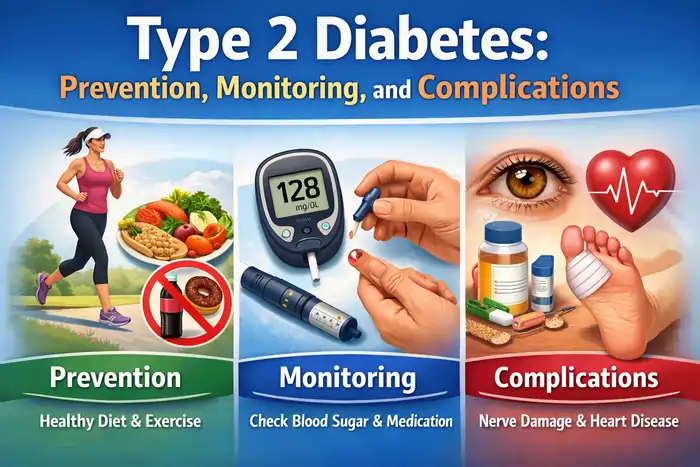
Prevention of Type 2 Diabetes
Large clinical trials such as the Diabetes Prevention Program (DPP) demonstrated that lifestyle changes reduce diabetes risk by up to 58%, as summarized in NIDDK’s coverage of the DPP and diabetes prevention.
Weight Loss
Even 5–7% weight reduction improves insulin sensitivity.
Healthy Diet
The ADA recommends:
Whole grains
Fiber-rich vegetables
Lean protein
Limited added sugars
These recommendations are reflected in ADA’s guidance on healthy eating and nutrition for diabetes.
Physical Activity
CDC and ADA both recommend 150 minutes per week of moderate aerobic exercise, as discussed in CDC’s section on physical activity for people with diabetes.
Monitoring Type 2 Diabetes
Monitoring blood sugar is essential for preventing complications.
Home glucose monitoring helps detect:
Hyperglycemia
Hypoglycemia
Medication response
For a detailed guide, see our article on how to monitor blood sugar at home.
HbA1c Monitoring
HbA1c reflects 2–3 months of average blood sugar. ADA recommends testing at least twice per year for stable patients and quarterly for those adjusting therapy, as outlined in its Care recommendations.
Treatment of Type 2 Diabetes
Lifestyle Therapy
First-line therapy includes diet, exercise, and weight loss.
Metformin
Metformin is recommended as initial pharmacologic therapy in most patients unless contraindicated, according to ADA Standards of Care in type 2 diabetes.
SGLT2 Inhibitors and GLP-1 Receptor Agonists
These agents provide cardiovascular and kidney protection benefits, according to recent ADA and AHA-aligned recommendations that discuss cardiorenal protective diabetes therapies.
Complications of Type 2 Diabetes
Persistent hyperglycemia damages blood vessels and nerves.
Microvascular Complications
Diabetic retinopathy
Diabetic nephropathy
Diabetic neuropathy
The CDC outlines diabetes as a leading cause of kidney failure and blindness in its section on diabetes complications.
Macrovascular Complications
Heart disease
Stroke
Peripheral artery disease
The American Heart Association confirms that adults with diabetes are at significantly higher cardiovascular risk in its information on diabetes and heart disease.
If diabetes remains poorly controlled, risk increases significantly; you can learn more in our article on uncontrolled diabetes and its risks.
Kidney Disease and Diabetes
Diabetes is the leading cause of chronic kidney disease worldwide. The National Kidney Foundation and CDC recommend annual urine albumin screening in people with diabetes, as noted in their resources on diabetes-related kidney disease.
Eye Disease
The National Eye Institute emphasizes annual dilated eye exams for early detection of diabetic retinopathy in its educational pages on diabetic eye disease.
Living Well With Type 2 Diabetes
With structured care, many individuals maintain excellent quality of life.
Key pillars include:
Routine monitoring
Medication adherence
Healthy diet
Exercise
Smoking cessation
Regular follow-ups
WHO emphasizes that diabetes complications are largely preventable with sustained management in its diabetes fact sheet.
Frequently Asked Questions
Can type 2 diabetes be reversed?
Some individuals achieve remission with significant weight loss and sustained lifestyle changes, but long-term monitoring remains essential, as described in research summaries on diabetes remission.
Is insulin always required?
No. Many patients manage with lifestyle and oral medication. Insulin may be needed if glucose remains uncontrolled, consistent with treatment pathways in type 2 diabetes overviews.
What happens if diabetes is untreated?
Untreated diabetes increases risk of cardiovascular disease, kidney failure, blindness, and neuropathy; we discuss this further in our article on uncontrolled diabetes complications.
Final Thoughts
Type 2 diabetes is common but manageable. Prevention, early recognition, regular blood sugar monitoring, and evidence-based treatment significantly reduce long-term complications.
If you suspect symptoms or are at risk, seek medical evaluation early.
⚠️ Medical Disclaimer
The information provided on MedEduHub is for educational purposes only and does not replace professional medical advice, diagnosis, or treatment.
If you experience severe hyperglycemia, confusion, chest pain, sudden weakness, or signs of a medical emergency, seek immediate medical care.
Always consult a licensed healthcare provider before starting, stopping, or changing any diabetes treatment plan.
👩⚕️ Written by: Eden Grace Ramos-Arsenio, RN
📚 Medical Sources & References
This article is based on current clinical guidelines and peer-reviewed research from World Health Organization diabetes fact sheet, Centers for Disease Control and Prevention diabetes statistics and resources, American Diabetes Association Standards of Care, National Institute of Diabetes and Digestive and Kidney Diseases type 2 diabetes information, American Heart Association cardiovascular risk guidance in diabetes, and National Eye Institute diabetic eye disease resources.