Medical decisions often involve complex information about treatments, procedures, risks, and potential outcomes. Before patients undergo medical treatments or surgical procedures, healthcare providers are ethically and legally required to explain this information clearly. This process is known as informed consent, and it plays a central role in modern healthcare.
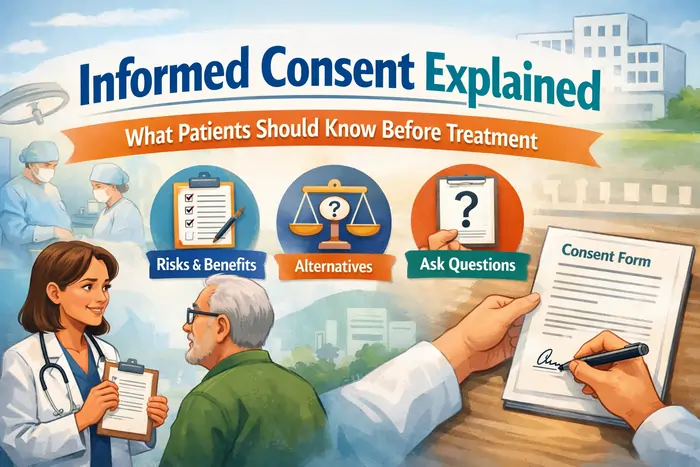
Informed consent ensures that patients understand the purpose, risks, benefits, and alternatives of a medical procedure before agreeing to treatment. It is not simply a signature on a form; rather, it represents a collaborative conversation between patients and healthcare professionals that supports patient autonomy and ethical medical practice.
Global patient safety organizations emphasize the importance of informed consent as a key component of safe healthcare, and the World Health Organization’s patient safety framework—which highlights communication and shared decision-making as pillars of safe medical care—explains that patients should always receive clear information before undergoing clinical procedures or treatments, as outlined in WHO’s patient safety overview at WHO Patient Safety. For patients preparing for medical treatments or surgeries, understanding informed consent helps them participate actively in healthcare decisions and ensures they receive care aligned with their preferences and values.
If you want to understand how medical procedures are performed and why consent is necessary, you can explore our pillar guide Common Medical Procedures: What Patients Should Expect at Common Medical Procedures, which explains how diagnostic, therapeutic, and preventive procedures are performed in modern healthcare. This guide explains what informed consent means, why it is required, how the process works, and how patients can make informed medical decisions.
What Is Informed Consent?
Informed consent is a communication process between a patient and a healthcare provider that allows the patient to make a voluntary and educated decision about medical treatment. The process typically includes discussing the purpose of the procedure or treatment, potential benefits, potential risks and complications, alternative treatment options, expected recovery outcomes, and possible side effects. Only after receiving this information can patients decide whether they wish to proceed with the treatment.
The National Institutes of Health’s clinical research ethics resources, which explain the ethical foundations of medical consent in healthcare and research settings, describe informed consent as a fundamental principle that protects patient rights and promotes transparency between healthcare providers and patients; this is reflected in NIH’s discussions of informed consent and human subjects protection at NIH Clinical Research Ethics.
Why Informed Consent Is Important in Healthcare
Informed consent serves several critical purposes in modern medicine. First, it protects patient autonomy, which means individuals have the right to make decisions about their own bodies and medical treatments. Second, it promotes clear communication between healthcare providers and patients, helping patients understand complex medical information. Third, it improves patient safety: when patients understand potential risks and treatment options, they are better able to participate in decisions that affect their health outcomes.
Healthcare safety organizations frequently highlight communication failures as a major contributor to medical errors. The Centers for Disease Control and Prevention’s patient safety guidance, which emphasizes clear communication as a key strategy for reducing healthcare-associated risks, notes that patient engagement and education are essential components of safer healthcare systems, as described in CDC’s tips for being a safe patient at CDC Patient Safety.
The Key Elements of Informed Consent
Although the consent process may vary depending on the situation, most informed consent discussions include several essential elements.
Explanation of the Medical Condition
Healthcare providers first explain the patient’s diagnosis or medical condition. This may include symptoms, test results, diagnostic findings, and information about disease progression. Understanding the underlying condition helps patients evaluate whether a proposed treatment is appropriate.
Description of the Proposed Treatment or Procedure
Doctors must explain what the treatment or procedure involves. For example, if a patient is scheduled for surgery, the doctor may explain how the procedure will be performed, how long it will take, whether anesthesia will be used, and what kind of hospital or outpatient care is expected afterward. Patients preparing for procedures such as same-day surgery may also benefit from reading our guide Preparing for Outpatient Surgery at Outpatient Surgery Guide, which explains the steps patients should follow before undergoing outpatient medical procedures.
Potential Benefits of Treatment
Healthcare providers also explain the expected benefits of the treatment. Benefits may include symptom relief, improved function, disease management, or prevention of complications. Understanding the benefits helps patients weigh potential outcomes against risks.
Potential Risks and Complications
Every medical treatment carries some level of risk. Doctors must discuss possible complications so patients can make informed decisions. Possible risks may include infection, bleeding, medication reactions, anesthesia complications, or delayed recovery. International surgical safety initiatives, including the WHO Safe Surgery program and Surgical Safety Checklist, highlight risk communication as a critical component of patient safety because patients who understand surgical risks are better prepared to recognize complications early; these principles are described in WHO’s safe surgery resources at WHO Safe Surgery.
Alternative Treatment Options
Patients should also be informed about alternative treatments. Alternatives may include different medications, alternative procedures, non-surgical treatments, lifestyle modifications, or watchful waiting. Providing alternatives ensures patients understand that multiple treatment approaches may exist.
Opportunity for Patient Questions
Informed consent is not a one-way explanation. Patients should have the opportunity to ask questions such as: How long will recovery take? What happens if I delay treatment? Are there non-surgical options? What side effects should I expect? Healthcare providers should encourage questions to ensure patients fully understand their choices, aligning with patient engagement strategies promoted in CDC and WHO patient safety materials.
Types of Informed Consent in Healthcare
Informed consent may occur in several different medical contexts.
Consent for Medical Procedures
Procedures such as biopsies, surgeries, or diagnostic testing require explicit patient consent because they involve potential risks and interventions beyond routine care. If you want to understand how these procedures are typically performed, you can read our pillar guide Common Medical Procedures: What Patients Should Expect at Common Medical Procedures, which outlines diagnostic tests, minimally invasive procedures, and therapeutic treatments commonly performed in healthcare settings.
Surgical Consent
Surgical consent involves detailed discussions before operations. These conversations often include surgical technique, anesthesia methods, recovery expectations, and postoperative care, and they are supported by global surgical safety frameworks such as the WHO Surgical Safety Checklist referenced in safe surgery initiatives at WHO Safe Surgery.
Research Consent
Clinical research studies require participants to sign informed consent documents explaining the purpose of the study, potential risks, and participant responsibilities. The NIH research ethics guidelines, which govern clinical trials and human subject research, emphasize informed consent as one of the most important protections for research participants; you can see this discussed in NIH information on clinical research and consent at NIH Clinical Trials and Informed Consent.
When Is Informed Consent Required?
Informed consent is typically required before surgery, invasive procedures, anesthesia administration, clinical research participation, and certain diagnostic tests. Healthcare providers must document consent before proceeding with treatment, following legal and ethical standards that are reflected in national and institutional policies influenced by WHO and NIH ethics frameworks.
Situations Where Consent May Not Be Required
In rare circumstances, medical treatment may proceed without formal consent. These situations may include life-threatening emergencies, patients who are unconscious and unable to communicate, or urgent medical conditions requiring immediate treatment. Even in emergency cases, doctors must act in the patient’s best interest, following ethical guidance similar to that described in international bioethics and emergency care policies.
Informed Consent and Patient Rights
Informed consent supports several important patient rights. Patients have the right to receive clear medical information, ask questions about treatment, refuse treatment, request alternative options, and seek second medical opinions. Healthcare ethics frameworks emphasize respect for patient autonomy as a cornerstone of modern medicine, and this principle is consistently reinforced in WHO patient rights and safety materials as well as NIH ethics guidance.
The Role of Communication in Informed Consent
Effective communication is essential for meaningful informed consent. Doctors must explain medical information in language patients can understand. Complex medical terminology may create confusion, so healthcare providers often simplify explanations, use visual aids, or provide written information.
Patient education initiatives supported by organizations such as the CDC’s safer patient care guidance—which highlights communication and patient engagement as key strategies for improving healthcare outcomes—reinforce the importance of clear doctor-patient discussions, as noted in CDC’s patient safety tips at CDC Patient Safety.
Informed Consent for Outpatient Procedures
In outpatient procedures, informed consent often occurs before the day of surgery. Patients may receive information about pre-procedure instructions, medication adjustments, fasting requirements, and anesthesia planning. Patients preparing for same-day procedures may also benefit from reviewing our guide Preparing for Outpatient Surgery at Outpatient Surgery Guide, which explains preoperative instructions and safety recommendations in detail.
After the Procedure: Ongoing Patient Communication
Informed consent does not end when the procedure begins. Healthcare providers continue discussing recovery expectations and post-procedure care. Patients should receive instructions about medication use, wound care, activity restrictions, and follow-up appointments. Patients recovering from minor procedures can learn more in our guide Recovery After Minor Procedures at Recovery After Minor Procedures, which explains common recovery symptoms and healing timelines and aligns with general recovery advice seen in large health-system and NIH patient education materials.
Challenges in the Informed Consent Process
Despite its importance, the informed consent process can sometimes face challenges. Common barriers include complex medical terminology, limited patient health literacy, time constraints in clinical settings, and emotional stress before procedures. Healthcare systems increasingly focus on improving patient education to address these challenges, echoing themes in NIH-supported research on health literacy and patient-provider communication.
Improving Informed Consent Through Patient Education
Modern healthcare systems are developing strategies to improve informed consent. Examples include visual decision aids, simplified consent forms, patient education videos, and multilingual resources. Research supported by the National Institutes of Health—which studies patient-provider communication and medical decision-making—shows that clear educational materials improve patient understanding and treatment satisfaction; these findings are discussed in multiple NIH communications and clinical ethics summaries at NIH Clinical Research Ethics.
Key Takeaways | Understanding Informed Consent
Informed consent is an essential part of ethical medical care. It ensures that patients receive clear information about their medical conditions, treatment options, potential risks, and expected outcomes before agreeing to medical procedures. Through informed consent, patients are empowered to participate actively in healthcare decisions and exercise their right to choose or decline treatment. Effective communication between patients and healthcare providers supports safer healthcare, improves treatment outcomes, and strengthens trust within the healthcare system.
Frequently Asked Questions (FAQ)
What does informed consent mean in healthcare?
Informed consent is the process through which healthcare providers explain the risks, benefits, and alternatives of medical treatments so patients can make informed decisions about their care, reflecting ethical standards described in NIH and WHO patient rights guidance.
Why is informed consent required before surgery?
Informed consent ensures patients understand the procedure, potential complications, recovery expectations, and alternative treatment options before agreeing to surgery, aligning with safe surgery principles promoted by WHO’s Safe Surgery program.
Can a patient refuse medical treatment after receiving informed consent?
Yes. Patients have the right to refuse treatment even after discussing the risks and benefits with their healthcare provider, consistent with autonomy-focused ethics frameworks referenced by major health organizations.
Who can give informed consent for medical treatment?
Adult patients who are mentally capable of making decisions can provide consent. In certain situations, legal guardians or family members may provide consent for minors or incapacitated individuals, as outlined in national laws and clinical ethics guidelines.
Medical Disclaimer
This article is intended for educational purposes only and should not replace professional medical advice, diagnosis, or treatment. Always consult a qualified healthcare professional for personalized medical guidance regarding medical decisions or treatment options.
Written by: Eden Grace Ramos, RN
Medical Resources
This article references evidence-based guidance from internationally recognized health organizations. These include the World Health Organization’s patient safety initiatives, which promote communication and shared decision-making in clinical care as summarized at WHO Patient Safety, the Centers for Disease Control and Prevention’s patient safety guidance at CDC Patient Safety, which highlights the role of communication in preventing medical errors, and National Institutes of Health resources on clinical ethics and informed consent at NIH Clinical Research Ethics, which support ethical medical decision-making in healthcare and research environments. These organizations publish widely used clinical guidelines and research findings that help healthcare professionals deliver safe, ethical, and patient-centered care.