Key Symptoms of Stroke Every Clinician Should Recognize Key Takeaways
Stroke is the second leading cause of death worldwide and a leading cause of long-term disability.
- The key symptoms of stroke every clinician should recognize include sudden unilateral weakness, speech difficulty, facial droop, visual loss, and severe headache.
- Using the FAST stroke assessment (Face, Arms, Speech, Time) alongside a focused neurological exam can differentiate stroke from mimics and guide urgent neuroimaging.
- Early recognition of acute stroke signs reduces door-to-needle time and improves outcomes, especially for ischemic stroke patients eligible for thrombolysis or thrombectomy.
Why Every Clinician Must Master Stroke Symptoms Recognition
Stroke is the second leading cause of death worldwide and a leading cause of long-term disability. The phrase “time is brain” is not a cliché — it is a clinical reality. Every minute of untreated large-vessel occlusion destroys nearly 1.9 million neurons. For the emergency physician, neurologist, nurse, or paramedic, the ability to instantly identify stroke symptoms recognition is the single most impactful skill in acute neurology. Missing a cerebrovascular accident symptom or misinterpreting a neurological deficit sudden onset can delay reperfusion therapy and condemn a patient to permanent disability. For a related guide, see 15 Most Common Neurological Disorders You Will See in Practice.
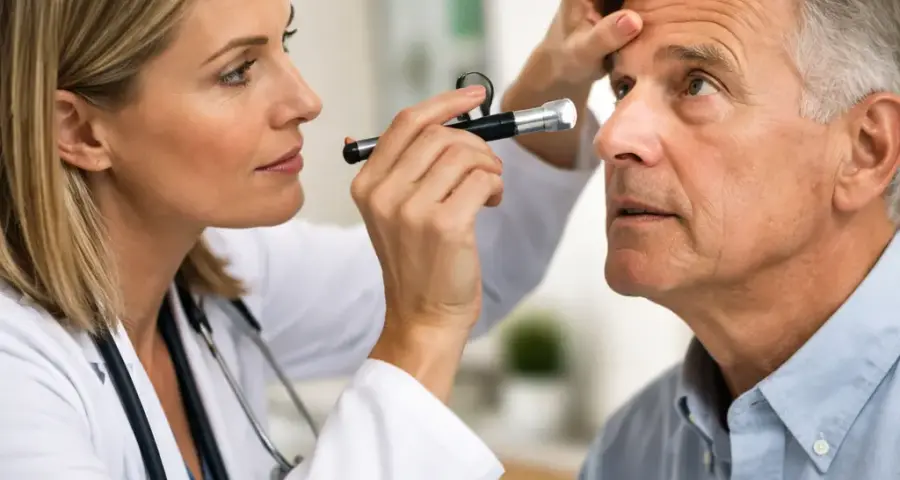
This guide provides a comprehensive checklist of the ten cardinal symptoms every clinician must know. We will integrate the FAST stroke assessment, differentiate ischemic vs hemorrhagic stroke differences, highlight common misdiagnoses, and explain why urgent intervention hinges on pattern recognition. Whether you work in an emergency department, intensive care unit, prehospital setting, or rehabilitation facility, these acute stroke signs should become second nature. For a related guide, see Early Signs of Heart Conditions: Symptoms and Prevention.
The 10 Key Symptoms of Stroke Every Clinician Should Recognize

1. Sudden Unilateral Weakness (Hemiparesis)
The most classic manifestation of stroke is the abrupt onset of weakness on one side of the body. This motor deficit sudden onset typically involves the face, arm, and leg. In right-hemisphere strokes, the left side is affected; in left-hemisphere strokes, the right side is affected. When assessing hemiparesis stroke signs, ask the patient to hold both arms extended forward for 10 seconds. A downward drift or inability to lift one arm is a red flag. FAST stroke assessment specifically evaluates arm drift as a core component.

2. Facial Droop (Facial Weakness)
Facial asymmetry is often the first sign noticed by family members or first responders. Ask the patient to smile or show their teeth. A drooping of one corner of the mouth, with flattening of the nasolabial fold, indicates upper motor neuron facial weakness — a hallmark of facial droop arm weakness speech difficulty. This is also a key element of the FAST method (Face). Unlike Bell palsy, forehead sparing is present because the forehead receives bilateral cortical innervation.
3. Speech Difficulty (Aphasia or Dysarthria)
Sudden difficulty speaking or understanding language is a critical aphasia hemiparesis stroke sign. Expressive aphasia (Broca area) presents as effortful, non-fluent speech with preserved comprehension. Receptive aphasia (Wernicke area) results in fluent but nonsensical speech with poor comprehension. Dysarthria — slurred speech due to motor weakness — is another common presentation. During acute stroke signs assessment, ask the patient to repeat a simple sentence like “The sky is blue.” Inability to do so is a strong predictor of stroke.
4. Sudden Vision Loss (Monocular or Hemianopic)
Visual disturbances in stroke can present as transient monocular blindness (amaurosis fugax), homonymous hemianopia (loss of half the visual field in both eyes), or diplopia. These brain ischemia symptoms occur when the posterior circulation (vertebrobasilar system) or the ophthalmic artery is affected. Patients may describe a curtain descending over one eye or an inability to see objects on one side. Testing visual fields by confrontation should be part of every neuro exam acute stroke findings evaluation.
5. Severe Headache of Sudden Onset (Thunderclap Headache)
A sudden, severe headache — often described as the worst headache of a patient’s life — is a classic hemorrhagic stroke sign. This symptom is much more common in intracerebral hemorrhage and subarachnoid hemorrhage than in ischemic stroke. Nausea, vomiting, and neck stiffness may accompany it. Any patient presenting with thunderclap headache requires urgent neuroimaging to rule out cerebrovascular disease symptoms such as aneurysm rupture or arteriovenous malformation bleeding.
6. Unilateral Numbness or Sensory Loss
While motor deficits are more noticeable, isolated sensory loss affecting one side of the body can be a presenting clinical stroke diagnosis feature. Patients may complain of a heavy, dead, or numb sensation in the face, arm, or leg. Sensory deficits occur more commonly with parietal lobe infarcts. Even without weakness, new-onset unilateral numbness should prompt a stroke early signs FAST method investigation.
7. Dizziness, Vertigo, or Loss of Balance
Posterior circulation strokes can present solely with dizziness, vertigo, gait ataxia, or a sensation of floating. Because these symptoms are common in benign conditions (e.g., vestibular neuritis), stroke misdiagnosis in this group is frequent. The HINTS (Head Impulse, Nystagmus, Test of Skew) exam can help differentiate central from peripheral vertigo. Any patient older than 60 with vascular risk factors and acute vertigo should be evaluated for brain attack symptoms clinical guide activation.
8. Sudden Confusion or Altered Mental Status
Stroke can present as acute confusion, disorientation, or decreased level of consciousness, especially in large hemispheric strokes, intracerebral hemorrhage, or brainstem involvement. This neurological emergency stroke symptom often mimics delirium or metabolic encephalopathy. Clinicians must maintain a high index of suspicion, particularly in elderly patients. A brief mental status exam including attention, orientation, and language is essential during emergency stroke assessment protocol.
9. Sudden Difficulty Walking (Ataxia)
Loss of coordination or a sudden inability to walk without support may be the sole manifestation of a cerebellar stroke. Patients may appear drunk. The motor and speech deficits stroke combination is not always present. Ask the patient to stand unaided and perform heel-to-toe walking. Truncal ataxia without limb weakness is a clinical neurology stroke checklist item that should never be dismissed. For a related guide, see 10 Red Flags in Neurological Assessment You Should Never Miss.
10. Acute Onset of Aphasia Without Motor Deficits
Some ischemic strokes, particularly in the dominant temporal or frontal lobe, present with pure language difficulty. The patient may suddenly stop speaking mid-sentence, use incorrect words, or fail to follow commands. Because there is no weakness, these brain ischemia symptoms can be overlooked. A simple language screening — asking the patient to name objects or follow a two-step command — is part of the emergency stroke assessment protocol and should be performed even in patients who appear otherwise intact.
Differentiating Ischemic vs Hemorrhagic Stroke Symptoms
While the ten symptoms above can occur in both stroke types, certain features help distinguish ischemic vs hemorrhagic stroke differences. Ischemic stroke symptoms often develop gradually over minutes to hours, with a stuttering or stepwise progression. Hemorrhagic stroke, in contrast, typically presents with a sudden onset of severe headache, early loss of consciousness, and rapidly worsening neurological deficits. A history of anticoagulant use, hypertension, or trauma should raise suspicion for hemorrhage. However, clinical judgment alone is insufficient — urgent non-contrast CT scan remains the gold standard for differentiation before any stroke management urgency interventions like thrombolysis.
Common Misdiagnoses of Stroke and How to Avoid Them
How do stroke symptoms differ from other neurological conditions? Several disorders can mimic stroke, including seizure with postictal Todd paralysis, migraine with aura, hypoglycemia, vestibular neuritis, and conversion disorder. Using a structured neurovascular assessment and reviewing the time course can help. Stroke symptoms are almost always sudden in onset and unremitting. Hypoglycemia can be quickly excluded with a bedside glucose test. For patients with isolated dizziness, the HINTS exam has high sensitivity for central versus peripheral vertigo. The most common stroke misdiagnosis occurs when clinicians focus on a single symptom without considering the full clinical picture. Always perform the full FAST stroke assessment and a focused neurological exam.
What Should Be Assessed First in Suspected Stroke?
When a patient presents with possible acute stroke signs, the initial assessment follows the ABCs (Airway, Breathing, Circulation) with immediate stroke symptoms recognition. A brief history — time of onset, medications, past medical history — is taken from the patient or witness. The FAST exam is performed. Simultaneously, blood glucose is measured, and an NIH Stroke Scale (NIHSS) is scored to quantify severity. The goal is to complete clinical assessment, obtain non-contrast head CT, and determine eligibility for thrombolysis within 25 minutes of arrival. Every clinician should know the hospital stroke identification guide used in their facility, including which imaging to order and which specialists to activate.
Why Early Stroke Recognition Is Time-Critical
The therapeutic window for intravenous thrombolysis is just 4.5 hours from symptom onset, and for endovascular thrombectomy, it extends to 24 hours in selected patients. Early recognition directly determines how many patients receive treatment. For every 15-minute reduction in door-to-needle time, there is a measurable improvement in functional outcomes. Moreover, patients with acute stroke signs who are misdiagnosed in the emergency department have significantly higher mortality. The Key Symptoms of Stroke Every Clinician Should Recognize are not academic — they are the foundation of stroke treatment time critical protocols that save brains and lives.
| Symptom | Ischemic Stroke | Hemorrhagic Stroke |
|---|---|---|
| Onset | Gradual or stuttering | Sudden (minutes) |
| Headache | Uncommon or mild | Severe (thunderclap) |
| Consciousness | Usually preserved | Often decreased |
| Nausea/Vomiting | Rare | Common |
| FAST findings | One or more positive | One or more positive |
| Anticoagulant use | Possible | Increased risk |
Useful Resources
For a deeper dive into stroke pathophysiology and clinical trials, refer to these authoritative sources:
- American Stroke Association: 2019 AHA/ASA Acute Ischemic Stroke Guidelines
- UpToDate: Initial Assessment and Management of Acute Stroke
Frequently Asked Questions About Key Symptoms of Stroke Every Clinician Should Recognize
What are the key symptoms of stroke?
The key symptoms include sudden weakness on one side of the body, facial droop, speech difficulty, vision loss, severe headache, dizziness, confusion, and trouble walking. These are the key symptoms of stroke every clinician should recognize.
How can clinicians quickly recognize stroke symptoms?
Use the FAST method: Face (facial droop), Arms (arm drift), Speech (slurred or absent speech), and Time (time of onset). A focused neurological exam and NIHSS scoring further confirm the diagnosis.
What are early warning signs of stroke?
Early warning signs may include transient ischemic attack (TIA) episodes lasting minutes, sudden dizziness, fleeting visual loss, or mild speech difficulty. Recognizing these stroke warning signs can prevent a full stroke.
What is FAST in stroke detection?
FAST stands for Face, Arms, Speech, and Time. It is a validated tool used by paramedics, nurses, and physicians to rapidly identify acute stroke signs and activate emergency protocols.
How do stroke symptoms differ from other neurological conditions?
Stroke symptoms have a sudden onset and are unremitting. Conditions like migraine or seizure have a waxing-waning course or a preceding aura. Hypoglycemia and Todd paralysis resolve quickly after glucose or the postictal period.
What should be assessed first in suspected stroke?
Assessment begins with the ABCs (Airway, Breathing, Circulation). Then perform FAST and obtain blood glucose. Simultaneously, a brief history and NIHSS are completed, and CT is ordered urgently.
Why is early stroke recognition important?
Early recognition reduces door-to-needle time, expands the window for thrombolysis and thrombectomy, and significantly lowers disability and mortality. Time is brain.
What are common misdiagnoses of stroke?
Common misdiagnoses include seizure (Todd paralysis), migraine with aura, hypoglycemia, vestibular neuritis, and conversion disorder. Use of FAST and NIHSS helps avoid stroke misdiagnosis.
How do ischemic and hemorrhagic stroke symptoms present?
Ischemic stroke often has gradual onset of focal deficits without headache. Hemorrhagic stroke presents with sudden severe headache, vomiting, and altered consciousness. Both can show motor and speech deficits stroke features.
What clinical signs indicate urgent stroke intervention?
Signs requiring immediate intervention include any new neurological deficit sudden onset within the thrombolysis window, large-vessel occlusion deficits (e.g., severe aphasia, gaze deviation), or rapid deterioration.
What is the role of the NIH Stroke Scale?
The NIHSS provides a standardized, reproducible assessment of stroke severity. It helps quantify deficits, guides treatment decisions, and predicts outcomes. It is a core part of clinical stroke diagnosis.
Can stroke symptoms be silent?
Yes, silent strokes are small infarcts detectable on imaging that cause no obvious symptoms. They increase the risk of future strokes and cognitive decline. Routine screening in high-risk patients is recommended.
How is aphasia assessed in stroke?
Ask the patient to name objects, repeat a sentence, and follow a two-step command. Inability to speak fluently, paraphasic errors, or poor comprehension indicates aphasia hemiparesis stroke signs.
What is the time window for thrombolysis?
The window for intravenous alteplase is 4.5 hours from symptom onset. For endovascular thrombectomy, the window extends to up to 24 hours in selected patients with salvageable brain tissue.
What is the first imaging study for suspected stroke?
Non-contrast head CT is the first study. It quickly excludes hemorrhage and helps determine if the patient is a candidate for thrombolysis. CT angiography and perfusion studies follow if indicated.
How should clinicians manage a patient with transient symptoms?
Even if symptoms resolve, treat as a TIA. Perform urgent brain imaging, carotid evaluation, and risk stratification. Patients with TIA have a high short-term stroke risk and require immediate secondary prevention.
What causes a false-positive FAST?
Seizures, hypoglycemia, severe migraine, Bell palsy, and previous stroke deficits can cause false-positive FAST. Bedside glucose and history help differentiate these stroke symptoms recognition confounders.
How does age affect stroke symptom presentation?
Elderly patients may present with non-specific symptoms like confusion, falls, or lethargy. Younger patients more often show typical focal deficits. Awareness of atypical brain attack symptoms clinical guide is key in the elderly.
What resources exist for clinicians to improve stroke recognition?
Online modules from the American Stroke Association, NIHSS certification courses, and simulation-based training programs all improve clinical neurology stroke checklist skills and reduce diagnostic errors.
Why is it important to document exact time of onset?
The exact time determines eligibility for thrombolysis and thrombectomy. If onset is unwitnessed, the last known well time is used. Accurate documentation is critical for stroke management urgency and medico-legal purposes.