
Blood tests are among the most common diagnostic tools used in modern medicine. These laboratory tests provide important information about how the body is functioning and can help healthcare professionals detect disease, monitor health conditions, and guide treatment decisions.
Doctors often order blood tests during routine health checkups, when symptoms appear, or to monitor chronic conditions such as diabetes, cardiovascular disease, and infections. Blood testing can reveal valuable insights about organ function, immune system activity, hormone levels, and metabolic health. According to the Centers for Disease Control and Prevention, laboratory testing plays a vital role in diagnosing infectious diseases, chronic illnesses, and metabolic disorders, with blood tests helping providers detect health problems early and evaluate treatment effectiveness as outlined in CDC’s laboratory services overview.
If you want to understand how diagnostic testing works more broadly, you can read our pillar guide on medical diagnostics and common medical tests in our article on medical diagnostics and common tests.
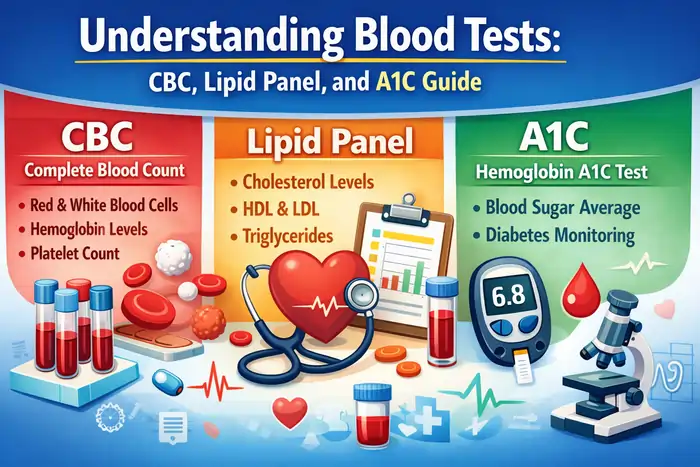
This guide explains the most common blood tests used in healthcare, including the Complete Blood Count (CBC), lipid panel, and hemoglobin A1C test, and what these results may mean for your health.
What Are Blood Tests?
Blood tests are laboratory analyses performed on a sample of blood taken from a vein, artery, or finger prick. These tests measure different components of blood to evaluate overall health and identify medical conditions.
A blood sample may be analyzed for:
- blood cells
- glucose levels
- cholesterol levels
- hormones
- electrolytes
- enzymes
- proteins
Blood tests are widely used in healthcare because they provide objective medical information about the body’s internal systems. Healthcare providers may order blood tests to detect infections, diagnose chronic diseases, evaluate organ function, monitor medications, or assess nutritional deficiencies. The World Health Organization highlights laboratory testing as a fundamental component of modern health systems because diagnostic tests help guide clinical decision-making and improve patient outcomes, as reflected in WHO’s laboratory medicine and diagnostics resources.
How Blood Tests Are Performed
Blood tests are usually performed by trained healthcare professionals called phlebotomists.
The process typically involves:
- cleaning the skin with antiseptic
- inserting a sterile needle into a vein
- collecting blood into test tubes
- sending the sample to a laboratory for analysis
Most blood tests take only a few minutes to perform and involve minimal discomfort. Some tests require preparation, such as fasting before a blood sample is taken, and proper preparation helps ensure accurate results. If you want to learn how to prepare for diagnostic procedures, read our guide on how to prepare for lab testing.
The Complete Blood Count (CBC)
The Complete Blood Count (CBC) is one of the most frequently ordered blood tests. It measures several components of blood and provides important information about overall health.
A CBC evaluates:
- red blood cells (RBCs)
- white blood cells (WBCs)
- hemoglobin
- hematocrit
- platelets
Doctors often use CBC tests to detect infections, anemia, immune disorders, and blood diseases.
Red Blood Cells (RBC)
Red blood cells carry oxygen from the lungs to tissues throughout the body. Abnormal RBC levels may indicate:
- anemia
- dehydration
- chronic disease
- bone marrow disorders
Low RBC counts may lead to symptoms such as fatigue, weakness, or shortness of breath.
White Blood Cells (WBC)
White blood cells are part of the immune system and help fight infections. Elevated WBC counts may indicate infection, inflammation, or immune disorders, while low WBC levels may occur with certain infections, medications, or immune system conditions.
Platelets
Platelets are responsible for blood clotting and help prevent excessive bleeding. Abnormal platelet counts may be associated with clotting disorders, bone marrow disease, or autoimmune conditions.
Hemoglobin and Hematocrit
Hemoglobin is the oxygen-carrying protein in red blood cells, while hematocrit measures the proportion of blood made up of red blood cells. Low hemoglobin levels often indicate anemia.
Lipid Panel: Cholesterol Testing
A lipid panel measures different types of cholesterol and fats in the blood. This test is commonly used to assess cardiovascular health. The American Heart Association recommends cholesterol screening to identify risk factors for heart disease and stroke, as described in its cholesterol and risk assessment guidance.
A lipid panel typically measures:
- LDL cholesterol
- HDL cholesterol
- total cholesterol
- triglycerides
LDL Cholesterol (Low-Density Lipoprotein)
LDL cholesterol is often referred to as “bad cholesterol.” High LDL levels can lead to plaque buildup in arteries, increasing the risk of heart disease, stroke, and atherosclerosis.
HDL Cholesterol (High-Density Lipoprotein)
HDL cholesterol is known as “good cholesterol.” Higher HDL levels help remove excess cholesterol from the bloodstream and protect against cardiovascular disease.
Triglycerides
Triglycerides are a type of fat in the blood. High triglyceride levels may increase the risk of heart disease, metabolic syndrome, and pancreatitis.
Hemoglobin A1C Test
The hemoglobin A1C test measures average blood sugar levels over the previous two to three months. This test is widely used to diagnose and monitor diabetes. According to the CDC, A1C testing is an important diagnostic tool for identifying diabetes and prediabetes and for monitoring blood sugar management, as outlined in CDC’s A1C and blood sugar management resource.
A1C Test Results
Typical A1C ranges include:
- below 5.7% — normal
- 5.7% to 6.4% — prediabetes
- 6.5% or higher — diabetes
Doctors use A1C results alongside other tests to confirm a diabetes diagnosis.
Why Blood Tests Are Important for Preventive Healthcare
Blood tests are essential for preventive medicine because they can detect health problems before symptoms appear. Routine blood tests help identify:
- high cholesterol
- diabetes
- infections
- anemia
- metabolic disorders
Early detection allows healthcare providers to begin treatment sooner and prevent complications.
Understanding Blood Test Results
Laboratory results often include reference ranges, which indicate typical values for healthy individuals. However, test results may vary depending on factors such as age, sex, medications, and underlying health conditions. A single abnormal result does not always mean a person has a medical condition. Doctors interpret blood test results alongside medical history, symptoms, and additional tests.
Common Reasons Doctors Order Blood Tests
Healthcare providers may order blood tests for several reasons, including:
- routine health screening
- diagnosing symptoms
- monitoring chronic disease
- evaluating medication effects
- detecting infections
Blood testing is widely used in hospitals, clinics, and preventive healthcare settings.
Limitations of Blood Tests
Although blood tests are valuable diagnostic tools, they are not perfect. Possible limitations include:
- false positive results
- false negative results
- laboratory variability
Doctors often order additional tests to confirm diagnoses. Imaging tests may sometimes be used alongside blood tests; to understand imaging techniques more deeply, you can read our article on MRI vs CT scan.
Future Advances in Blood Testing
Advances in medical technology are expanding the capabilities of blood testing. Emerging innovations include:
- liquid biopsy for cancer detection
- molecular diagnostics
- genetic blood tests
- biomarker-based disease screening
These technologies may allow earlier disease detection and more personalized healthcare.
Key Takeaways | Understanding Blood Tests
Blood tests are essential diagnostic tools used to evaluate overall health, detect disease, and monitor treatment. Common blood tests such as the CBC, lipid panel, and A1C test provide valuable insights into blood cell health, cardiovascular risk, and blood sugar levels. Routine blood testing helps doctors detect health problems early and guide treatment decisions. Understanding how blood tests work can help patients feel more informed and prepared when undergoing medical evaluation.
Medical Disclaimer
This article is intended for educational purposes only and should not replace professional medical advice, diagnosis, or treatment. Always consult a qualified healthcare professional for personalized medical guidance regarding blood tests, health conditions, or treatment decisions.
Written by: Eden Grace Ramos, RN
Medical Resources
This article references evidence-based guidance from trusted global health authorities to ensure accuracy and clinical reliability. Key resources include the CDC’s laboratory testing guidance, diabetes screening information from CDC A1C testing resources, cardiovascular screening recommendations from the American Heart Association, and diagnostic research from the World Health Organization on laboratory medicine and health systems. These organizations provide clinical guidance widely used by healthcare professionals worldwide.