
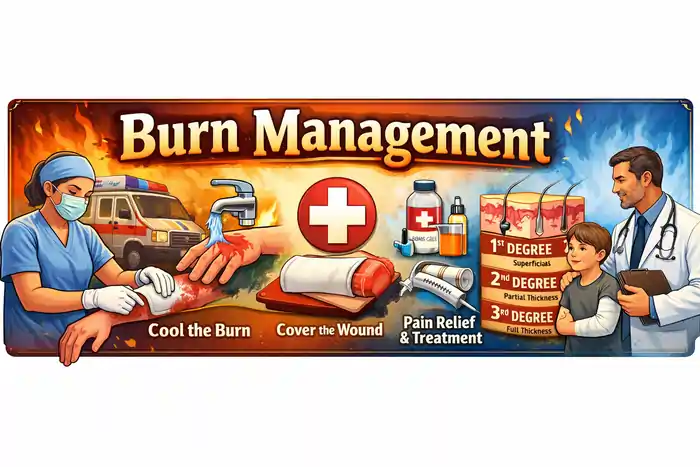
Burn injuries are among the most common household and emergency medical conditions worldwide, affecting people of all ages. Burns can range from minor skin irritation to severe, life-threatening injuries that require immediate medical intervention. Proper burn management—including first aid, wound care, and timely medical treatment—plays a critical role in reducing complications, preventing infection, and improving recovery outcomes.
According to the World Health Organization (WHO), burns account for approximately 180,000 deaths annually, with many occurring in low- and middle-income countries. WHO emphasizes that early first aid, especially cooling the burn and preventing infection, significantly improves survival and healing outcomes. Similarly, the Centers for Disease Control and Prevention (CDC) highlights that prompt treatment reduces complications such as infection, scarring, and long-term disability. Clinical guidelines from organizations such as the National Institutes of Health (NIH) and the American Heart Association (AHA) reinforce that understanding burn severity and responding appropriately within the first few minutes can make a substantial difference.
This comprehensive guide explains the causes of burns, types and degrees, first aid steps, medical treatment, and warning signs that require urgent care.
Understanding Burns and Skin Damage
A burn is an injury to the skin or underlying tissues caused by heat, chemicals, electricity, radiation, or friction. The skin acts as a protective barrier against infection, regulates body temperature, and maintains fluid balance, so when the skin is damaged, these functions are compromised.pmc.ncbi.nlm.nih+2
The National Institute of General Medical Sciences explains that burns can disrupt the skin’s structure, leading to fluid loss, infection risk, and impaired healing, and that severe burns trigger a hypermetabolic and inflammatory response throughout the body. Severe burns may affect deeper tissues such as muscles, nerves, and bones.
Types of Burns
Burns are classified based on their cause, which influences treatment and severity.
Thermal Burns
Caused by heat sources such as:
- fire or flames
- hot liquids (scald burns)
- steam
- hot surfaces
Thermal burns are the most common type of burn injury in both children and adults.
Chemical Burns
Result from exposure to corrosive substances such as:
- acids
- alkalis
- cleaning agents
The CDC’s chemical safety guidance notes that chemical burns can continue damaging tissue until the substance is removed or thoroughly rinsed away.
Electrical Burns
Caused by electrical currents passing through the body, electrical burns may appear minor externally but can cause significant internal damage along the current path.
Radiation Burns
Often caused by prolonged exposure to ultraviolet (UV) radiation, such as sunburn, or by medical and industrial radiation sources in more severe cases.
Burn Degrees Explained
Burn severity is categorized into degrees based on the depth of skin damage.
👉 Learn more in:
Burn Degrees Explained
First-Degree Burns (Superficial Burns)
- affect only the outer layer (epidermis)
- cause redness, pain, and mild swelling
- examples: mild sunburn
Second-Degree Burns (Partial Thickness)
- affect deeper skin layers (dermis)
- cause blisters, redness, swelling, and pain
- may result in scarring
Third-Degree Burns (Full Thickness)
- destroy all layers of the skin
- may appear white, charred, or leathery
- often painless due to nerve damage
Severe burns may extend beyond third-degree and involve deeper tissues such as muscle and bone.
Common Causes of Burn Injuries
Burn injuries can occur in everyday environments at home, at work, or outdoors.american-burn-association.
Household Causes
- hot liquids and cooking accidents
- electrical appliances
- chemicals and cleaning agents
- hot surfaces (stoves, irons)
Occupational Causes
- industrial chemicals
- electrical hazards
- fire exposure
Environmental Causes
- sun exposure
- wildfires
The CDC injury prevention data identifies burns as a leading cause of emergency visits, especially among children and older adults.
Signs and Symptoms of Burns
Symptoms vary depending on burn severity.
Common Symptoms
- redness
- pain
- swelling
- blisters
- peeling skin
- fluid loss
Severe Burn Symptoms
- white or charred skin
- numbness
- difficulty breathing (if airway involved)
- signs of shock
The WHO burn management fact sheet emphasizes that deeper burns may not always be painful due to nerve damage, making proper assessment critical.
Immediate Burn Treatment Steps (First Aid)
Early intervention is crucial in burn management.
👉 Learn more in:
Immediate Burn Treatment Steps
Step 1: Stop the Burning Process
- remove the person from the heat source
- turn off electricity if safe
- remove contaminated clothing if it is not stuck to the skin
WHO first aid advice for burns stresses stopping the burning process quickly to limit further tissue damage.
Step 2: Cool the Burn
- use cool running water for 10–20 minutes
- avoid ice (can worsen tissue damage)
WHO guidelines and first aid reviews consistently recommend cooling burns with running water as soon as possible to reduce depth and improve outcomes.
Step 3: Protect the Burn
- cover with clean, non-stick dressing
- avoid applying butter, oils, or toothpaste
Step 4: Manage Pain
- over-the-counter pain relievers may help, following label directions or medical advice
Step 5: Prevent Infection
- keep the area clean
- avoid breaking blisters
The CDC wound care recommendations emphasize hygiene and appropriate dressings to reduce infection risk in burn wounds.
What NOT to Do in Burn First Aid
Avoid common mistakes that can worsen burns:
- do not apply ice directly
- do not pop blisters
- do not apply home remedies such as butter or oils
- do not remove clothing stuck to the burn
Incorrect treatment can worsen injury and delay healing, as highlighted in burn first aid guidance from burn centers and emergency care organizations.
When to Seek Emergency Care
Some burns require immediate medical attention.
👉 Learn more in:
When to Seek Emergency Care
Emergency Warning Signs
- burns covering large areas of the body
- burns on face, hands, feet, or genitals
- third-degree or deep burns
- electrical or chemical burns
- difficulty breathing or suspected inhalation injury
- signs of shock
The AHA and WHO emergency care frameworks emphasize early hospital treatment for severe burns and burns involving critical areas.
Medical Treatment for Burns
Medical care depends on burn severity, location, and patient factors.
Minor Burn Treatment
- wound cleaning
- topical antibiotics or antimicrobial dressings
- protective, non-stick dressings
Moderate Burn Treatment
- prescription medications
- specialized wound care or dressings
- follow-up to monitor healing and function
Severe Burn Treatment
- IV fluids for resuscitation
- surgical procedures such as debridement and skin grafting
- infection control and antibiotics when indicated
- intensive care and rehabilitation
The NIH burn research programs highlight advances in burn care, including improved wound healing techniques, infection prevention, and critical care management.
Complications of Burns
Burns can lead to serious complications if not properly managed.pmc.ncbi.nlm.nih+1
Common Complications
- infection
- scarring
- contractures (tightening of skin and tissues)
- dehydration
- nerve damage
Severe Complications
- sepsis
- organ failure
- shock
WHO data show that infection remains one of the leading causes of death in severe burn cases, especially where access to timely care is limited.
Preventing Infection in Burn Wounds
Preventing infection is critical for healing and survival.
Infection Prevention Strategies
- clean wounds regularly as advised
- use sterile or clean dressings
- monitor for redness, warmth, swelling, or discharge
- follow medical advice on topical and systemic treatments
CDC infection control guidelines emphasize meticulous wound care and hygiene in burn management.
Special Considerations
Burns in Children
Children are at higher risk due to:
- thinner, more delicate skin
- curiosity
- limited hazard awareness
Burns in Older Adults
Older adults have:
- slower healing
- higher risk of complications and infections
Burns in High-Risk Individuals
- people with diabetes
- immunocompromised individuals
NIH clinical data and reviews show these groups require closer monitoring, more cautious wound care, and earlier medical intervention.
Pain Management in Burns
Pain management is essential for comfort and recovery.
Options Include
- oral pain relievers
- topical treatments
- advanced pain management strategies for severe burns under medical supervision
Rehabilitation and Recovery
Burn recovery may take weeks to months, and sometimes longer for severe injuries.
Rehabilitation Includes
- physical therapy to maintain movement and function
- scar management (e.g., pressure garments, therapies)
- psychological support for trauma and body image changes
The NIH and specialized burn rehabilitation programs highlight the importance of long-term recovery support to restore function and quality of life.
Psychological Impact of Burns
Burn injuries can affect mental health as well as physical health.who+1
Common Issues
- anxiety
- depression
- post-traumatic stress
WHO mental health programs emphasize integrating psychological care into burn recovery to support overall well-being.
Preventing Burn Injuries
Prevention is the most effective strategy to reduce burn-related harm.american-burn-association.prowly+1
Safety Tips
- keep hot liquids and cooking equipment away from children
- install and maintain smoke detectors
- use protective equipment at work and during high-risk tasks
- avoid unsafe electrical practices
- use sunscreen and limit UV exposure
CDC and burn prevention campaigns, along with initiatives like National Burn Awareness Week, highlight awareness and simple household changes as key strategies.
Key Takeaways
Burn injuries range from minor to life-threatening conditions. Immediate first aid—especially cooling the burn and applying proper wound care—can significantly improve outcomes, while recognizing burn severity, preventing infection, and seeking timely medical care are essential steps in effective burn management. Global health organizations such as WHO, CDC, NIH, and AHA consistently emphasize that early intervention and proper care can reduce complications, improve healing, and save lives.
FAQ | Burn First Aid and Treatment
What is the first thing to do for a burn?
Cool the burn with running water for 10–20 minutes and remove the heat source if it is safe to do so.
Should I put ice on a burn?
No. Ice can damage tissue and worsen the injury; guidelines recommend cool running water instead.
When should I go to the hospital for a burn?
Seek care for large burns, deep burns, electrical or chemical burns, or burns affecting the face, hands, feet, genitals, or major joints.
Can burns get infected?
Yes. Proper cleaning, dressing, and monitoring are essential to prevent infection, which is a major cause of complications in burn patients.
Medical Disclaimer
This article is intended for educational purposes only and should not replace professional medical advice, diagnosis, or treatment. Always consult a qualified healthcare professional for personalized medical guidance regarding burn injuries and treatment.
Written by: Eden Grace Ramos, RN
Medical Resources
This article integrates evidence-based guidance from the World Health Organization (WHO) burn prevention and trauma care programs, which emphasize early cooling and infection prevention. Public health data and injury prevention strategies reflect resources from the Centers for Disease Control and Prevention (CDC). Scientific insights into burn physiology, treatment, and recovery are supported by research from the National Institutes of Health (NIH). Emergency response principles and first aid practices align with American Heart Association (AHA) first aid guidelines and other first aid authorities.