
Phobias are a type of anxiety disorder characterized by intense, irrational fear of specific objects, situations, or activities. According to the National Institute of Mental Health (NIMH), individuals with phobias may experience overwhelming anxiety, avoidance behavior, and physical symptoms such as rapid heartbeat, sweating, and shortness of breath. Effective treatment for phobias includes cognitive behavioral therapy (CBT), exposure therapy, medications, and coping strategies like mindfulness and relaxation techniques.
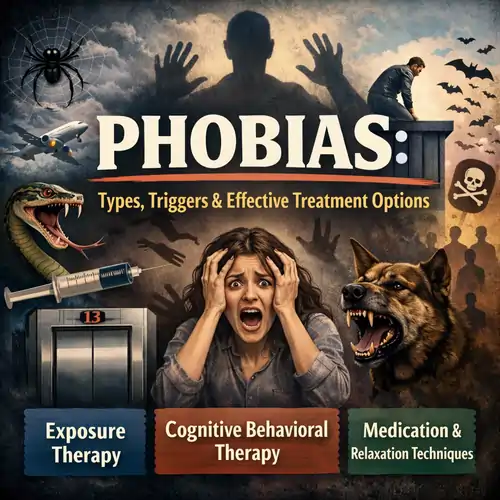
Introduction to Phobias
Phobias are one of the most common anxiety disorders, affecting people across all age groups. Unlike normal fear, phobias involve persistent and excessive fear that interferes with daily functioning.
The World Health Organization (WHO) identifies anxiety disorders as a leading cause of disability worldwide, highlighting the importance of early treatment. Individuals with phobias often go to great lengths to avoid triggers, which can significantly affect relationships, work, and quality of life.
What Are Phobias?
A phobia is an intense and irrational fear of a specific object, activity, or situation. These fears trigger immediate anxiety responses and often lead to avoidance behavior.
Key Characteristics of Phobias
- Persistent and excessive fear
- Immediate anxiety response
- Avoidance behavior
- Recognition that fear may be irrational
- Interference with daily life
The American Psychological Association (APA) explains that phobias are rooted in exaggerated fear responses and learned behavioral patterns.
Types of Phobias
Understanding the types of phobias helps identify appropriate treatment approaches.
1. Specific Phobias
Specific phobias involve fear of particular objects or situations.
Examples
- Animal phobias (dogs, spiders)
- Natural environment phobias (heights, storms)
- Blood-injection-injury phobia
- Situational phobias (flying, elevators)
According to NIMH, these are the most common and often begin in childhood.
2. Social Phobia (Social Anxiety Disorder)
Social phobia involves fear of social interactions or performance situations. People with this condition fear being judged or embarrassed.
The Centers for Disease Control and Prevention (CDC) highlights how social anxiety impacts mental well-being and daily functioning.
3. Agoraphobia
Agoraphobia is the fear of situations where escape may be difficult. Individuals may avoid public spaces or crowded environments.
Research from the National Institutes of Health (NIH) explains that agoraphobia is often linked with panic-related conditions.
Symptoms of Phobias
The symptoms of phobias include physical, emotional, and behavioral responses.
Physical Symptoms
- Rapid heartbeat
- Shortness of breath
- Sweating
- Trembling
- Nausea
- Dizziness
These symptoms are part of the body’s stress response, as noted by the CDC’s stress and coping resources (CDC).
Emotional Symptoms
- Intense fear
- Feeling out of control
- Anticipatory anxiety
Behavioral Symptoms
- Avoidance of triggers
- Escaping situations
- Disruption of routine
Triggers of Phobias
The triggers of phobias vary by individual.
Common Triggers
- Specific objects
- Situations
- Social interactions
- Trauma reminders
Even thinking about the trigger can cause anxiety.
Causes of Phobias
The causes of phobias involve multiple factors.
1. Genetic Factors
NIMH states that genetics can increase susceptibility to anxiety disorders, including phobias.
2. Brain Function
The NIH highlights the role of the amygdala and related brain structures in fear processing.
3. Trauma and Learning
The APA explains how trauma, negative experiences, and learned responses contribute to the development and maintenance of phobias.
Diagnosis of Phobias
Diagnosis involves clinical evaluation by a qualified healthcare or mental health professional.
The CDC recommends ruling out medical conditions before confirming an anxiety disorder such as a phobia.
Effective Treatment for Phobias
1. Cognitive Behavioral Therapy (CBT)
Cognitive behavioral therapy (CBT) is one of the most effective treatments for phobias.
The National Institute for Health and Care Excellence (NICE) recommends CBT for anxiety disorders, including certain phobias.
2. Exposure Therapy
Exposure therapy gradually reduces fear responses by helping individuals face feared situations in a controlled way.
NIH resources support exposure-based approaches as highly effective for specific phobias (NIH).
3. Medications
Common medications include:
- SSRIs
- SNRIs
- Beta-blockers
The U.S. Food and Drug Administration (FDA) emphasizes careful monitoring and appropriate prescribing of psychiatric medications.
4. Lifestyle Changes
The CDC’s stress management guide (CDC) supports:
- Regular exercise
- Healthy sleep habits
- Mindfulness and relaxation practices
5. Self-Help Strategies
The Anxiety and Depression Association of America (ADAA) recommends:
- Journaling
- Gradual self-directed exposure
- Building and using support systems
6. Alternative Therapies
The NIH National Center for Complementary and Integrative Health (NCCIH) supports complementary approaches like yoga, meditation, and relaxation techniques to help manage anxiety symptoms.
Living with Phobias
With proper treatment, individuals can significantly improve their quality of life. Consistency in therapy and gradual, structured exposure help reduce fear over time and restore daily functioning.
Frequently Asked Questions (FAQs)
- What are phobias?
Phobias are intense and irrational fears of specific objects or situations, causing strong emotional and physical reactions that interfere with daily life. - What causes phobias?
Phobias are caused by genetics, trauma, learned behavior, and brain function. Environmental factors and life experiences also play important roles. - What are the types of phobias?
Types include specific phobias, social phobia (social anxiety disorder), and agoraphobia. Each type has different triggers and levels of impairment. - Are phobias treatable?
Yes, phobias are highly treatable with therapies like CBT and exposure treatment. Early intervention improves outcomes. - What is exposure therapy?
Exposure therapy involves gradually facing feared objects or situations to reduce anxiety over time and build confidence. - What is CBT?
CBT helps individuals change negative thought patterns and behaviors that drive fear and avoidance. - Can phobias go away?
Many phobias improve significantly with treatment, and some people fully recover. - Are phobias genetic?
Genetics can increase the risk of phobias, especially when combined with environmental stress or trauma. - What triggers phobias?
Triggers include specific objects, environments, social situations, or reminders of past events. - Can children have phobias?
Yes, children commonly experience phobias, and early support can prevent long-term problems. - Can phobias cause panic attacks?
Yes, encountering a phobic trigger can lead to panic attacks with intense physical symptoms. - What are symptoms of phobias?
Symptoms include intense fear, sweating, rapid heartbeat, nausea, and avoidance of feared situations. - Is medication necessary?
Medication is not always required; many people respond well to therapy alone, but it can be helpful for severe symptoms. - How are phobias diagnosed?
Diagnosis involves clinical evaluation using standard mental health criteria, while ruling out medical causes. - Can lifestyle changes help?
Yes, exercise, sleep, and stress management can help reduce overall anxiety. - Are phobias serious?
Phobias can significantly impair daily functioning and quality of life if left untreated. - What is agoraphobia?
Agoraphobia is fear of situations where escape may be difficult, such as crowded or open spaces. - What is social phobia?
Social phobia (social anxiety disorder) is fear of social interactions and being judged by others. - When should I seek help?
Seek help when fear and avoidance interfere with daily life, work, or relationships. - Can phobias lead to depression?
Yes, untreated phobias can lead to isolation and increased risk of depression.
Written by: Eden Grace Ramos, RN
Medical Disclaimer
This article is for informational purposes only and does not replace professional medical advice. Phobias and other mental health conditions require proper diagnosis and treatment by qualified healthcare professionals. Always consult a licensed physician or mental health specialist. Content is based on current clinical guidelines and peer-reviewed research from WHO, CDC, NIH, and APA.