
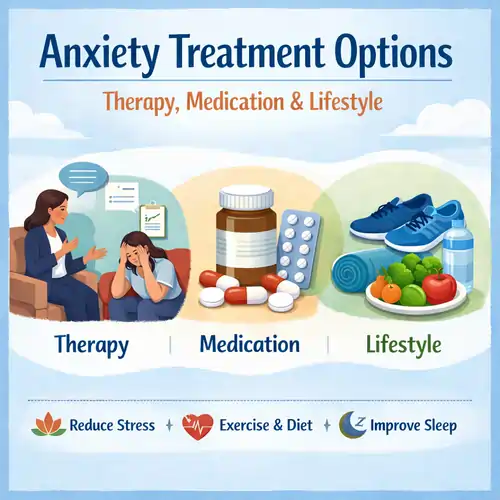
Anxiety treatment options include a combination of therapy, medication, and lifestyle changes, depending on the severity and type of anxiety disorder. According to the National Institute of Mental Health (NIMH), effective treatment often involves cognitive behavioral therapy (CBT), medications such as SSRIs, and supportive lifestyle interventions. While therapy addresses thought patterns, medications regulate brain chemistry, and lifestyle changes improve overall mental health, the best outcomes usually come from a personalized, combined approach. Understanding the different treatment options for anxiety helps individuals choose strategies that work best for long‑term recovery.
Introduction to Anxiety Treatment Options
Understanding anxiety treatment options is essential for managing anxiety disorders effectively. Anxiety can range from mild and occasional to severe and chronic, and treatment approaches vary depending on individual needs.
The World Health Organization (WHO) emphasizes that mental health treatment should be holistic, combining psychological, medical, and lifestyle interventions. This means that therapy, medication, and lifestyle changes all play important roles.
With the right treatment plan, most individuals can significantly reduce anxiety symptoms and improve their quality of life.
Understanding Anxiety Disorders and Treatment Needs
Different types of anxiety disorders require different treatment strategies, including generalized anxiety disorder (GAD), panic disorder, social anxiety disorder, and phobias. The severity, duration, and impact of symptoms help determine the best course of anxiety treatment, often in collaboration with a mental health professional.
Therapy for Anxiety
1. Cognitive Behavioral Therapy (CBT)
Cognitive behavioral therapy (CBT) is considered the gold standard for treating many anxiety disorders. It focuses on how thoughts, feelings, and behaviors interact.
How CBT works:
- Identifies negative thought patterns
- Replaces them with more realistic thinking
- Develops coping and problem‑solving strategies
Benefits of CBT:
- Strong evidence for long‑term effectiveness
- Can be used with or without medication
- Teaches skills patients can continue to use after therapy ends
Organizations such as the National Institute for Health and Care Excellence (NICE) recommend CBT as a first‑line treatment for anxiety disorders.
2. Exposure Therapy
Exposure therapy helps individuals gradually face feared situations or cues in a controlled way, reducing avoidance and fear over time. It is especially effective for phobias, social anxiety, and panic disorder.
3. Other Therapy Options
- Acceptance and commitment therapy (ACT)
- Mindfulness‑based therapies
- Psychodynamic or interpersonal therapy in some cases
These approaches support emotional regulation, acceptance, and insight into relationship patterns that may fuel anxiety.
Medication for Anxiety
Medication is often considered for moderate to severe anxiety disorders, or when therapy alone is not enough.
1. SSRIs (Selective Serotonin Reuptake Inhibitors)
SSRIs are among the most commonly prescribed medications for anxiety.
Examples:
- Sertraline
- Fluoxetine
- Escitalopram
How SSRIs work:
They increase serotonin availability in the brain, which can improve mood and reduce anxiety over time.
2. Benzodiazepines
Benzodiazepines can provide short‑term relief for severe, acute anxiety or panic. Examples include diazepam and alprazolam. Because of tolerance and dependence risks, they are usually prescribed at the lowest effective dose for the shortest possible time, and always under close medical supervision.
3. SNRIs and Other Medications
Other options may include:
- SNRIs (such as venlafaxine or duloxetine)
- Buspirone
- Beta‑blockers for physical symptoms like rapid heartbeat in specific situations
The U.S. Food and Drug Administration (FDA) provides official information on approved medications, indications, and safety considerations for anxiety treatment.
Lifestyle Changes for Anxiety Treatment
Lifestyle modifications are essential for long‑term anxiety management and work best alongside therapy and/or medication.
- Sleep improvement – Good sleep supports emotional regulation and reduces anxiety symptoms.
- Diet and nutrition – Balanced nutrition supports brain health, energy, and mood stability.
- Exercise – Regular physical activity reduces stress hormones and releases endorphins, improving mental well‑being.
- Stress management – Mindfulness, meditation, breathing techniques, and relaxation exercises help calm the nervous system and improve resilience.
Natural Remedies for Anxiety
Some individuals explore natural remedies for anxiety as complementary approaches, such as herbal supplements, relaxation techniques, and yoga. These should never replace evidence‑based treatment in moderate or severe cases, and it is important to discuss any supplement use with a healthcare professional to avoid interactions.
How Long Does Anxiety Treatment Take?
The timeline for anxiety treatment varies by person and depends on symptom severity, type of treatment, co‑occurring conditions, and consistency in following the plan. Some people notice improvement within a few weeks of starting CBT or medication, while others require longer‑term management.
This is a good place to link internally to your detailed article on how long anxiety treatment takes.
Combining Therapy, Medication, and Lifestyle
The most effective anxiety treatment plans often combine:
- Therapy to address thoughts, behaviors, and coping skills
- Medication when needed to support neurochemical balance
- Lifestyle changes to reduce stress load and support overall health
This integrated approach addresses both the symptoms and contributing factors, improving the chances of long‑term recovery.
Choosing the Right Anxiety Treatment
When choosing treatment, important factors include:
- Severity and type of symptoms
- Personal preferences and values
- Medical and psychiatric history
- Past responses to treatment
Consulting a healthcare professional—such as a primary‑care doctor, psychiatrist, or psychologist—helps ensure that the chosen treatment is safe and appropriate.
When to Seek Professional Help
Seek professional help if:
- Symptoms persist for weeks or months
- Anxiety interferes with work, school, or relationships
- Panic attacks occur or fear begins to limit daily activities
Early evaluation and treatment generally lead to better outcomes.
Living with Anxiety During Treatment
Managing anxiety during treatment involves patience and consistency. Following the treatment plan, monitoring progress, and building support systems (family, friends, support groups) can make the process more manageable. Adjustments to the plan over time are common and normal.
Preventing Anxiety Relapse
Relapse prevention often focuses on:
- Maintaining healthy lifestyle habits
- Continuing therapy or booster sessions when helpful
- Recognizing early warning signs of increasing anxiety
- Using coping strategies learned in treatment
These steps help sustain gains and reduce the chances of symptoms returning.
Frequently Asked Questions (FAQs)
- What are the main anxiety treatment options?
The main options include therapy, medication, and lifestyle changes. These approaches target different aspects of anxiety, and a combined approach is often most effective. - Is therapy effective for anxiety?
Yes. Therapy—especially CBT—has strong evidence for reducing anxiety symptoms and improving functioning. - What medications are used for anxiety?
Common medications include SSRIs, SNRIs, and sometimes benzodiazepines or other agents, prescribed based on individual needs. - Can anxiety be treated without medication?
Many people with mild to moderate anxiety improve with therapy and lifestyle changes alone. Treatment choice depends on severity and personal preference. - How long does anxiety treatment take?
Duration varies. Some people improve within weeks; others need months or ongoing support. Consistency with treatment is key. - Are natural remedies effective?
Some natural strategies (like relaxation practices and certain supplements) may help, but evidence is mixed. They should complement—not replace—professional care. - What is CBT for anxiety?
CBT is a structured therapy that helps people identify and change unhelpful thoughts and behaviors, and practice new coping skills. - Can lifestyle changes reduce anxiety?
Yes. Improving sleep, nutrition, physical activity, and stress management can substantially reduce symptoms and support recovery. - Are medications safe for anxiety?
Medications can be safe and effective when prescribed and monitored by a healthcare professional, though side effects and risks must be discussed. - Can anxiety be cured?
Many people fully recover or experience long‑term remission. Others manage anxiety as a chronic condition with ongoing strategies. - What is exposure therapy?
Exposure therapy gradually and safely exposes people to feared situations or sensations to reduce avoidance and fear over time. - Can anxiety return after treatment?
Yes, symptoms can recur, especially during stressful periods. Relapse‑prevention strategies and ongoing self‑care help reduce this risk. - What are side effects of anxiety medication?
Side effects vary by medication and may include nausea, headaches, sleep changes, or sexual side effects. Most improve over time or with dose adjustments. - Can exercise replace medication?
Exercise is very helpful but may not fully replace medication for severe anxiety. It is usually part of a comprehensive plan. - How do I choose the best treatment?
Work with a healthcare professional who can evaluate your symptoms, explain options, and tailor a plan to your needs. - Is anxiety treatment expensive?
Costs depend on location, insurance, and treatment type. Many regions offer low‑cost or community services. - Can children receive anxiety treatment?
Yes. Children and teens can benefit from age‑appropriate therapy and, when needed, carefully monitored medication. - What happens if anxiety is untreated?
Untreated anxiety can worsen over time and may lead to other mental or physical health problems. - Can therapy and medication be combined?
Yes, and this combination is often more effective than either alone for moderate to severe anxiety. - When should I seek treatment?
Seek treatment when anxiety interferes with daily life, persists for weeks, or causes significant distress.
Written by: Eden Grace Ramos, RN
Medical Disclaimer
This article is for informational and educational purposes only and does not replace professional medical advice. Anxiety disorders and treatment options require proper diagnosis and management by qualified healthcare professionals. Always consult a licensed physician or mental health specialist. Content is informed by guidance and research from organizations such as the World Health Organization (WHO), the Centers for Disease Control and Prevention (CDC), the National Institutes of Health (NIH), and the National Institute of Mental Health (NIMH).