
Medical laboratory testing is an essential part of modern healthcare. From routine blood tests to specialized diagnostic screening, laboratory tests help healthcare professionals evaluate health conditions, detect disease early, and monitor treatment progress.
Proper preparation before laboratory testing is important because it helps ensure accurate results. Certain foods, medications, physical activity, and hydration levels can affect test outcomes. When patients follow preparation instructions carefully, healthcare providers can make more reliable diagnostic decisions. According to the Centers for Disease Control and Prevention (CDC), laboratory testing plays a critical role in diagnosing infectious diseases, monitoring chronic health conditions, and guiding clinical treatment decisions across healthcare systems; accurate test results depend not only on laboratory technology but also on proper patient preparation, as emphasized in the CDC’s laboratory services guidance on diagnostic testing and quality.
If you want to understand how diagnostic testing works more broadly, you can read our pillar guide on medical diagnostics and common medical tests.
This guide explains how to prepare for common laboratory tests, including blood tests, fasting tests, metabolic panels, cholesterol screening, and other medical diagnostics.
What Is Laboratory Testing?
Laboratory testing refers to medical tests performed on biological samples such as blood, urine, saliva, or tissue. These tests analyze chemical markers, cells, proteins, enzymes, and genetic material to evaluate how the body is functioning.
Common laboratory tests include:
- blood tests
- urine analysis
- hormone testing
- metabolic panels
- infectious disease screening
- genetic testing
Laboratory diagnostics allow healthcare providers to detect diseases, monitor organ function, and evaluate treatment responses. The World Health Organization (WHO) emphasizes that laboratory medicine is a foundational component of healthcare systems because diagnostic testing supports accurate disease detection and public health surveillance worldwide, as outlined in WHO’s laboratory services and diagnostics resources.
Why Preparation Matters for Lab Tests
Patient preparation can significantly influence laboratory test accuracy. Many substances in the body fluctuate depending on diet, hydration, medications, and physical activity.
Improper preparation may lead to:
- inaccurate glucose levels
- altered cholesterol measurements
- misleading hormone results
- false laboratory values
These inaccuracies may require repeat testing or lead to incorrect diagnoses. For this reason, healthcare providers often provide instructions before testing.
Types of Lab Tests That Require Preparation
Different types of diagnostic tests may require specific preparation steps. Examples include:
- Fasting blood tests – Require patients to avoid food and caloric beverages for several hours before testing.
- Lipid panel tests – Cholesterol testing may require fasting to ensure accurate triglyceride measurement.
- Blood glucose testing – Fasting glucose tests measure blood sugar levels and may require a period without food to evaluate metabolic health.
- Hormone testing – Some hormone tests must be performed at specific times of day due to natural hormone fluctuations.
Preparing for Blood Tests
Blood testing is one of the most common diagnostic procedures in healthcare. These tests measure substances in the bloodstream that reflect organ function, metabolic activity, immune response, and cardiovascular risk.
If you want a deeper explanation of blood tests and what they measure, you can read our guide on understanding blood tests (CBC, lipid panel, A1C).
Blood tests may evaluate:
- red blood cells
- white blood cells
- hemoglobin
- cholesterol levels
- blood sugar levels
- electrolytes
- hormones
Proper preparation helps ensure reliable blood test results.
Fasting Before Lab Tests
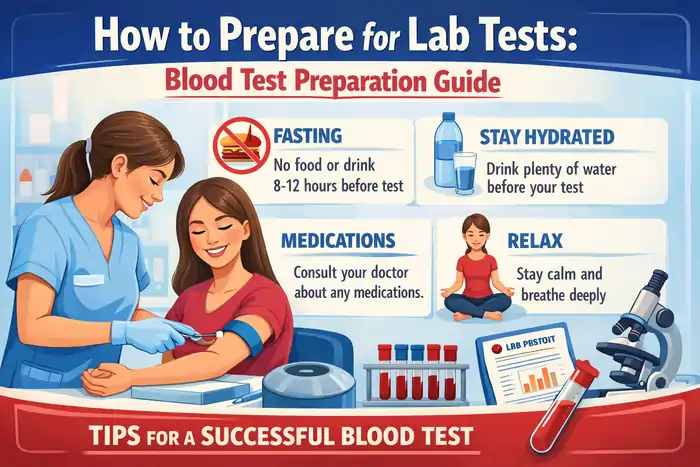
Fasting is one of the most common preparation requirements for laboratory testing. Patients may be instructed to avoid food for 8–12 hours before a test; water is usually allowed unless otherwise specified.
Fasting may be required for tests such as:
- lipid panel
- fasting glucose test
- metabolic panel
- insulin testing
Food intake can temporarily alter blood chemistry, affecting glucose, cholesterol, and triglyceride levels.
Medications and Lab Tests
Certain medications may influence laboratory test results. Patients should inform their healthcare provider about any medications or supplements they are taking before testing.
Examples include:
- antibiotics
- hormone therapy
- blood pressure medications
- steroids
- vitamin supplements
Doctors may advise patients to temporarily stop or adjust medications before certain tests. However, patients should never stop medications without medical guidance.
Hydration Before Laboratory Testing
Drinking water before laboratory testing may make blood collection easier by improving vein visibility and circulation.
Proper hydration can:
- improve blood sample quality
- reduce dizziness during blood draws
- support accurate electrolyte measurements
However, beverages containing sugar, caffeine, or alcohol should generally be avoided before testing unless your provider tells you otherwise.
Physical Activity and Test Results
Exercise can temporarily affect several laboratory measurements. Physical activity may influence:
- blood glucose
- hormone levels
- enzyme levels
- muscle biomarkers
For this reason, patients may be advised to avoid strenuous exercise before testing.
Alcohol and Laboratory Testing
Alcohol consumption can interfere with several laboratory markers. Alcohol may affect:
- liver enzyme levels
- blood glucose levels
- triglycerides
- electrolyte balance
Healthcare providers often recommend avoiding alcohol for at least 24 hours before testing.
Preparing for Urine Tests
Urine testing is commonly used to evaluate kidney function, infections, and metabolic disorders. Patients may be asked to provide a clean-catch urine sample.
Preparation typically includes:
- washing hands before sample collection
- cleaning the genital area
- collecting midstream urine
These steps help prevent contamination.
Preparing for Imaging Tests
Some diagnostic imaging procedures also require preparation. Examples include:
- fasting before contrast imaging
- avoiding metal objects before MRI
- drinking contrast agents for CT scans
If you want to learn more about imaging procedures, read our article on MRI vs CT scan.
Lab Testing in Preventive Healthcare
Laboratory tests are essential for preventive medicine because they allow doctors to detect diseases before symptoms appear. Routine tests may help identify:
- diabetes
- high cholesterol
- anemia
- infections
- metabolic disorders
Public health organizations such as the CDC and research bodies like the NIH highlight laboratory testing as a key component of early disease detection and chronic disease management in their overviews of screening and chronic disease programs. Early detection can improve treatment outcomes and reduce complications.
Common Lab Tests and Their Purpose
Healthcare providers use many types of laboratory tests. Common examples include:
- Complete Blood Count (CBC) – Evaluates red blood cells, white blood cells, hemoglobin, and platelets.
- Lipid Panel – Measures cholesterol levels to assess cardiovascular risk.
- Hemoglobin A1C – Evaluates long-term blood sugar control.
- Metabolic Panel – Assesses kidney function, electrolyte balance, and glucose levels.
What Happens During a Blood Test?
Most blood tests are performed by a trained healthcare professional called a phlebotomist. The procedure typically includes:
- cleaning the skin with antiseptic
- inserting a sterile needle into a vein
- collecting blood into tubes
- sending the sample to a laboratory for analysis
The process usually takes only a few minutes.
Understanding Test Results
Laboratory reports usually include reference ranges, which indicate typical values for healthy individuals. However, results may vary depending on:
- age
- sex
- medications
- health conditions
Doctors interpret laboratory results alongside symptoms and medical history rather than relying on numbers alone.
Common Reasons Doctors Order Lab Tests
Healthcare providers order laboratory tests for many reasons. Examples include:
- diagnosing medical conditions
- monitoring chronic disease
- evaluating treatment effectiveness
- screening for health risks
- investigating symptoms
Laboratory diagnostics are widely used in hospitals, clinics, and preventive healthcare settings.
Limitations of Laboratory Testing
Although laboratory tests provide valuable medical information, they are not always perfect. Possible limitations include:
- false positive results
- false negative results
- biological variability
Doctors may recommend additional testing if results are unclear.
Advances in Laboratory Diagnostics
Technology is rapidly improving laboratory medicine. Emerging innovations include:
- molecular diagnostics
- genetic testing
- biomarker screening
- automated laboratory analysis
The National Institutes of Health supports research on advanced diagnostic technologies designed to improve disease detection and personalized medicine, as described in NIH’s biomedical diagnostics and laboratory research programs.
Key Takeaways | How to Prepare for Lab Tests
Preparing properly for laboratory testing helps ensure accurate diagnostic results. Following medical instructions regarding fasting, medications, hydration, and physical activity can significantly improve test reliability. Laboratory diagnostics are essential for detecting disease, monitoring health conditions, and guiding treatment decisions. When patients understand how to prepare for testing, they can play an active role in supporting accurate medical evaluation.
Medical Disclaimer
This article is intended for educational purposes only and should not replace professional medical advice, diagnosis, or treatment. Always consult a qualified healthcare professional for personalized medical guidance regarding laboratory testing, health conditions, or treatment decisions.
Written by: Eden Grace Ramos, RN
Medical Resources
This article references evidence-based guidance from trusted health authorities to ensure clinical accuracy and reliability. Key resources include the CDC’s laboratory testing guidance, diagnostic research from the National Institutes of Health on laboratory medicine and biomedical diagnostics, and global healthcare recommendations from the World Health Organization on laboratory medicine and diagnostic services. These organizations provide research and clinical recommendations widely used by healthcare professionals worldwide.