
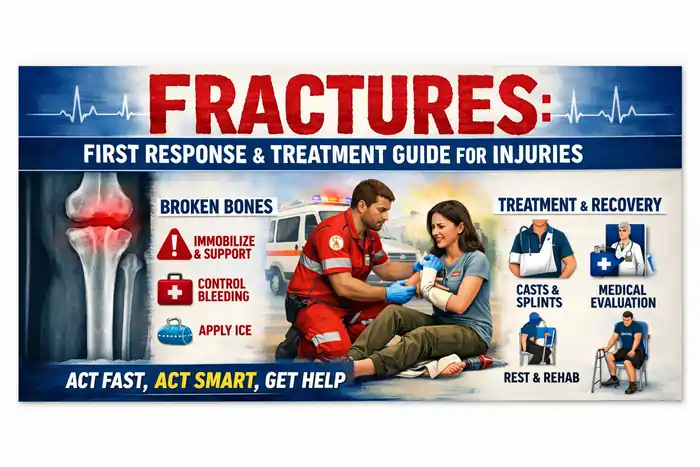
Fractures—commonly known as broken bones—are among the most frequent injuries worldwide, affecting people of all ages due to falls, accidents, sports injuries, and trauma. While some fractures are minor and heal with basic care, others can be severe, requiring urgent medical attention to prevent complications such as nerve damage, infection, or long-term disability.
According to the World Health Organization (WHO) overview on injuries and violence, injuries—including fractures—are a major cause of disability globally, particularly among children, older adults, and individuals involved in road traffic accidents. WHO injury prevention programs emphasize that early recognition and proper first response significantly improve outcomes and reduce complications. Similarly, the Centers for Disease Control and Prevention (CDC) injury and fall data report that millions of fractures occur annually, many linked to falls, especially in older adults, and underscore that prompt first aid and correct immobilization can prevent worsening injury and improve recovery.
Clinical guidance from institutions such as the National Institutes of Health (NIH) musculoskeletal research programs and emergency care frameworks supported by organizations like the American Heart Association (AHA) reinforce that timely intervention—within minutes to hours—can preserve function, reduce pain, and prevent permanent damage.
This comprehensive guide explains fracture types, symptoms, first aid steps, treatment options, recovery, and when to seek emergency care.
Understanding Fractures and Bone Injuries
A fracture occurs when a bone breaks due to excessive force, stress, or weakening from disease. Bones are strong but not indestructible, and trauma can disrupt their structure.
The NIH’s musculoskeletal and trauma resources explain that fractures may involve:
- complete breaks
- partial cracks
- displacement of bone fragments
- damage to surrounding tissues
Bones play essential roles in:
- supporting body structure
- protecting organs
- enabling movement
- producing blood cells
When a fracture occurs, these functions are compromised, making proper treatment essential.
Types of Fractures
Fractures are classified based on severity, pattern, and cause.
Closed (Simple) Fracture
- Bone breaks but does not pierce the skin
Open (Compound) Fracture
- Bone breaks through the skin
- High risk of infection
Hairline (Stress) Fracture
- Small crack due to repetitive stress
Comminuted Fracture
- Bone breaks into multiple pieces
Greenstick Fracture
- Partial break (common in children)
Compression Fracture
- Bone collapses (often in spine, linked to osteoporosis)
Displaced vs Non-Displaced
- Displaced: bones out of alignment
- Non-displaced: bones remain aligned
Understanding fracture types helps guide first aid and treatment decisions.
Common Causes of Fractures
Fractures can occur in everyday situations.
Traumatic Causes
- falls
- car accidents
- sports injuries
- workplace accidents
Medical Causes
- osteoporosis
- bone infections
- cancer affecting bones
Repetitive Stress
- overuse injuries
- athletic training
The CDC injury prevention data highlight that falls are the leading cause of fractures, particularly among older adults, and that fall-related injuries often result in broken bones and lengthy rehabilitation.
Signs and Symptoms of a Fracture
Recognizing fracture symptoms early is critical.
👉 Learn more in:
Signs of a Broken Bone
Common Symptoms
- intense pain
- swelling
- bruising
- deformity
- inability to move the limb
- tenderness
Severe Signs
- bone protruding through skin
- numbness or tingling
- loss of circulation
- severe bleeding
The NIH trauma resources emphasize that visible deformity, inability to bear weight, or loss of function strongly suggest a fracture and warrant prompt evaluation.
First Aid for Fractures: Immediate Response
Proper first aid can prevent complications and reduce pain.
Step 1: Ensure Safety
- move away from danger
- avoid unnecessary movement
WHO trauma care and post-injury care guidance stresses that scene safety and avoiding further harm are always the first steps.
Step 2: Stop Any Bleeding
- apply gentle pressure
- use a clean cloth or bandage
Step 3: Immobilize the Area
👉 Learn more in:
Immobilization Techniques
- keep the injured area still
- use splints or supports if available
- immobilize joints above and below the suspected fracture
The AHA and other first aid authorities emphasize that immobilization reduces pain and prevents further damage to bones, nerves, and blood vessels.
Step 4: Apply Cold Compress
- reduce swelling
- limit inflammation
Avoid direct ice contact with skin by wrapping ice in a cloth or using a cold pack.
Step 5: Elevate (If Possible)
- reduces swelling
- improves circulation, as long as it does not cause pain or worsen injury
Step 6: Seek Medical Help
Call emergency services if there is:
- severe pain
- visible deformity
- an open fracture
- inability to move the limb
Immobilization Techniques (Critical Step)
Proper immobilization is one of the most important first aid actions.
👉 Learn more in:
Immobilization Techniques
Basic Methods
- splints (wood, cardboard, rigid material)
- slings for arm injuries
- padding to prevent pressure from the splint
Key Principles
- do not try to realign the bone
- immobilize joints above and below the injury
- check circulation regularly (color, warmth, sensation, pulse)
Improper handling can worsen injury, increase pain, or damage nerves and blood vessels.
When to Seek Emergency Care
Some fractures require urgent medical attention.
Emergency Signs
- open fractures
- severe bleeding
- numbness or paralysis
- pale or cold limb
- suspected head, neck, or spine injury
WHO and CDC guidelines emphasize that delayed treatment increases complications such as infection, nerve damage, and long-term disability, especially in high-impact or open fractures.
Medical Diagnosis of Fractures
Doctors use several tools to diagnose fractures accurately.
Diagnostic Methods
- X-rays
- CT scans
- MRI
- physical examination
NIH imaging and orthopedic research shows that these tools help determine fracture type, severity, and the most appropriate treatment plan.
Treatment Options for Fractures
Treatment depends on severity and location.
Non-Surgical Treatment
Casting and Splinting
- keeps bone in place
- allows natural healing
Medications
- pain relievers
- anti-inflammatory drugs
Surgical Treatment
Required for severe or unstable fractures.
Procedures Include
- internal fixation (plates, screws, rods)
- external fixation (metal frames outside the body)
- bone grafting in complex cases
The NIH orthopedic research programs highlight advancements in surgical techniques and fixation devices that improve alignment, stability, and recovery outcomes.
Healing Process of Bone Fractures
Bone healing occurs in stages:
- Inflammation phase
- Soft callus formation
- Hard callus formation
- Remodeling
Healing time varies:
- minor fractures: weeks
- severe or complex fractures: months
Factors such as age, nutrition, smoking, and underlying health affect healing speed.
Recovery After a Fracture
👉 Learn more in:
Recovery After a Fracture
Key Recovery Strategies
- physical therapy
- gradual movement and weight-bearing as advised
- strengthening exercises
- proper nutrition and hydration
Important Nutrients
- calcium
- vitamin D
- protein
The NIH emphasizes that rehabilitation and guided exercise are essential for restoring function, range of motion, and strength after a fracture.
Complications of Fractures
Without proper care, complications may occur.
Common Complications
- infection (especially in open fractures)
- nerve damage
- poor healing (nonunion or malunion)
- stiffness or reduced mobility
Serious Complications
- compartment syndrome
- blood clots (deep vein thrombosis)
- chronic pain and disability
Clinical trauma literature and orthopedic reviews warn that delayed treatment, inadequate immobilization, or missed diagnoses can increase the risk of these complications.
Fractures in High-Risk Groups
Children
- more flexible bones
- faster healing
- unique fracture patterns such as greenstick injuries
Older Adults
- higher risk due to osteoporosis and falls
- slower recovery
Athletes
- stress fractures and overuse injuries are common
CDC and aging-related fall data show that fall prevention and bone-strengthening strategies significantly reduce fracture risk in elderly populations.
Preventing Fractures
Prevention is key.
Safety Tips
- wear protective gear during sports and high-risk work
- avoid slippery surfaces and clutter
- strengthen muscles to support joints
- improve balance through exercises like tai chi or balance training
Lifestyle Prevention
- regular weight-bearing exercise
- proper nutrition for bone health
- bone density screening when indicated
WHO injury prevention programs emphasize education, safer environments, and targeted fall-prevention strategies as effective ways to reduce fractures and other injuries.
Psychological Impact of Fractures
Fractures can affect mental health as well as physical health.
Emotional Effects
- anxiety
- frustration
- fear of reinjury
Support from family, rehabilitation teams, and, when needed, mental health professionals helps patients cope with pain, temporary disability, and lifestyle changes during recovery.
Key Takeaways
Fractures are common but potentially serious injuries that require immediate attention. Recognizing symptoms early, immobilizing the injured area, and seeking medical care can prevent complications and improve recovery. Global health organizations such as WHO, CDC, NIH, and AHA consistently emphasize that early intervention, proper first aid, and structured rehabilitation are essential for optimal outcomes.
FAQ | Fractures and First Aid
What should I do if I suspect a fracture?
Immobilize the area, avoid movement, and seek medical care as soon as possible.
How can I tell if a bone is broken?
Signs include pain, swelling, deformity, bruising, and inability to move or bear weight on the affected area.
Should I move someone with a fracture?
Only if necessary for safety. Keep them still, support the injured limb, and wait for medical help when possible.
How long do fractures take to heal?
Typically weeks to months depending on severity, location, and overall health.
Medical Disclaimer
This article is intended for educational purposes only and should not replace professional medical advice, diagnosis, or treatment. Always consult a qualified healthcare professional for personalized medical guidance regarding fractures or injuries.
Written by: Eden Grace Ramos, RN
Medical Resources
This article is based on evidence-based medical guidance from globally recognized organizations. Clinical recommendations align with World Health Organization (WHO) injury prevention and trauma care programs. Public health data and fracture prevention strategies reflect resources from the Centers for Disease Control and Prevention (CDC). Scientific insights into bone healing and orthopedic care are supported by research from the National Institutes of Health (NIH). Emergency response and first aid principles align with American Heart Association (AHA) first aid guidance.