
Anxiety becomes a disorder when symptoms are persistent, excessive, difficult to control, and interfere with daily life. Unlike normal anxiety, anxiety disorders last for weeks or months and may cause physical, emotional, and behavioral symptoms. Diagnosis is based on clinical evaluation and DSM-5 criteria, and early treatment improves outcomes
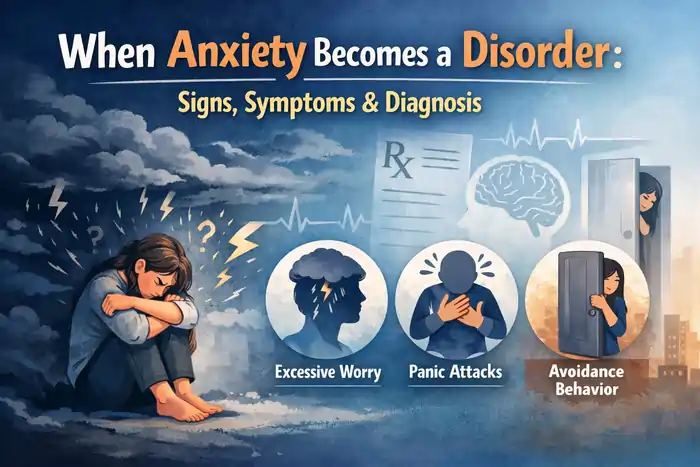
Anxiety is a normal part of life. It helps you respond to stress, stay alert, and prepare for challenges. However, many people begin to wonder:
- “When does anxiety become a disorder?”
- “Is my anxiety normal or a disorder?”
- “How do I know if my anxiety is serious?”
Understanding when anxiety becomes a disorder is essential for recognizing when it may require professional help.
What Is Normal Anxiety?
Normal anxiety is a temporary emotional response to stress. It typically occurs in situations like exams, work deadlines, or important life events.
Characteristics of normal anxiety include:
- Short-term duration
- Clear trigger
- Manageable intensity
- Does not disrupt daily life
This distinction helps separate normal anxiety vs anxiety disorder.
When Anxiety Becomes a Disorder
The key question is:
When is anxiety a disorder?
Anxiety becomes a disorder when it crosses certain thresholds:
- Persistent anxiety symptoms lasting weeks or months
- Anxiety that won’t go away even without a clear trigger
- Chronic anxiety symptoms affecting daily functioning
- Anxiety affecting daily life, work, or relationships
- Difficulty controlling anxiety
These patterns define when anxiety is too much and may indicate a clinical condition.
Signs of Anxiety Disorder
Recognizing the signs of anxiety disorder is crucial.
Common anxiety disorder symptoms include:
Emotional Symptoms
- Constant worry
- Fear without clear cause
- Irritability
Physical Symptoms
- Rapid heartbeat
- Muscle tension
- Dizziness
- Fatigue
For a deeper explanation of physical effects, see:
👉 Physical Symptoms of Anxiety Explained
Behavioral Symptoms
- Avoidance of situations
- Social withdrawal
- Difficulty completing tasks
Severe Anxiety Symptoms
When anxiety becomes more intense, severe anxiety symptoms may appear:
- Panic attacks
- Inability to function
- Constant fear or dread
These are anxiety disorder warning signs that require attention.
Anxiety vs Normal Stress
Understanding anxiety vs normal stress is essential.
| Feature | Normal Stress | Anxiety Disorder |
|---|---|---|
| Duration | Short-term | Long-term |
| Trigger | Clear | Often unclear |
| Impact | Minimal | Disruptive |
| Control | Manageable | Difficult |
This comparison clarifies stress vs anxiety disorder differences.
Anxiety vs Panic Disorder
Another key distinction is anxiety vs panic disorder.
- Anxiety → gradual, ongoing
- Panic disorder → sudden panic attacks
Learn more here:
👉 Anxiety vs Panic Attack: Key Differences
Symptoms That Indicate Anxiety Is Getting Worse
People often ask:
“What are signs my anxiety is getting worse?”
Warning signs include:
- Increased frequency of symptoms
- Stronger physical reactions
- Avoidance behaviors
- Difficulty functioning
These indicate how to tell if anxiety is severe.
How Anxiety Affects Daily Life
One major indicator is anxiety affecting daily life.
This may include:
- Poor work performance
- Relationship problems
- Sleep disturbances
- Reduced productivity
These reflect anxiety impacting work performance and quality of life.
Anxiety Lasting Weeks or Months
Another key factor is duration.
If you experience:
- Anxiety lasting weeks or months
- Persistent anxiety symptoms
- No improvement over time
It may indicate a disorder.
DSM-5 Criteria for Anxiety Disorder
Diagnosis is based on DSM-5 anxiety disorder criteria.
These include:
- Excessive anxiety and worry
- Symptoms lasting at least six months
- Difficulty controlling worry
- Physical or cognitive symptoms
Learn more here:
👉 How Anxiety Is Diagnosed (DSM-5 Criteria Explained)
When Anxiety Needs Diagnosis
Many ask:
“When anxiety needs diagnosis?”
You should seek evaluation if:
- Symptoms persist
- They interfere with daily life
- They cause distress
This defines how to know if anxiety is serious.
When to Seek Help for Anxiety
You should seek help if:
- Anxiety becomes overwhelming
- You cannot control symptoms
- Daily life is affected
These align with when to seek help for anxiety and when to see a doctor for anxiety.
Causes and Risk Factors
Understanding how anxiety develops into disorder involves:
- Genetics
- Stress
- Trauma
- Brain chemistry
Research from
👉 World Health Organization (WHO)
and
👉 National Institute of Mental Health (NIMH)
shows these factors contribute to anxiety disorders.
Long-Term Effects of Untreated Anxiety
Untreated anxiety may lead to:
- Depression
- Substance use
- Chronic illness
- Reduced quality of life
These reflect long-term effects of untreated anxiety.
Treatment Options
Treatment may include:
Therapy
- Cognitive Behavioral Therapy (CBT)
Medication
- SSRIs
Lifestyle Changes
- Exercise
- Sleep
- Stress management
Final Thoughts
Understanding when anxiety becomes a disorder is essential for early intervention.
If you’re asking:
- “Is my anxiety normal or a disorder?”
- “How do I know if I need help?”
That awareness is already a critical first step.
Frequently Asked Questions
1. When does anxiety become a disorder?
Anxiety becomes a disorder when it is persistent, excessive, and difficult to control. It often lasts for weeks or months. It also interferes with daily life.
2. How do I know if my anxiety is serious?
If anxiety affects work, relationships, or daily functioning, it may be serious. Persistent symptoms are a key sign. Professional evaluation is recommended.
3. What are signs of anxiety disorder?
Signs include constant worry, physical symptoms, and avoidance behaviors. These symptoms often occur together. They may worsen over time.
4. Is anxiety normal or a disorder?
Anxiety is normal in response to stress. It becomes a disorder when it is excessive and persistent. The difference lies in severity and impact.
5. How long should anxiety last before concern?
Anxiety lasting weeks or months should be evaluated. Short-term anxiety is normal. Persistent symptoms may indicate a disorder.
6. What are severe anxiety symptoms?
Severe symptoms include panic attacks and inability to function. Physical symptoms may intensify. Immediate help may be needed.
7. Can anxiety get worse over time?
Yes, untreated anxiety can worsen. Symptoms may become more frequent or intense. Early intervention is important.
8. When should I seek help for anxiety?
Seek help if anxiety affects daily life. Persistent symptoms are a key sign. Professional guidance improves outcomes.
9. What is chronic anxiety?
Chronic anxiety refers to long-term, persistent symptoms. It often lasts months or years. It usually requires treatment.
10. Can anxiety affect daily life?
Yes, anxiety can impact work, relationships, and sleep. It may reduce productivity. It can also affect quality of life.
11. What causes anxiety disorder?
Causes include genetics, stress, and brain chemistry. Environmental factors also play a role. Often multiple factors are involved.
12. Can anxiety go away on its own?
Mild anxiety may improve naturally. However, anxiety disorders often require treatment. Symptoms may persist without intervention.
13. How is anxiety diagnosed?
Diagnosis involves clinical evaluation and DSM-5 criteria. Doctors assess symptom patterns. Screening tools may be used.
14. What is DSM-5?
DSM-5 is a diagnostic manual for mental disorders. It defines criteria for diagnosis. It ensures consistency among professionals.
15. What is the difference between stress and anxiety?
Stress is short-term and situation-based. Anxiety is persistent and may not have a clear cause. Anxiety can become a disorder.
16. Can anxiety affect physical health?
Yes, anxiety can cause physical symptoms. These include fatigue, headaches, and muscle tension. It can also impact long-term health.
17. What happens if anxiety is untreated?
Untreated anxiety can lead to depression and health issues. It may affect daily functioning. Early treatment is important.
18. Can anxiety disorder be treated?
Yes, anxiety disorders are treatable. Therapy and medication are effective. Lifestyle changes also help.
19. How do I know if I need diagnosis?
If symptoms persist and affect daily life, evaluation is needed. Professional assessment confirms diagnosis. Early help improves outcomes.
20. What are warning signs of anxiety disorder?
Warning signs include persistent worry and functional impairment. Physical symptoms may also appear. These indicate need for evaluation.
Written by: Eden Grace Ramos, RN
Medical Disclaimer
Content is based on current clinical guidelines and peer-reviewed research from WHO, CDC, NIH, and AHA. This article is for educational purposes only and does not replace professional medical advice, diagnosis, or treatment. Always consult a qualified healthcare provider for any mental health concerns.