
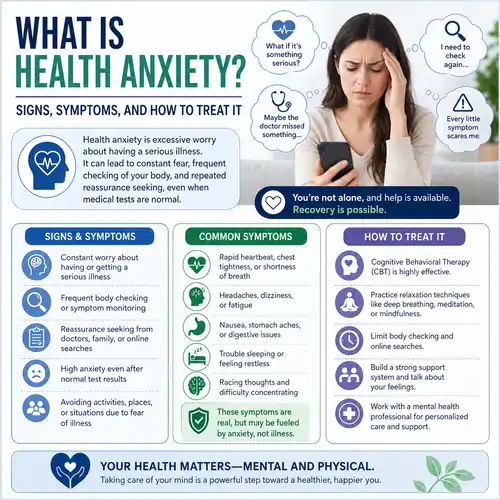
Health anxiety, also known as hypochondria or illness anxiety disorder, is a condition where a person becomes excessively worried about having a serious illness despite little or no medical evidence. Individuals often misinterpret normal bodily sensations as signs of disease, leading to repeated checking, reassurance-seeking, or avoidance of healthcare. Understanding the signs, symptoms, and treatment options is essential to managing this condition and improving quality of life.
Introduction
Many people occasionally worry about their health, especially when experiencing unusual symptoms. However, for individuals with health anxiety, these worries become persistent, overwhelming, and disruptive to daily life. Even after medical reassurance, the fear of serious illness remains.
Health anxiety (hypochondria) is not simply “overthinking.” It is a recognized mental health condition that can cause real physical distress, including chest pain, fatigue, headaches, and heart palpitations. The constant fear can lead to repeated doctor visits or, in some cases, complete avoidance of healthcare due to fear of diagnosis.
This guide explains everything you need to know about health anxiety symptoms, causes, and treatment strategies, using a clear, practical, and medically grounded approach.
What Is Health Anxiety?
Health anxiety, clinically referred to as illness anxiety disorder, is a condition characterized by excessive concern about having or developing a serious medical condition. It often occurs without significant physical symptoms or with only mild sensations.
Key Characteristics of Health Anxiety
- Persistent fear of serious illness
- Misinterpretation of normal bodily sensations
- Repeated checking behaviors (e.g., pulse, body scans)
- Frequent reassurance-seeking from doctors or online sources
- Difficulty accepting medical reassurance
Unlike general worry, health anxiety disorder persists for months or longer and significantly impacts daily functioning.
Signs and Symptoms of Health Anxiety
Emotional Symptoms
- Constant worry about health
- Fear of serious illness such as cancer, heart disease, or neurological disorders
- Feeling anxious after reading health-related content
- Difficulty concentrating due to health fears
Physical Symptoms
Although health anxiety is psychological, it often produces real physical sensations:
- Chest pain
- Heart palpitations
- Muscle tension
- Headaches
- Dizziness
- Fatigue
These symptoms are often caused by the body’s stress response and not by an underlying disease.
Behavioral Symptoms
- Frequent doctor visits (medical reassurance seeking)
- Excessive online searching (cyberchondria)
- Avoiding hospitals or medical tests
- Repeated body checking
Health Anxiety vs Normal Health Concern
It is normal to be concerned about your health occasionally. However, health anxiety becomes problematic when:
- Worry is persistent and excessive
- It interferes with daily life
- Reassurance does not reduce fear
- Symptoms are disproportionate to medical findings
Causes of Health Anxiety
Psychological Factors
- History of anxiety disorders
- Past trauma related to illness
- Fear of death or loss of control
Biological Factors
- Imbalance in brain chemicals such as serotonin
- Heightened sensitivity to bodily sensations
Environmental Factors
- Exposure to serious illness in family
- Overexposure to medical information
- Stressful life events
The Role of Cyberchondria
Cyberchondria refers to excessive online searching for medical information, which can worsen health anxiety symptoms. Reading worst-case scenarios often increases fear rather than providing reassurance.
Common Conditions Misinterpreted
People with health anxiety often misinterpret harmless sensations as serious illnesses, including:
- Muscle pain mistaken for heart attack symptoms
- Headaches perceived as brain tumors
- Fatigue linked to chronic disease
How Health Anxiety Affects Daily Life
- Reduced productivity
- Strained relationships
- Financial burden from repeated medical tests
- Emotional exhaustion
Over time, untreated health anxiety disorder can lead to depression and social withdrawal.
Diagnosis of Health Anxiety
Healthcare providers diagnose illness anxiety disorder based on:
- Medical history
- Symptom patterns
- Exclusion of physical illness
Diagnostic criteria often follow guidelines such as DSM-5.
Treatment for Health Anxiety
Cognitive Behavioral Therapy (CBT)
Cognitive Behavioral Therapy (CBT) is the most effective treatment for health anxiety. It helps individuals:
- Identify irrational thoughts
- Challenge negative beliefs
- Reduce compulsive checking behaviors
Medication
In some cases, doctors may prescribe:
- Selective serotonin reuptake inhibitors (SSRIs)
- Anti-anxiety medications
These help regulate mood and reduce obsessive thoughts.
Mindfulness and Relaxation Techniques
- Deep breathing
- Meditation
- Progressive muscle relaxation
These techniques reduce the body’s stress response.
Lifestyle Changes
- Limit exposure to health-related content
- Maintain a balanced diet
- Exercise regularly
- Prioritize sleep
Healthy habits improve both mental and physical well-being.
Coping Strategies
- Set limits on symptom checking
- Avoid excessive Googling
- Focus on evidence-based thinking
- Engage in distracting activities
When to Seek Professional Help
You should consult a healthcare provider if:
- Health worries interfere with daily life
- Anxiety persists despite reassurance
- You experience panic attacks or depression
Long-Term Outlook
With proper treatment, health anxiety is manageable. Many individuals experience significant improvement through therapy and lifestyle changes.
Frequently Asked Questions (FAQs)
1. What is health anxiety?
Health anxiety is excessive worry about having a serious illness. It often persists despite medical reassurance. It can interfere with daily life and emotional well-being.
2. Is health anxiety the same as hypochondria?
Yes, hypochondria is the older term for health anxiety or illness anxiety disorder. The terms are often used interchangeably. Modern diagnosis uses updated clinical terminology.
3. What causes health anxiety?
It can be caused by psychological, biological, and environmental factors. Past illness experiences and stress play a role. Brain chemistry may also contribute.
4. Can health anxiety cause physical symptoms?
Yes, it can cause real symptoms like chest pain and heart palpitations. These are triggered by the stress response. They are not due to underlying disease.
5. How do I know if I have health anxiety?
If you constantly worry about illness despite normal tests, it may be health anxiety. Reassurance does not reduce fear. A professional diagnosis is recommended.
6. Is health anxiety treatable?
Yes, it is highly treatable. CBT and medications are effective. Lifestyle changes also help manage symptoms.
7. What is cyberchondria?
Cyberchondria is excessive online searching about health symptoms. It increases anxiety and fear. Limiting searches can help.
8. Can health anxiety lead to depression?
Yes, chronic anxiety can lead to depression. Constant worry affects mood and energy. Treatment can address both conditions.
9. Should I stop going to the doctor?
No, regular medical care is important. However, avoid unnecessary visits driven by anxiety. Follow professional guidance.
10. How can I stop worrying about my health?
Practice mindfulness and challenge negative thoughts. Limit symptom checking. Seek therapy if needed.
11. Can stress trigger health anxiety?
Yes, stress is a major trigger. It increases awareness of bodily sensations. Managing stress reduces symptoms.
12. Is health anxiety common?
Yes, it is more common than many realize. Many people experience mild forms. Severe cases require treatment.
13. Can children have health anxiety?
Yes, children can develop health anxiety. It may be influenced by family or environment. Early intervention helps.
14. Does social media worsen health anxiety?
Yes, exposure to health content can increase fear. It often highlights worst-case scenarios. Limiting use can help.
15. What are the best treatments for health anxiety?
CBT is the most effective treatment. Medications may also help. A combination approach works best.
16. Can exercise help with health anxiety?
Yes, exercise reduces stress and improves mood. It helps regulate anxiety levels. Regular activity is beneficial.
17. How long does health anxiety last?
It can be chronic if untreated. With proper care, symptoms improve over time. Early treatment leads to better outcomes.
18. Can health anxiety cause panic attacks?
Yes, it can trigger panic attacks. Fear of illness increases anxiety levels. Treatment can reduce episodes.
19. Is reassurance helpful for health anxiety?
Temporary reassurance may help briefly. However, it often reinforces the cycle. Therapy focuses on reducing dependence on reassurance.
20. When should I seek help?
Seek help if anxiety affects your daily life. Persistent fear despite reassurance is a sign. Professional support can make a significant difference.
Disclaimer
This content is for educational purposes only and is not a substitute for professional medical advice, diagnosis, or treatment. Always consult a qualified healthcare provider regarding concerns about health anxiety, hypochondria, or any medical condition. If symptoms are severe or persistent, seek immediate medical attention.