
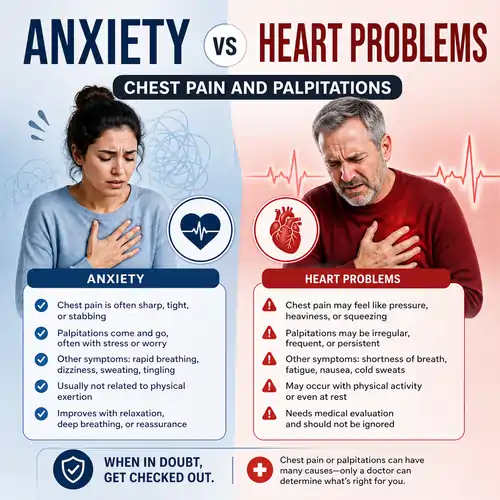
Anxiety and heart problems can produce very similar symptoms, especially chest pain and heart palpitations, which often causes fear and confusion. While anxiety-related chest pain is typically linked to stress responses and muscle tension, cardiac chest pain may signal serious conditions like angina or heart attack. Understanding the differences in symptom patterns, triggers, and associated signs can help you respond appropriately and know when to seek urgent medical care. This guide breaks down everything you need to know in a clear, practical way.
Introduction
Experiencing chest pain or heart palpitations can be alarming. For many people, the immediate thought is a heart attack or serious cardiovascular disease. However, these symptoms are also very common in individuals dealing with anxiety disorders, panic attacks, or chronic stress.
The overlap between anxiety and heart symptoms makes it difficult to distinguish between a psychological cause and a potentially life-threatening condition. This confusion often leads to repeated emergency visits, increased anxiety, and unnecessary testing—or worse, ignoring a real cardiac issue.
This article explores the key differences between anxiety-induced chest pain and heart-related chest pain, explains the mechanisms behind heart palpitations, and provides actionable guidance on when to seek medical attention.
Understanding Anxiety and Its Physical Effects
What is Anxiety?
Anxiety is a natural response to stress or perceived danger. It activates the body’s fight-or-flight response, releasing stress hormones like adrenaline and cortisol. While helpful in short bursts, chronic activation can lead to persistent physical symptoms.
How Anxiety Affects the Body
When anxiety is triggered, the body undergoes several changes:
- Increased heart rate
- Rapid breathing (hyperventilation)
- Muscle tension
- Heightened awareness of bodily sensations
These responses can directly cause chest tightness, heart palpitations, and even dizziness—symptoms often mistaken for heart disease.
What Are Heart Problems?
Common Heart Conditions
Heart problems that may cause chest pain and palpitations include:
- Coronary artery disease
- Angina
- Heart attack (myocardial infarction)
- Arrhythmias
- Heart failure
Unlike anxiety, these conditions involve structural or functional issues in the heart.
Why Symptoms Overlap
Both anxiety and heart disease affect the cardiovascular system, which explains why symptoms like chest pain, shortness of breath, and palpitations can occur in both.
Chest Pain: Anxiety vs Heart Problems
Characteristics of Anxiety Chest Pain
Anxiety chest pain typically presents as:
- Sharp or stabbing pain
- Localized to a small area
- Occurs during stress or panic
- May last for hours or fluctuate
- Often accompanied by panic attack symptoms
It is frequently linked to muscle tension, hyperventilation, and heightened sensitivity to bodily sensations.
Characteristics of Cardiac Chest Pain
Heart-related chest pain (especially from angina or heart attack) often includes:
- Pressure, squeezing, or heaviness
- Pain spreading to the arm, jaw, or back
- Triggered by physical exertion
- Short duration (minutes)
- Associated with sweating, nausea, and shortness of breath
Key Differences
| Feature | Anxiety Chest Pain | Heart-Related Chest Pain |
|---|---|---|
| Pain Type | Sharp, stabbing | Pressure, squeezing |
| Duration | Variable, longer | Short, consistent |
| Trigger | Stress, panic | Physical activity |
| Radiation | Rare | Common (arm, jaw) |
| Relief | Relaxation | Rest or medication |
Heart Palpitations: Anxiety vs Cardiac Causes
What Are Heart Palpitations?
Heart palpitations are sensations of a racing, fluttering, or pounding heart. They can be caused by both anxiety and cardiac arrhythmias.
Anxiety-Induced Palpitations
When caused by anxiety, palpitations are:
- Sudden onset during stress
- Linked to panic attacks
- Temporary
- Not associated with structural heart issues
Cardiac-Related Palpitations
When caused by heart problems, palpitations may:
- Occur unpredictably
- Be associated with fainting or dizziness
- Persist longer
- Indicate arrhythmia or electrical issues
Why Anxiety Causes Heart Symptoms
The Fight-or-Flight Response
The fight-or-flight response increases heart rate and blood pressure, leading to:
- Rapid heartbeat
- Chest tightness
- Palpitations
Hyperventilation
Hyperventilation reduces carbon dioxide levels, causing:
- Chest discomfort
- Lightheadedness
- Tingling sensations
Muscle Tension
Chronic anxiety leads to tight chest muscles, which can mimic cardiac chest pain.
When Symptoms Overlap
Some situations make it especially difficult to distinguish between anxiety and heart problems:
- First-time chest pain
- Severe symptoms
- Presence of risk factors (smoking, diabetes, hypertension)
- Older age
In these cases, medical evaluation is essential.
Risk Factors for Heart Disease
Understanding your risk helps guide your response:
- High blood pressure
- High cholesterol
- Smoking
- Diabetes
- Family history
- Obesity
If you have these, do not assume symptoms are due to anxiety.
When to Seek Emergency Care
Seek immediate medical help if you experience:
- Crushing chest pain
- Pain radiating to arm or jaw
- Severe shortness of breath
- Fainting
- Cold sweats
These may indicate a heart attack, not anxiety.
Diagnosis: How Doctors Tell the Difference
Doctors use several tools:
- Electrocardiogram (ECG)
- Blood tests
- Stress tests
- Medical history
If results are normal, symptoms may be attributed to anxiety disorders.
Managing Anxiety-Related Heart Symptoms
Lifestyle Changes
- Regular exercise
- Healthy diet
- Adequate sleep
- Limit caffeine
Psychological Strategies
- Cognitive Behavioral Therapy (CBT)
- Mindfulness
- Stress management techniques
Medical Treatment
- Anti-anxiety medications
- Beta-blockers (in some cases)
Managing Heart Conditions
If symptoms are cardiac-related:
- Medications (e.g., nitroglycerin, beta-blockers)
- Lifestyle modifications
- Medical procedures if necessary
Practical Tips to Differentiate Symptoms
Ask yourself:
- Did this start during stress?
- Does the pain change with movement?
- Do I have risk factors for heart disease?
If unsure, always choose safety and seek medical care.
Frequently Asked Questions (FAQs)
1. Can anxiety really cause chest pain?
Yes, anxiety chest pain is a common symptom caused by muscle tension and stress responses. It can feel intense and mimic heart-related pain. However, it is not caused by blocked arteries or heart damage.
2. How can I tell if my chest pain is serious?
Serious chest pain often feels like pressure and may spread to other areas. It is usually accompanied by symptoms like sweating or nausea. If unsure, always seek medical attention immediately.
3. Are heart palpitations from anxiety dangerous?
Anxiety-induced palpitations are generally harmless and temporary. They are caused by increased adrenaline levels. However, frequent or severe episodes should still be evaluated by a doctor.
4. Can a panic attack feel like a heart attack?
Yes, a panic attack can closely mimic a heart attack, including chest pain and shortness of breath. The symptoms can be overwhelming and frightening. Proper diagnosis is important to rule out cardiac causes.
5. What triggers anxiety chest pain?
Triggers include stress, fear, caffeine, and lack of sleep. These factors activate the body’s stress response. Managing triggers can reduce symptoms.
6. Does anxiety increase heart disease risk?
Chronic anxiety may contribute to long-term heart risk. It can lead to high blood pressure and unhealthy habits. Managing anxiety is important for overall heart health.
7. Can exercise trigger heart-related chest pain?
Yes, cardiac chest pain is often triggered by physical exertion. It occurs when the heart needs more oxygen. This is different from anxiety-related pain, which occurs at rest or during stress.
8. Should I go to the ER for chest pain?
If you are unsure, it is safer to seek emergency care. Chest pain should never be ignored. Early evaluation can save lives.
9. Can anxiety cause constant palpitations?
Yes, chronic anxiety can lead to frequent heart palpitations. They may come and go throughout the day. Stress management can help reduce them.
10. What does heart attack chest pain feel like?
It often feels like pressure or squeezing in the chest. The pain may spread to the arm, jaw, or back. It is usually persistent and severe.
11. Can young people have heart problems?
Yes, although less common, young individuals can have heart conditions. Risk factors and genetics play a role. Symptoms should always be evaluated.
12. Does breathing affect chest pain?
Yes, anxiety-related chest pain may worsen with deep breathing. This is due to muscle strain and hyperventilation. Cardiac pain is less affected by breathing.
13. Can dehydration cause palpitations?
Yes, dehydration can trigger heart palpitations. It affects blood volume and heart function. Staying hydrated helps prevent symptoms.
14. Are anxiety symptoms long-lasting?
They can last from minutes to hours. Chronic anxiety may cause recurring symptoms. Treatment helps reduce frequency and severity.
15. Can caffeine worsen palpitations?
Yes, caffeine stimulates the heart and can increase palpitations. It may also trigger anxiety. Limiting intake can help.
16. Is chest pain from anxiety dangerous?
It is usually not physically dangerous. However, it can be distressing and impact quality of life. Proper management is important.
17. Can ECG detect anxiety?
No, an ECG detects heart abnormalities, not anxiety. Normal results may suggest symptoms are anxiety-related. Doctors use multiple tools for diagnosis.
18. What helps stop anxiety palpitations?
Deep breathing, relaxation techniques, and reducing stress can help. Regular exercise and therapy are also effective. Medical advice may be needed for persistent symptoms.
19. Can heart problems cause anxiety?
Yes, experiencing heart symptoms can trigger anxiety. The fear of serious illness increases stress levels. Both conditions can influence each other.
20. When should I see a doctor for palpitations?
If palpitations are frequent, severe, or accompanied by fainting, seek medical care. These may indicate a heart condition. Early diagnosis is important.
Disclaimer
This content is for informational purposes only and does not substitute professional medical advice, diagnosis, or treatment. Always consult a qualified healthcare provider regarding any concerns about chest pain, heart palpitations, or anxiety symptoms. If you experience severe or persistent symptoms, seek emergency medical attention immediately.