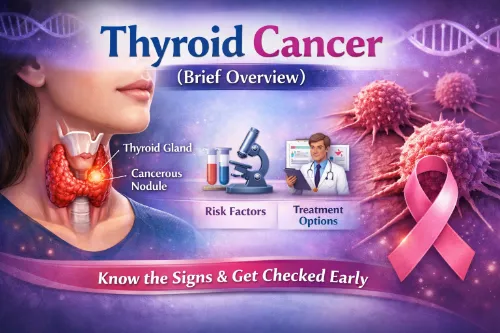
Thyroid cancer starts when abnormal cells in the thyroid grow and multiply in an uncontrolled way, forming a malignant tumour. It is relatively uncommon compared with many other cancers, and most types are highly treatable, especially when found early.
For a patient‑friendly overview, you can also see our main page Thyroid Cancer and information from the American Thyroid Association, Mayo Clinic, Canadian Cancer Society, and U.S. National Cancer Institute.
How Common Is Thyroid Cancer?
Thyroid cancer is considered a rare cancer overall, but its diagnosis has increased over recent decades, partly because small, low‑risk cancers are picked up more often on imaging. It is more common in women than in men and often appears in middle age, though it can occur at any age. Despite increased incidence, death rates from thyroid cancer have remained low, which supports its generally good prognosis.
Main Types of Thyroid Cancer
There are four main types of thyroid cancer.
- Papillary thyroid carcinoma (PTC) – the most common type (around 80% of cases), usually slow‑growing and highly treatable; often discovered as a small nodule.
- Follicular thyroid carcinoma (FTC) – the second most common type; also typically slow‑growing and has a good outlook when treated early.
- Medullary thyroid carcinoma (MTC) – less common; arises from C‑cells that make calcitonin and can be sporadic or inherited as part of genetic syndromes.
- Anaplastic (undifferentiated) thyroid carcinoma (ATC) – a rare but aggressive form that tends to affect older adults and needs urgent, specialized care.
Most people have differentiated thyroid cancers (papillary or follicular), which usually have an excellent long‑term prognosis.
Typical Symptoms and When to Worry
Many people with thyroid cancer have no symptoms, and the cancer is found when a nodule is noticed on exam or imaging. When symptoms do occur, they may include:
- A lump or swelling in the front of the neck that doesn’t go away.
- A feeling of fullness or tightness in the neck.
- Hoarseness or persistent voice changes.
- Difficulty swallowing or, less commonly, breathing problems.
- Enlarged lymph nodes in the neck.
Most thyroid nodules are not cancer, but these warning signs should always be checked by a healthcare professional.
How Thyroid Cancer Is Diagnosed
Evaluation usually follows the same pathway as for thyroid nodules, with extra focus on cancer risk.
Common steps:
- History and physical exam – looking for risk factors (for example, prior neck radiation, strong family history) and worrisome symptoms.
- Thyroid ultrasound – assesses nodule size, structure, and suspicious features such as irregular margins or microcalcifications.
- Fine‑needle aspiration (FNA) biopsy – a thin needle takes cells from the nodule to look for cancer under a microscope.
- Further imaging or tests – such as CT, MRI, or nuclear medicine scans, may be used if spread beyond the thyroid is suspected.
Specialist guidelines from the American Thyroid Association and other expert groups help doctors decide when to biopsy and how to stage disease.
Treatment in Simple Terms
Treatment is tailored to the type and stage of cancer, but many people follow a similar path.
Common components:
- Surgery – removal of part or all of the thyroid (lobectomy or total thyroidectomy); sometimes nearby lymph nodes are also removed.
- Radioactive iodine (for many papillary/follicular cancers) – taken as a capsule or liquid after surgery to destroy any remaining thyroid cancer cells that take up iodine.
- Thyroid hormone tablets (levothyroxine) – taken lifelong after total thyroid removal to replace normal hormone and sometimes suppress TSH to reduce the chance of recurrence.
- Other treatments in advanced cases – such as targeted therapies or external beam radiotherapy, may be used when disease is more aggressive or has spread.
Most care is guided by evidence‑based recommendations such as the 2025 ATA guidelines for differentiated thyroid cancer.
Outlook and Follow‑Up
For most people with differentiated thyroid cancer (papillary or follicular), the outlook is excellent, with high survival rates and good quality of life.
Key points:
- Many localized papillary cancers have 5‑year survival rates near 100%.
- Overall, thyroid cancer has around a 95% 5‑year survival rate across all types and stages combined.
- Prognosis depends on cancer type, size, spread, age at diagnosis, and how well it responds to treatment.
Long‑term follow‑up usually involves:
- Regular check‑ups with an endocrinologist or oncology team.
- Blood tests (for example, thyroglobulin in differentiated cancers, calcitonin in medullary cancer).
- Periodic neck ultrasound and other imaging when indicated.
Pro Tip for Daily Living with Thyroid Cancer
- Ask your team to write down your exact cancer type and stage (for example, “low‑risk papillary thyroid carcinoma, stage I”) and keep this with you – it determines your follow‑up plan and risk profile.
- Keep a simple record of key milestones (surgery date, radioactive iodine dose if given, thyroglobulin results, scans) so you can easily track your journey over time.
- If you are on levothyroxine after surgery, take it consistently and attend scheduled blood tests to keep your levels in the target range your specialist recommends.
- Reach out for support – many people find patient groups (for example, national thyroid patient organizations or cancer societies) helpful for sharing practical and emotional coping strategies.
Frequently Asked Questions (FAQ)
1. Is thyroid cancer always serious?
Not always. Many thyroid cancers, especially small papillary cancers, grow slowly and have an excellent prognosis when treated, with very low risk of death in younger, low‑risk patients.
2. How is thyroid cancer different from a benign nodule?
Benign nodules do not invade nearby tissues or spread, while cancerous nodules can grow into surrounding structures or spread to lymph nodes or distant organs; biopsy and imaging help tell them apart.
3. Will I need my whole thyroid removed?
Not everyone needs a total thyroidectomy; some small, low‑risk cancers can be treated with removal of just one lobe, depending on guideline recommendations and shared decision‑making with your team.
4. Will I need radioactive iodine?
Radioactive iodine is commonly used for many papillary and follicular cancers but is not needed in every case; decisions depend on cancer size, spread, and risk level.
5. Can thyroid cancer come back after treatment?
Yes, recurrence can happen, but with regular follow‑up most recurrences are found early and are usually treatable; your long‑term risk depends on type, stage, and response to initial therapy.
6. Does thyroid cancer run in families?
Most thyroid cancers are sporadic, but some forms, particularly medullary thyroid cancer, can be hereditary and linked to specific gene changes; your doctor may recommend genetic testing if they suspect this.
7. Will I feel normal again after treatment?
Many people return to normal or near‑normal daily life after treatment, though it may take time to stabilize thyroid hormone replacement and adjust emotionally; survivorship programs and support groups can help.
Disclaimer: This information is for educational purposes only and does not replace medical advice, diagnosis, or treatment from your own healthcare provider.
Written by: Eden Grace Ramos-Arsenio, RN
Sources: American Thyroid Association (ATA); Mayo Clinic; Canadian Cancer Society; National Cancer Institute (NCI); StatPearls (NCBI/NIH); British Thyroid Foundation; Cancer Council Australia; peer‑reviewed medical and nursing journals.