
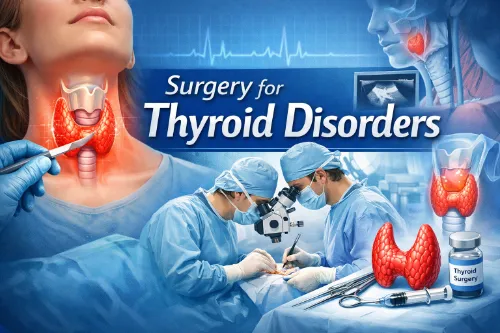
Thyroid surgery (thyroidectomy) is used to remove part or all of the thyroid gland when medication or other treatments are not enough, or when there is concern about cancer. It is most often considered for large goiters, overactive nodules, or thyroid cancer.
This article supports your page Surgery and aligns with patient information from major organisations such as Mayo Clinic, NHS, Cleveland Clinic, and the American Thyroid Association (ATA).
When Is Thyroid Surgery Recommended?
Your healthcare team may recommend surgery if:
- You have a suspicious or cancerous nodule on biopsy.
- You have a large goiter causing swallowing difficulty, breathing problems, or pressure in the neck.
- You have toxic (overactive) nodules or toxic multinodular goiter, and medication or radioactive iodine is not suitable or has not worked well.
- You have Graves’ disease and prefer surgery, cannot tolerate antithyroid drugs, or are not a candidate for radioactive iodine.
Related pages on your site:
- Thyroid Nodules & Goiter
- Hyperthyroidism (Overactive Thyroid)
- Thyroid Cancer (Brief Overview)
- Treatment Options for Thyroid Disorders
Types of Thyroid Surgery
Total Thyroidectomy
- Removal of the entire thyroid gland.
- Commonly used for most thyroid cancers, very large goiters, and some severe or recurrent hyperthyroidism.
- You will need lifelong levothyroxine hormone replacement afterwards.
Lobectomy (Hemithyroidectomy)
- Removal of one lobe (half) of the thyroid, sometimes with the isthmus (middle section).
- Often done for a single nodule that is suspicious or causing symptoms, or some small cancers.
- Some people maintain enough thyroid function and may not need hormone tablets, but others will.
Near‑Total or Subtotal Thyroidectomy
- Removal of most of the gland, leaving a small remnant.
- Less commonly used now; many surgeons prefer total thyroidectomy or lobectomy depending on the situation.
External references for patients:
- ATA – Thyroid Surgery: https://www.thyroid.org/thyroid-surgery/
- Cleveland Clinic – Thyroidectomy: https://my.clevelandclinic.org/health/treatments/16397-thyroidectomy
Preparing for Thyroid Surgery
Before surgery, you may have:
- Blood tests (including thyroid hormone levels and general pre‑operative labs).
- Ultrasound or other imaging to map the thyroid and any nodules.
- Fine‑needle aspiration (FNA) results if nodules have been biopsied.
- A review of your medications (for example, blood thinners, antithyroid drugs, or supplements).
If you have hyperthyroidism, you are often treated with antithyroid drugs (and sometimes beta‑blockers) to bring levels closer to normal before surgery, which reduces complications.
Related internal articles:
External examples:
- Mayo Clinic – Thyroidectomy: https://www.mayoclinic.org/tests-procedures/thyroidectomy/about/pac-20385195
What Happens During the Operation
- Thyroid surgery is usually done under general anaesthesia, so you are asleep and feel nothing.
- A small incision is made at the front of the neck; surgeons aim to place it in a natural skin crease when possible.
- The surgeon carefully identifies and preserves important structures:
- The recurrent laryngeal nerves, which control the vocal cords.
- The parathyroid glands, which regulate calcium levels.
- The planned portion of the thyroid is removed.
- In some cancer surgeries, nearby lymph nodes are also removed for staging or treatment.
Many operations take 1–3 hours, depending on complexity. Hospital stay is often one night, or occasionally same‑day discharge where safe.
After Thyroid Surgery: Hospital and Early Recovery
Immediately after surgery:
- You wake in a recovery area with your breathing, heart rate, and pain monitored.
- You may have a small drain in the neck for a short period, depending on the type of surgery and surgeon preference.
- Your neck may feel sore or stiff, and your voice may sound hoarse or weak initially.
Short‑term experiences:
- Mild pain at the incision, usually managed with tablets like paracetamol or similar.
- Temporary difficulty swallowing larger or very dry foods.
- Tiredness for a few days as you recover from anaesthetic and surgery.
Your team will also monitor:
- Calcium levels (especially after total thyroidectomy).
- Voice quality and vocal cord movement if there are concerns.
NHS recovery overview:
Possible Risks and Complications
Most thyroid surgeries are safe in experienced hands, but possible risks include:
- Bleeding or haematoma in the neck (rare but can be serious in the first hours after surgery).
- Infection at the incision site (uncommon).
- Temporary or permanent hoarseness/voice changes due to irritation or injury of the recurrent laryngeal nerve.
- Low calcium (hypocalcaemia) if the parathyroids are affected; symptoms include tingling around the mouth or in fingers/toes and muscle cramps.
- Need for thyroid hormone replacement, especially after total thyroidectomy.
Risk rates and preventive steps are outlined on:
- ATA – Thyroid Surgery Risks: https://www.thyroid.org/thyroid-surgery/
Thyroid Hormone Replacement After Surgery
If enough thyroid tissue is removed, your body may not produce sufficient hormone, and you will need levothyroxine.
- After total thyroidectomy, levothyroxine is almost always required for life.
- After lobectomy, some people maintain normal function; others develop hypothyroidism and need replacement.
Key points:
- Initial dose is based on weight, age, and other conditions, then adjusted using TSH and free T4 plus how you feel.
- After some thyroid cancers, the dose may be set to keep TSH slightly low to reduce risk of recurrence.
See:
External references:
- NIDDK – Hypothyroidism: https://www.niddk.nih.gov/health-information/endocrine-diseases/hypothyroidism
Recovery at Home
Many people:
- Resume light activities within a few days.
- Return to desk‑based work in about 1–2 weeks (more physical jobs may take longer and should be discussed with the surgeon).
- Notice scar healing and fading over several months.
Home care tips:
- Follow your team’s instructions on wound care and showering.
- Watch for signs of infection (increasing redness, warmth, discharge, or fever) or sudden swelling in the neck; seek urgent help if these occur.
- Report symptoms of low calcium (tingling, cramps) promptly; you may need temporary calcium and/or vitamin D supplements.
- Protect the healing scar from sun exposure with clothing or high‑SPF sunscreen once the wound has closed.
Supportive information:
- Living with a Thyroid Condition
- Thyroid UK – Surgery information: https://thyroiduk.org/about-thyroid-conditions/thyroid-surgery/
Questions to Ask Your Surgeon or Endocrinologist
- “Why are you recommending surgery for my thyroid rather than other treatments?”
- “What type of operation will I have (lobectomy, total thyroidectomy, etc.)?”
- “What are the most important risks in my case, and how often do you see them?”
- “Will I need thyroid hormone tablets afterwards, and how will the dose be determined?”
- “How long will recovery take, and when can I safely return to work and exercise?”
Disclaimer: This information is for educational purposes only and does not replace medical advice, diagnosis, or treatment from your own healthcare provider.
Written by: Eden Grace Ramos-Arsenio, RN
Sources: National Institute of Diabetes and Digestive and Kidney Diseases (NIDDK/NIH) – https://www.niddk.nih.gov/health-information/endocrine-diseases
Mayo Clinic – https://www.mayoclinic.org/tests-procedures/thyroidectomy/about/pac-20385195
NHS – https://www.nhs.uk/conditions/thyroid-cancer/treatment/
American Thyroid Association (ATA) – https://www.thyroid.org/thyroid-surgery/
Cleveland Clinic – https://my.clevelandclinic.org/health/treatments/16397-thyroidectomy
Endocrine Society – https://www.endocrine.org/patient-engagement/endocrine-library
Thyroid UK – https://thyroiduk.org/about-thyroid-conditions/
MedlinePlus – https://medlineplus.gov/thyroiddiseases.html