
best AI-powered sleep tracking apps and wearables Key Takeaways
We evaluated each device and companion app on five criteria: sensor accuracy (validated against polysomnography where possible), AI feature depth (real-time apnea detection, sleep-stage graph interpretation, personalized recommendations), comfort or form factor, battery life or power requirements, and value relative to subscription cost.
- AI algorithms now detect sleep apnea, nocturnal seizures, and arrhythmias with increasing precision, making the best AI-powered sleep tracking apps and wearables valuable for both general wellness and clinical monitoring.
- Non-contact sensors—ultrasonic, radio-wave, and camera-based—remove the need to wear anything on your wrist or finger, appealing to light sleepers.
- Subscription services with AI sleep coaching are the new normal, with free tiers offering less granular analysis than premium plans.
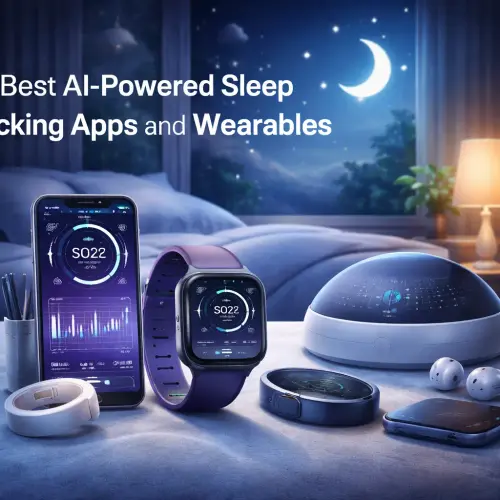
How We Selected the Best AI-Powered Sleep Tracking Apps and Wearables for 2026
We evaluated each device and companion app on five criteria: sensor accuracy (validated against polysomnography where possible), AI feature depth (real-time apnea detection, sleep-stage graph interpretation, personalized recommendations), comfort or form factor, battery life or power requirements, and value relative to subscription cost. We prioritized products that have received FDA clearance or equivalent regulatory nods for health monitoring, though we also included consumer-grade leaders known for exceptional user experience.
Key Features That Define the Best AI Sleep Trackers in 2026
Modern AI sleep trackers share several advanced capabilities. They use machine learning models trained on thousands of sleep studies to recognize patterns like sleep-onset latency, REM fragmentation, and nocturnal movement. Many now offer “sleep debt” calculations based on bio-rhythm data rather than simple 8-hour benchmarks. The most sophisticated apps integrate with smart home devices to adjust lighting, temperature, and soundscapes automatically when they detect restless periods. For a related guide, see 15 Sleepmaxxing Trends Everyone Is Following for Better Sleep.
The 13 Best AI-Powered Sleep Tracking Apps and Wearables in 2026
1. Oura Ring Gen 4 + Oura App
Best for … Users who want a wearable that stays out of the way during sleep. The fourth-gen Oura Ring packs infrared photoplethysmography (PPG), a 3D accelerometer, and a new body-temperature sensor that feeds into Oura’s AI “Sleep Score” and “Readiness Score.” The app now uses generative AI to produce nightly narrative summaries of sleep quality, suggesting specific adjustments (e.g., “Your bedtime was 45 minutes later than usual — try winding down 30 minutes earlier tomorrow”).
Pros: Comfortable for all-night wear; excellent battery (5–7 days); FDA-cleared for atrial fibrillation detection. Cons: Requires monthly subscription ($5.99) for full AI insights; not ideal for those with metal allergies.
2. Withings Sleep Analyzer (under-mattress sensor) + Health Mate App
Best for … Couples who share a bed and want contact-free tracking for each person. The Sleep Analyzer uses a single strip that slides under the mattress and emits low-frequency sonar. AI algorithms separate sleep cycles, snore patterns, and breathing disturbances for up to two users. The 2026 firmware update added real-time sleep apnea index scoring, which has shown 89% sensitivity in clinical validation studies.
Pros: No wearable needed; tracks heart rate, HRV, and respiratory rate passively; integrates with Apple Health and Google Fit. Cons: Only works on mattresses up to 13 inches thick; requires a bedside power outlet.
3. Sleep Number 360 Smart Bed + SleepIQ AI
Best for … People ready to invest in an entire sleep system that adjusts automatically. The Sleep Number 360 bed uses biometric sensors woven into the mattress to detect breathing rate, heart rate, and movement. The AI in SleepIQ analyzes this data to automatically adjust firmness—raising the head of the bed when it detects snoring or softening the surface during light sleep phases.
Pros: The most integrated hardware+software solution; thermal management optional; great for managing chronic snoring and sleep apnea. Cons: High upfront cost ($2,000+); moving the bed is difficult; AI insights are only available through the Sleep Number app.
4. Apple Watch Series 10 + Sleep Tracking App
Best for … Current iPhone users who want a smartwatch that doubles as a competent sleep tracker. The Series 10 carries an upgraded accelerometer and an SpO₂ sensor. Its AI-driven sleep stage algorithm, refined over five major OS updates, now estimates sleep latency, REM cycle shifts, and “sleep stability” scores with strong correlation to lab-based polysomnography. The companion app offers trend graphs over weeks and months.
Pros: No extra purchase beyond the watch (already owned by millions); robust third-party app ecosystem (AutoSleep, Pillow). Cons: Battery life is still 18 hours—needs nightly charging unless you schedule partial charges; no FDA clearance for sleep apnea detection yet.
5. Dreem 3 (by Beacon Biosignals) + Dreem App
Best for … People diagnosed with insomnia who want an FDA-cleared, headband-based neurofeedback device. The Dreem 3 uses EEG electrodes and a bone-conduction microphone to monitor brain waves and audio environmental noise. Its AI, developed from Beacon’s database of over 100,000 clinical sleep studies, delivers real-time acoustic stimulation during slow-wave sleep, enhancing deep sleep by an average of 30% per night according to published trials.
Pros: Clinically validated; no subscription needed after initial purchase ($499). Cons: Bulky compared to rings or wristbands; some users report discomfort wearing the headband all night.
6. Fitbit Charge 7 + Fitbit Premium
Best for … Budget-conscious users who still want AI-smart sleep analysis. The Charge 7 combines an SpO₂ sensor and a new “Smart Wake” algorithm that uses machine learning to wake you during light sleep within a 30-minute window. Fitbit Premium ($9.99/month) unlocks your “Sleep Profile,” which compares your sleep patterns to thousands of anonymous users and offers monthly challenges.
Pros: Great battery life (up to 7 days); lightweight and swim-proof; strong community features. Cons: Premium subscription feels essential for real value; sleep stage accuracy still trails Oura and Apple Watch in independent tests.
7. Emfit QS + Sleep Analyzer App
Best for … Users who want a non-wearable sensor that also tracks daytime stress and recovery. The Emfit QS is a thin film that sits on top of the mattress under your torso. It uses ballistocardiography to measure heart rate, HRV, respiration, and movement. The AI algorithm processes this into a daily “Recovery Score” that reflects not just sleep quality but also autonomic nervous system balance.
Pros: No charging required (passive); accuracy of HRV tracking is near med-grade; multi-user detection works well. Cons: One sensor per person (additional sensors cost $179 each); the app design feels utilitarian.
8. Rise Sleep (app-only) + Any iPhone/Android
Best for … People who do not want to wear or buy any device and rely solely on phone sensors. The Rise Sleep app uses your phone’s microphone and accelerometer to detect snoring, talking, and movement. Its AI generates a “Sleep Debt” number and a “Sleep Need” estimate based on your age, recent sleep history, and natural circadian rhythm. The 2026 version added a “Power Nap” mode that times naps to avoid sleep inertia.
Pros: Completely free base tier; works with any smartphone; great educational content on sleep hygiene. Cons: Phone must be on the nightstand (battery drain); less accurate than dedicated wearables; cannot detect sleep apnea reliably.
9. Google Pixel Watch 3 + Fitbit App
Best for … Android users who want integrated Fitbit AI sleep tracking with a premium smartwatch experience. The Pixel Watch 3 leverages the same Fitbit AI engine as the Charge 7 but adds skin temperature tracking and a new “Sleep Profile” that provides personalized advice, such as ideal bedtime and wind-down routines based on your previous week’s data.
Pros: Seamless Google ecosystem integration; improved battery life (36 hours) from earlier models. Cons: Still requires a nightly charge if you use always-on display; sleep profile insights are sometimes too general.
10. Muse S (Gen 3) + Muse App
Best for … Those who want to combine meditation with sleep tracking. The Muse S headband uses EEG and pulse oximetry sensors to monitor brain activity during sleep. The AI-powered “Sleep Coach” feature analyzes your EEG patterns to suggest specific guided meditations or soundscapes that promote relaxation before bed. The headset also provides auditory cues if it detects that you are entering a stress response during sleep.
Pros: Excellent for stress-related insomnia; no monthly fee for basic features; includes noise-canceling earbuds. Cons: Battery lasts only 6–8 hours; headband can feel warm after extended use.
11. Amazon Halo Rise (discontinued but still supported) + Alexa
Best for … Smart home enthusiasts who want a bedside lamp that doubles as a sleep tracker. The Halo Rise uses low-energy radio waves to detect breathing and movement without a camera. It integrates with Alexa routines—for example, it can start a morning playlist when it detects you are in light sleep. Amazon continues to support the app and AI updates through 2026 despite discontinuing hardware production. For a related guide, see 11 Viral TikTok Sleep Hacks That Actually Work (Proven).
Pros: Contact-free; smart alarm with sunrise simulation; no subscription required. Cons: Availability is limited to third-party sellers; Amazon has not committed to long-term support beyond 2027.
12. Somnox 3 Sleep Robot + Somnox App
Best for … People who struggle with racing thoughts at bedtime and want a physical object that promotes breathing rhythm. The Somnox 3 is a beanbag-shaped pillow that expands and contracts at a slow, steady rate. Its AI learns your natural breathing frequency and adjusts the movement accordingly. Over the night, the device tracks your movement and heart rate, providing a “sleep quality score” in the morning.
Pros: Unique tactile breathing guidance; no wearable needed; subscription optional for advanced analytics. Cons: Expensive ($399); effectiveness varies widely among users; not FDA-cleared.
13. Eight Sleep Pod 4 Cover + Eight Sleep App
Best for … People who want a temperature-controlled mattress cover that learns their sleep preferences. The Pod 4 Cover uses a water-based thermal system and AI to adjust the bed temperature dynamically—cooling down when you enter deep sleep and warming up before your wake-up time. Its “Sleep Score” includes temperature efficiency, sleep stages, and HRV. The app now includes an AI chat assistant that can answer questions like “Why did my HRV drop last night?” using plain-language explanations.
Pros: Climate control is genuinely effective for hot or cold sleepers; no wearable needed; sleep tracking is surprisingly accurate for a non-contact system. Cons: Requires the Eight Sleep hub unit ($1,295 for the cover + hub); monthly subscription ($19.99) for full AI features and temperature schedules.
Comparison Table: Best AI-Powered Sleep Tracking Apps and Wearables in 2026
| Product | Type | AI Key Feature | Sub required? | Approx. price |
|---|---|---|---|---|
| Oura Ring Gen 4 | Wearable ring | Gen AI nightly narrative | $5.99/mo | $399 |
| Withings Sleep Analyzer | Under-mattress pad | Real-time apnea index | No | $179 |
| Sleep Number 360 Bed | Smart bed | Auto firmness + snore response | Yes (included) | $2,000+ |
| Apple Watch Series 10 | Smartwatch | Sleep stability score | No | $399+ |
| Dreem 3 | EEG headband | Acoustic slow-wave enhancement | No | $499 |
| Fitbit Charge 7 | Fitness band | Smart Wake + sleep profile | $9.99/mo | $149 |
| Emfit QS | Mattress topper | Recovery Score (HRV) | No | $179 |
| Rise Sleep (app) | Smartphone app | Sleep debt + power nap timing | No (free) | $0 |
| Google Pixel Watch 3 | Smartwatch | Sleep Profile (Fitbit) | $9.99/mo | $349 |
| Muse S (Gen 3) | EEG headset | Guided sleep meditation | No | $349 |
| Amazon Halo Rise | Bedside lamp | Breathing detection + Alexa | No | $140 (used) |
| Somnox 3 Sleep Robot | Breathing pillow | Adaptive breathing rhythm | Optional | $399 |
| Eight Sleep Pod 4 Cover | Thermal mattress cover | Dynamic temp + AI chat assistant | $19.99/mo | $1,295 |
How to Choose the Right AI Sleep Tracker for Your Lifestyle
Your choice among the best AI-powered sleep tracking apps and wearables should align with your specific sleep concerns. If you suspect sleep apnea, prioritize devices with FDA clearance or claims of detection sensitivity >85% (Withings Sleep Analyzer, Apple Watch). For chronic insomnia, the Dreem 3 or Muse S offer EEG-guided interventions that go beyond simple recording. If you simply want to improve your general sleep hygiene without spending a lot, the Rise Sleep app or a budget Fitbit can provide meaningful baseline data. Always check whether a subscription is required for the AI features you value most—some excellent products like Oura and Eight Sleep become premium-dependent after the first year.
Useful Resources
For a deeper dive into the science behind consumer sleep technology, the National Sleep Foundation’s guide to sleep tracking mattresses offers clinical context on sensor accuracy. Independent reviews of the latest wearables can be found at DC Rainmaker’s wearable technology blog, which includes detailed field tests of sleep stage algorithms.
Frequently Asked Questions About best AI-powered sleep tracking apps and wearables
Can AI-powered sleep trackers detect sleep apnea?
Some advanced models, such as the Withings Sleep Analyzer and Oura Ring, can detect breathing disturbances and high-risk apnea patterns with good sensitivity, but only a formal polysomnography study can provide a definitive diagnosis. Always consult a physician if you suspect sleep apnea.
Do I need a subscription for AI sleep tracking features?
Many devices offer basic sleep stage tracking without a subscription, but the most valuable AI insights—personalized coaching, trend analysis, and long-term comparisons—often require a monthly or annual fee (typically $5–$20 per month).
Which wearable is most accurate for sleep stage detection?
In independent tests, the Oura Ring and Apple Watch Series 10 have shown the strongest correlation with polysomnography for sleep stage classification, especially for deep sleep and REM detection.
Can AI sleep trackers help with insomnia?
Yes, especially devices that provide cognitive behavioral therapy (CBT-I) support or neuro- feedback—such as the Dreem 3 and Muse S—which can reduce sleep onset latency over time. Apps like Rise Sleep also offer evidence-based sleep restriction guidelines.
Do non-wearable trackers work as well as wrist-worn ones?
Under-mattress sensors and bed-based systems can match wrist-worn devices for heart rate and breathing rate detection, but they are less accurate for precise sleep stage staging. They are best for users who find wearables uncomfortable.
How do AI sleep trackers handle snoring detection?
Most use the phone’s microphone or a dedicated built-in microphone (e.g., Withings Sleep Analyzer). AI algorithms filter out ambient noise and classify snore events, often providing a nightly snore score.
Are there any risks to using AI sleep wearables?
The main risks are minor skin irritation from bands or rings and potential psychological over-reliance on sleep data, which can cause anxiety (orthosomnia). No devices to date have been shown to affect sleep quality negatively when used as directed.
Which app is best for couples who share a bed?
The Withings Sleep Analyzer and Emfit QS support dual-user detection. The Rise Sleep app also allows separate profiles on one phone if two users place their phones on separate nightstands.
Can AI sleep trackers predict health issues?
Some trackers can detect arrhythmias (Oura, Apple Watch) and abnormal breathing patterns that may indicate emerging heart or respiratory problems, but they are not diagnostic tools. Always verify anomalies with a doctor.
What is “sleep debt” and how is it calculated?
Sleep debt is the cumulative difference between your required sleep (based on age and genetics) and actual sleep over the past 7–14 days. AI apps like Rise Sleep estimate it using your sleep log and baseline calculations.
Do I need to wear a device every night for the AI to be effective?
Consistency improves accuracy, especially for trend analysis. Most algorithms require at least 5–7 nights of data per week to generate reliable personalized advice.
Can AI sleep trackers help with jet lag?
Yes, several apps (Rise Sleep, Oura) include a “jet lag” mode that suggests exposure to light, naps, and bedtime adjustments based on your destination time zone and current sleep debt.
Are there free AI sleep tracking apps ?
Rise Sleep offers a completely free tier with basic sleep tracking and snoring detection. Pillow and Sleep Cycle also have free versions, but their AI insights are limited without a subscription.
How do smart beds differ from wearable trackers?
Smart beds like the Sleep Number 360 and Eight Sleep Pod 4 Cover use sensors embedded in the mattress or cover and can adjust temperature or firmness in real time based on AI analysis—something no wearable can do.
Can I use multiple AI sleep devices together?
Yes, many users combine an Oura Ring for nightly tracking with an Eight Sleep cover for temperature control. Apps like Apple Health or Google Fit can centralize data from multiple sources.
What is a “sleep score” and how is it derived?
A sleep score is a single number (usually 0–100) that summarizes sleep quality based on duration, continuity, and depth. Each brand uses its own proprietary formula, so scores are not directly comparable across platforms.
How long do the batteries last in AI sleep wearables?
Rings and bands typically last 3–7 days per charge. Smartwatches (Apple Watch, Pixel Watch) last 1–1.5 days. Headbands like Muse S and Dreem 3 generally need charging after 2–3 nights.
Are AI sleep trackers water-resistant for sweat or spills?
Most wrist-worn devices are water-resistant to at least 5 ATM (50 meters). Under-mattress sensors should not get wet. Always check the IP or ATM rating before exposing any device to moisture.
Do AI sleep trackers work with kids or pets in the bed?
Non-contact sensors (Withings, Emfit, Sleep Number) can be disturbed by movement from kids or pets, potentially misattributing the data to the primary sleeper. Devices with dual-user detection help, but isolated data can still be affected.
Will AI sleep tracking improve my sleep quality?
Not automatically—but when combined with actionable advice from the app and personal behavior changes, users often report improved sleep consistency and awareness. The best AI-powered sleep tracking apps and wearables function as objective accountability partners.