
causes of sleepwalking in adults Key Takeaways
Sleepwalking isn’t just a childhood phase — it affects roughly 2–3% of adults and can be triggered by a surprising range of factors.
- Sleep deprivation is the top trigger, disrupting the brain’s ability to transition smoothly between sleep stages.
- Medications, alcohol, and underlying health issues like restless leg syndrome can all provoke sleepwalking in adults .
- Genetics play a major role — if a first-degree relative sleepwalks, your chances increase significantly.
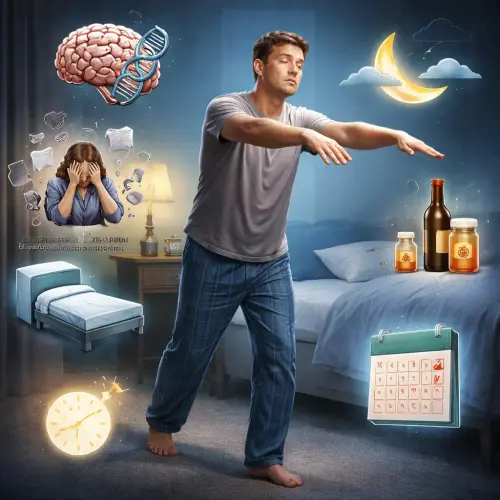
What Triggers Sleepwalking in Adults? A Closer Look at the Science
Sleepwalking, or somnambulism, occurs during non-rapid eye movement (NREM) sleep, typically in the first third of the night. In adults, the condition is less common but often more complex, frequently linked to external or internal disturbances that fragment deep sleep. Understanding the causes of sleepwalking in adults requires examining lifestyle, medical, and genetic factors that interrupt normal sleep architecture.
Below, we break down the ten proven triggers, each with clear explanations and actionable advice.
10 Proven Causes of Sleepwalking in Adults
1. Sleep Deprivation and Irregular Sleep Schedules
Lack of quality sleep is the most frequently reported trigger for sleepwalking in adults. When you’re sleep-deprived, your brain spends more time in deep NREM sleep — the stage where sleepwalking begins. This becomes problematic when you try to “catch up” on sleep, as the rebound deep sleep can provoke an episode. For a related guide, see 10 Long COVID Symptoms That Hurt Sleep Quality – Avoid These.
Shift workers, parents of newborns, and frequent travelers are especially vulnerable. Maintaining a consistent bedtime and aiming for 7–9 hours of sleep nightly can dramatically reduce episodes.
2. Chronic Stress and Anxiety
Emotional stress doesn’t just keep you awake — it can also trigger adult sleepwalking triggers by increasing arousal during sleep. Studies show that adults under significant psychological stress are three times more likely to experience sleepwalking. The brain remains partially alert while trying to rest, leading to confused wake-sleep states.
Mindfulness, therapy, and stress-management techniques can help lower the risk. If you notice episodes during high-pressure periods, stress is likely a contributing factor.
3. Medications That Affect the Central Nervous System
Certain prescription drugs are known to induce sleepwalking as a side effect. Sedative-hypnotics like zolpidem (Ambien), some antidepressants (especially SSRIs), and antipsychotics can alter sleep cycles and trigger complex behaviors like sleepwalking.
Always review medication side effects with your doctor. If you start a new drug and notice sleepwalking, a dosage adjustment or alternative medication may resolve the issue.
4. Alcohol Consumption Before Bed
Alcohol is a double-edged sword for sleep. While it helps you fall asleep faster, it disrupts REM sleep and increases time spent in deep NREM sleep — the perfect environment for sleepwalking. Even moderate drinking within two hours of bedtime can trigger episodes.
If you have a history of sleepwalking in adults, avoiding alcohol altogether, especially in the evening, is a prudent step.
5. Fever and Illness
Acute illness, particularly with high fever, can destabilize sleep patterns and provoke sleepwalking. The body’s immune response, combined with disrupted thermoregulation, confuses the brain’s sleep-wake signals.
Children are more commonly affected by fever-related sleepwalking, but adults are not immune. Managing the underlying illness and ensuring a cool, comfortable sleep environment can help.
6. Obstructive Sleep Apnea and Breathing Disorders
Sleep apnea causes repeated pauses in breathing during sleep, leading to frequent micro-arousals. These sudden awakenings — even if you don’t remember them — can trigger sleepwalking in predisposed adults. Treating sleep apnea with CPAP therapy often resolves coexisting sleepwalking.
If you snore loudly or wake up gasping for air, a sleep study could reveal apnea as a hidden common cause of sleepwalking.
7. Restless Leg Syndrome (RLS) and Periodic Limb Movement Disorder
Uncontrollable leg movements during sleep fragment deep sleep and increase the likelihood of sleepwalking episodes. RLS affects up to 10% of adults and is strongly linked to adult sleepwalking triggers. The urge to move the legs can create a state of partial arousal that leads to wandering.
Treating the underlying movement disorder — through medication, iron supplements, or lifestyle changes — often improves sleep stability.
8. Genetic Predisposition
Sleepwalking runs in families. If one parent sleepwalks, a child has a 45% chance of doing so; if both parents do, the odds jump to 60%. Twin studies confirm a strong heritable component, though the specific genes are still being identified. Genetics may make you more susceptible, but it often takes an environmental trigger — like stress or sleep loss — to manifest.
Understanding your family history can help you identify early warning signs and take preventive measures.
9. Migraines and Headache Disorders
Adults with chronic migraines are more likely to experience sleepwalking. The link may be due to shared brain chemistry — specifically, disruptions in serotonin and dopamine pathways that affect both headache regulation and sleep stability. Some studies report that migraine sufferers are twice as likely to report sleepwalking. For a related guide, see 10 Gut Health Issues Ruining Your Sleep (Proven Fixes).
Managing migraines with a neurologist’s guidance may reduce sleepwalking frequency.
10. Hormonal Changes and Pregnancy
Hormonal fluctuations — particularly during pregnancy, menopause, or severe premenstrual syndrome — can alter sleep architecture and trigger sleepwalking. Pregnancy-related sleep deprivation, physical discomfort, and hormonal shifts make the second and third trimesters common windows for first-time episodes in women.
Postpartum, the combination of sleep fragmentation and hormonal adjustment can also provoke episodes.
When to Seek Medical Help for Sleepwalking
Most sleepwalking episodes are harmless and resolve on their own. However, you should consult a doctor if sleepwalking leads to dangerous behavior (e.g., leaving the house, driving), occurs frequently (more than once a week), or persists after addressing obvious triggers like poor sleep or stress. A sleep specialist can conduct a polysomnogram (sleep study) to rule out underlying conditions like sleep apnea or seizure disorders.
Practical Steps to Reduce Sleepwalking Episodes
While medical advice is essential for chronic cases, you can reduce your risk with these strategies:
- Prioritize sleep hygiene: Go to bed and wake up at the same time daily, even on weekends.
- Create a safe bedroom: Lock doors and windows, remove tripping hazards, and hide sharp objects.
- Manage stress proactively: Incorporate relaxation techniques like deep breathing or meditation before bed.
- Avoid alcohol and heavy meals within three hours of bedtime.
- Review your medications with your doctor to rule out sleepwalking as a side effect.
Useful Resources
For more detailed information on causes of sleepwalking in adults, visit these reputable sources:
Frequently Asked Questions About causes of sleepwalking in adults
Is sleepwalking in adults dangerous?
Yes, sleepwalking can be dangerous if it leads to falls, leaving the house, or engaging in risky behaviors like cooking or driving. Most episodes are harmless, but safety precautions are essential.
Can stress cause sleepwalking in adults ?
Absolutely. Chronic stress and anxiety are among the most common adult sleepwalking triggers, as they increase nighttime arousal and disrupt deep NREM sleep. For a related guide, see Anxiety Chronic Insomnia: 9 Warning Signs and Better Options.
Do certain medications cause sleepwalking?
Yes, sedative-hypnotics like zolpidem, some antidepressants (SSRIs), and antipsychotics are linked to sleepwalking. Always check with your doctor if you notice new episodes after starting a medication.
Can alcohol trigger sleepwalking?
Yes, alcohol increases time spent in deep NREM sleep and disrupts REM cycles, making sleepwalking more likely. Avoiding alcohol before bed can help.
Is sleepwalking genetic?
Strongly. If a first-degree relative sleepwalks, your risk is significantly higher. Genetics appear to create a predisposition that environmental factors often trigger.
Can sleep apnea cause sleepwalking?
Yes, obstructive sleep apnea causes frequent micro-arousals that can trigger sleepwalking. Treating apnea often reduces or eliminates episodes.
Does fever trigger sleepwalking in adults ?
Yes, especially high fevers. The body’s immune response can destabilize sleep patterns, leading to sleepwalking during illness.
What is the link between migraines and sleepwalking?
Migraine sufferers are twice as likely to report sleepwalking. The connection likely involves shared serotonin and dopamine pathways that affect both headache regulation and sleep stability.
Can pregnancy cause sleepwalking?
Yes, hormonal changes, physical discomfort, and sleep deprivation during pregnancy can provoke sleepwalking in women who have never experienced it before.
How is sleepwalking diagnosed?
Diagnosis is usually based on clinical history and sometimes a sleep study (polysomnogram) to rule out other conditions like sleep apnea or seizures.
Is it safe to wake a sleepwalker?
Waking a sleepwalker can cause confusion or aggression. It’s safer to gently guide them back to bed. If you must wake them, do so from a distance.
Can sleepwalking start in adulthood?
Yes, while it often begins in childhood, adult-onset sleepwalking is well-documented and is usually linked to a specific trigger like medication, stress, or a medical condition.
Does restless leg syndrome cause sleepwalking?
Yes, RLS and periodic limb movement disorder fragment sleep and increase arousal, which can trigger sleepwalking episodes.
Can dietary deficiencies trigger sleepwalking?
While not a primary cause, iron deficiency is linked to restless leg syndrome, which in turn may contribute to sleepwalking. Magnesium or vitamin D deficiencies are also being studied.
How common is sleepwalking in adults ?
Approximately 2–3% of adults experience sleepwalking at least once a year, with about 1% having more frequent episodes.
Can sleepwalking be cured?
There is no cure, but it often resolves with lifestyle changes, treating underlying causes, and sometimes medication like low-dose benzodiazepines prescribed by a specialist.
Is sleepwalking linked to mental health disorders?
Yes, adults with depression, anxiety, or PTSD are at higher risk. Treating the mental health condition often reduces sleepwalking episodes.
Can sleep deprivation cause sleepwalking?
Yes, sleep deprivation is the single most common trigger. It forces the brain into rebound deep sleep, increasing the likelihood of episodes.
Should I see a doctor for occasional sleepwalking?
Occasional, mild sleepwalking usually doesn’t require medical attention. However, if episodes are frequent, dangerous, or accompanied by other symptoms, a professional evaluation is wise.
Does sleepwalking get worse with age?
Not typically. Many adults see a decrease in episodes over time, especially if triggers are managed. However, new-onset sleepwalking in older adults should be evaluated for underlying illness.